A valid SMS webhook can fail signature validation after a reverse proxy changes how the application sees the request URL. The fix is to reconstruct and validate the documented public request correctly, not to disable authentication. Keep the request untrusted until the provider’s verification procedure succeeds.
If a backup phone number to check texts in browser also feeds an authorised integration, treat the browser inbox and the callback endpoint as separate access paths. Seeing the same message in the inbox does not authenticate an HTTP request sent to your server.
Locate the mismatch at the boundary
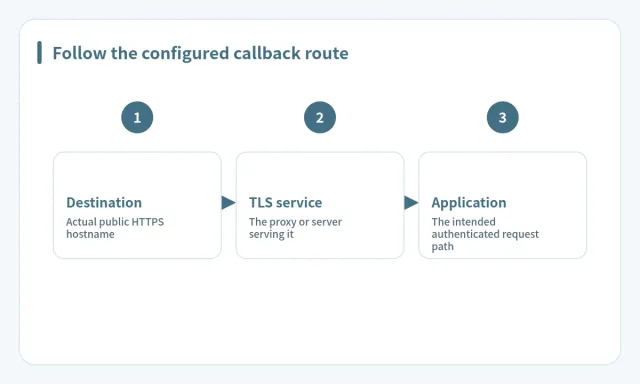
A typical deployment has a public HTTPS address, a proxy and an internal application address. The application may see HTTP on a private port even though the provider called HTTPS on the public hostname. Record those non-secret URL components and compare them with the configured callback destination.
Do this using a controlled test event. Avoid dumping full message bodies, credentials or authentication tokens into ordinary access logs. A request identifier, content type and a carefully limited account of which validation step failed are usually better starting points.
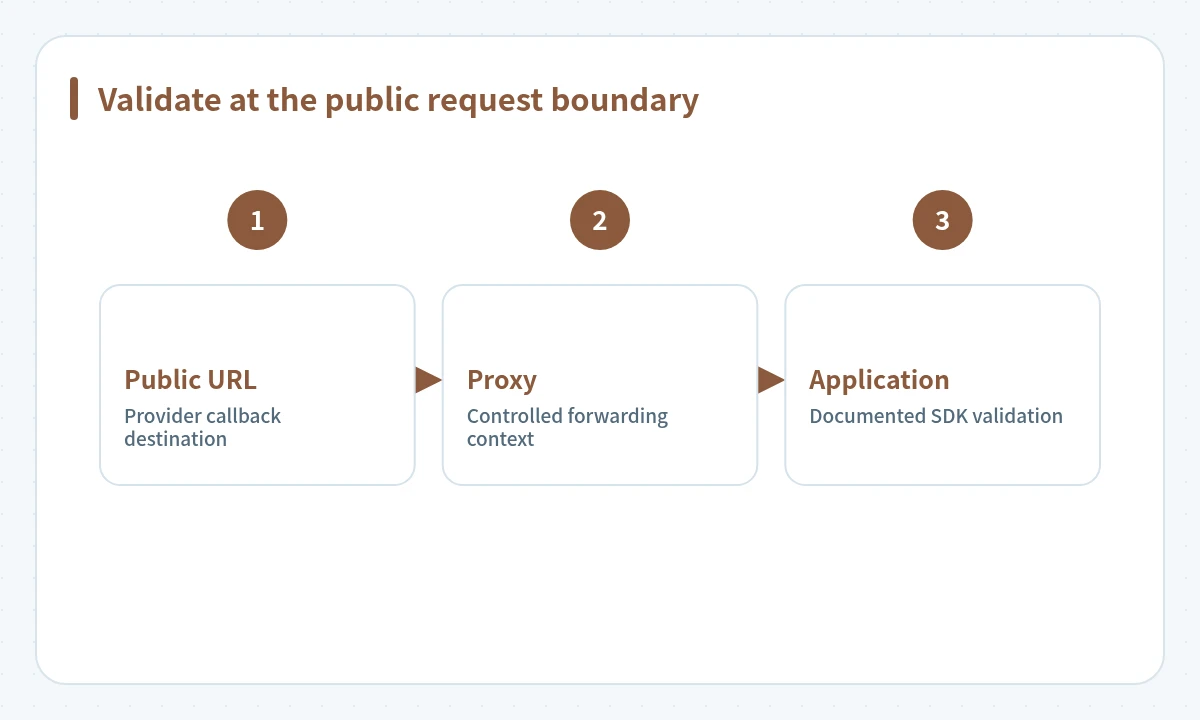
Twilio’s security documentation says validation uses the exact request URL and the appropriate request data. It recommends its SDK validation helpers and describes different treatment for form and JSON payloads. URL decoding, middleware trimming or reserialising a body can therefore matter. Follow the relevant provider and content-type procedure; do not invent a generic signature formula for every SMS API.
Trust proxy information only from your proxy
Headers describing the original host or scheme can help an application identify the public address, but arbitrary clients can also send headers. Configure the framework’s trusted-proxy mechanism for the actual deployment. Do not accept an attacker-supplied forwarded hostname as the basis for validation simply because it makes a test pass.
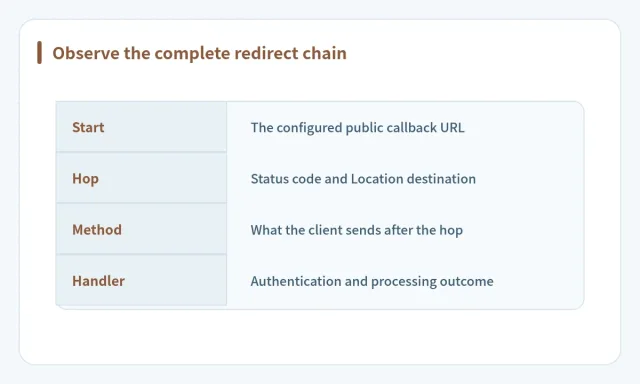
Keep the callback destination stable during diagnosis. Check the scheme, hostname, path, query string and any documented port handling. If a redirect is involved, establish which URL the provider actually requests and whether that flow is supported. A manual browser visit is not a substitute for a signed webhook test.
Verify both acceptance and rejection
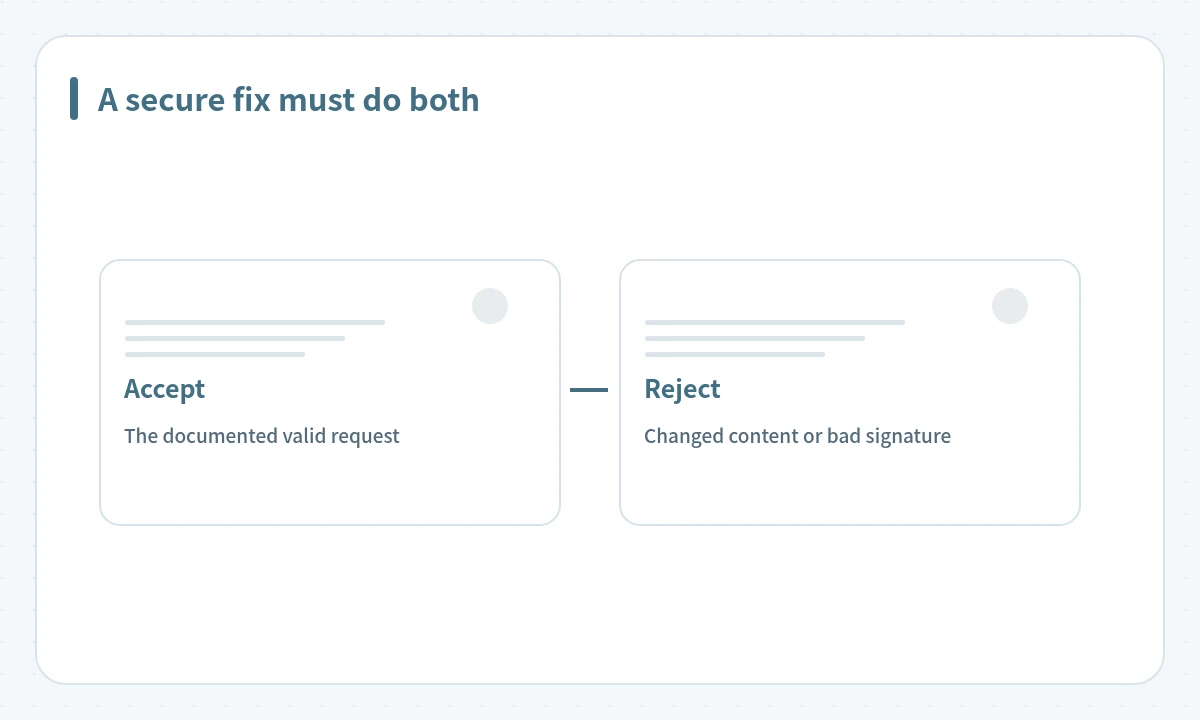
A useful test set includes a documented valid fixture, a modified body, an incorrect signature and a request to the wrong external path. The valid request should pass only under the intended configuration; the altered requests should be rejected before any message processing occurs.
| Checkpoint | Evidence to retain |
|---|---|
| Public destination | The configured URL without credentials |
| Application reconstruction | The expected scheme, host and path |
| Validation | Pass or fail for controlled test cases |
| Processing | The authenticated event’s internal outcome |
After changing proxy or framework settings, rerun the negative tests as well as the working example. A patch that accepts every request solves the visible error by removing the boundary you intended to protect.
Once validation is reliable, handle duplicate events and application failures separately. Authentication establishes where a request came from under the provider’s scheme; it does not itself prove that a downstream action was completed once and only once.
Technical reference: Twilio: secure webhooks.