
Call Center API Integration Guide: Agents, Tasks and Events
Prepare call center API integration across agent groups, team leaders, agents, trunks, campaign states, call records and event processing.
This is a preparation and acceptance guide. Available features, endpoints, fields and billing depend on the confirmed project documentation.
The platform showed a directory preview when checked. Preview is not a number allocation or an open purchase offer; check the platform for its current state. Checked: 2026-10-22
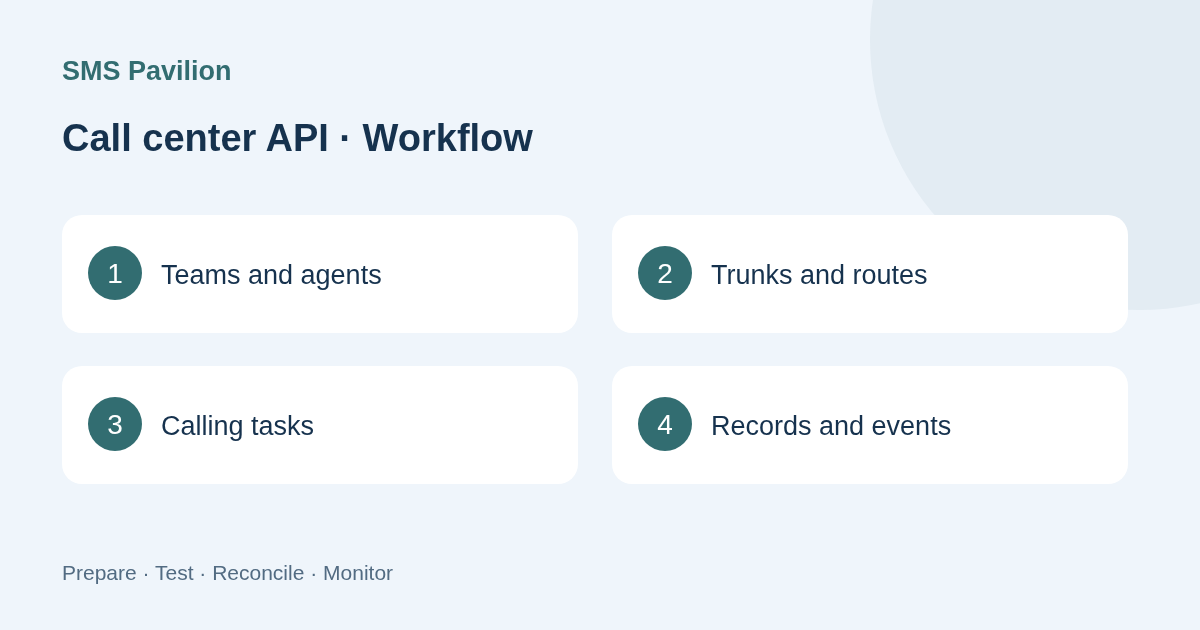
Agent groups, base settings and inbound ringing
Map business teams to agent groups before integrating the call center. For group creation, define purpose, naming and management permissions. Keep stable group identifiers when listing or renaming groups so historical calls retain their ownership. Before deletion, check related agents, campaigns and retention requirements.
Read current settings before changing group configuration and define how concurrent updates are handled. Uploading, replacing or deleting inbound ringtones requires agreed audio format, duration, volume and usage rights, followed by an actual inbound-call test.
The maximum number of phones that can be created in a group is a planning input, not a guarantee of call concurrency. Confirm account allowances, agent counts, phone assignment and active-call limits separately.
Checks
- Audit creation, listing, renaming and deletion permissions.
- Verify configuration and ringtone changes with a small group first.
- Test capacity limits, active dependencies and concurrent updates.
Team leader roles and batch changes
When adding a team leader, specify the assigned groups and accessible data. List operations should account for pagination, inactive users and duplicate grants. An edit to leadership responsibilities may affect active campaigns and reporting access.
Do not treat a single batch-level response as proof that every leader change succeeded. Keep object-level results and a list of retryable failures. When removing permission, establish how existing sessions and reporting access are revoked.
Checks
- Use least privilege and restrict access across groups.
- Test partial success, repeated batches and reversal conditions.
- Remove unnecessary permissions when responsibilities change.
Agent creation, priority and effective-call definitions
Before creating agents in batches, validate unique personnel and business identifiers and decide how credentials are delivered. Use stable identifiers for listing, modifying and batch processing agents. Distinguish temporary unavailability, deactivation and deletion.
Changing agent priority requires a verified assignment policy and observation for unfair distribution or starvation. An effective-call definition affects reporting: agree the timer start, duration threshold, connection condition and rule version before use.
An effective-call metric is not the same as a resolved customer issue. Keep historical rule definitions when comparing reporting periods, and explain breaks in measurement caused by configuration changes.
Checks
- Test duplicate creation, invalid users and partial failures.
- Observe real assignment after priority changes.
- Version effective-call rules and provide acceptance examples.
Trunk configuration and bulk activation
Confirm network paths, authentication, allowed source addresses, number formats and routing before adding a trunk. Restrict sensitive fields in list and edit operations, and keep test configuration separate from production.
Deleting a trunk or enabling and disabling trunks in bulk may affect active campaigns. Check dependencies, alternative routes and the treatment of established calls versus new attempts before changing status. Use a monitored change window and keep recovery steps.
Connectivity alone does not establish acceptable audio quality. Test call setup, two-way audio, DTMF, termination causes and recovery according to the features actually agreed for the project.
Checks
- Restrict configuration access and redact passwords.
- Record object-level outcomes for bulk changes.
- Test registration failures, one-way audio and route outages.
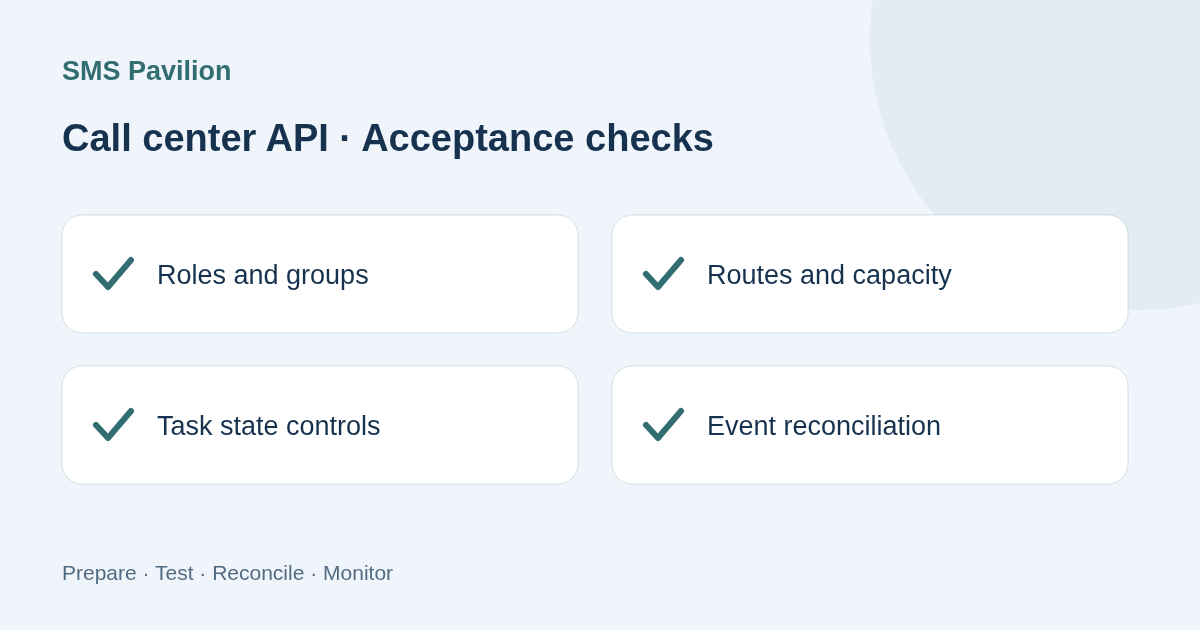
Preview and campaign-to-agent task lifecycle
For preview-task lists, task details and dynamic headers, confirm filters, pagination, field definitions and data access. Treat dynamic field labels as data rather than executable page code; apply safe output encoding and explicit display rules.
Before uploading a calling-number spreadsheet, agree columns, number formats, file limits, deduplication and permitted data use. Creating or redialling a task with deduplication involves separate concerns: duplicate rows, duplicate tasks and repeated business submissions.
Starting, pausing, cancelling and editing campaign-to-agent tasks require a defined state model. Establish which fields can change while running, whether a pause prevents new attempts, whether cancellation is reversible and how task status relates to calls already in progress.
Checks
- Validate spreadsheet mapping with a small authorised sample.
- Test creation, start, pause, redial and cancellation transitions.
- Trace duplicate requests, conflicting changes and partial failures.
Call records, record pushes and agent ringing events
Link call records to agents, tasks and business records using stable call identifiers. Verify timezones, pagination, termination causes and timing fields. Record creation can lag the call itself, so recovery queries need an agreed overlap window.
Call-record push events and agent-ringing notifications describe different stages. Ringing is not a connection, and an ended call is not a completed business outcome. Validate documented event credentials and process duplicates, delays and reordering safely.
If event notifications and query results disagree, preserve a timeline and reconcile against the agreed authoritative final record. Do not substitute client receipt time for the source event timestamp.
Checks
- Test duplicate, reordered, delayed and missing events.
- Link call, agent, task and internal business identifiers.
- Keep ringing, connection, termination and resolution separate.
Verify permissions, capacity and operational recovery
Acceptance should cover organisational permissions, configuration changes, task execution and event reconciliation. Start with a few agents and test campaigns before observing queues, rate limits and recovery under load. Do not promise capacity or quality that has not been verified.
Prepare retention rules, incident ownership, a pause control, access revocation and rollback steps. Support evidence should contain a redacted timeline and task or call identifiers, not full customer lists, passwords or unnecessary recordings.
Checks
- Agree reporting definitions, capacity boundaries and recording access.
- Retest critical flows after trunk or task-policy changes.
- Keep a versioned deployment and recovery record.