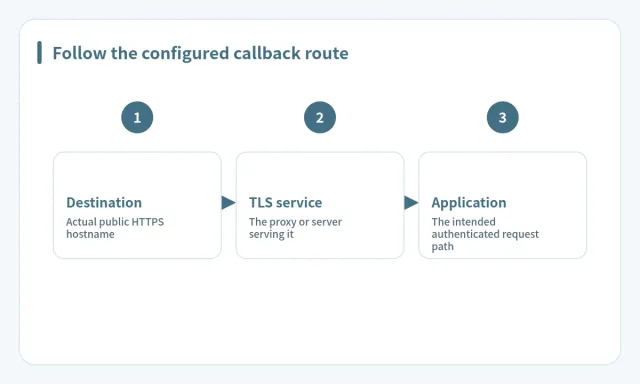
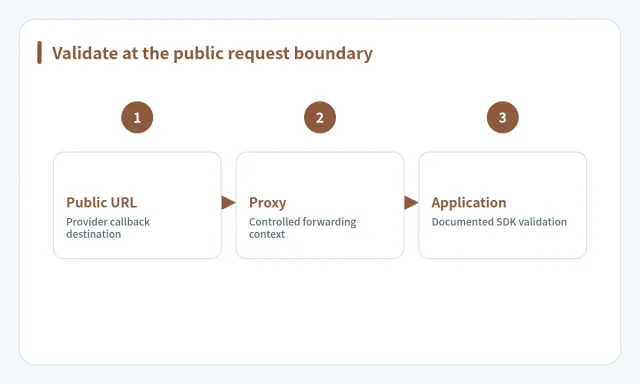
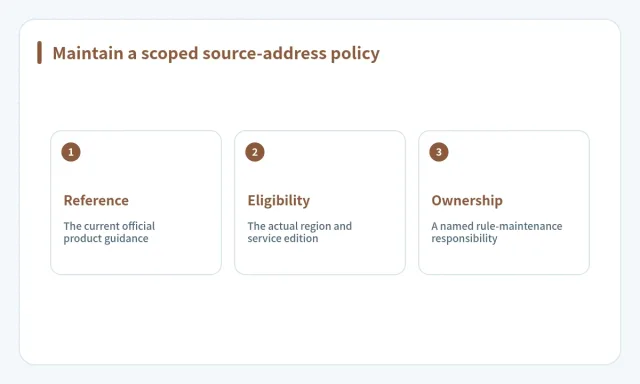
A callback URL working in a browser does not prove that a provider can follow the same redirect. Check redirect support, the method reaching the destination and the request verification requirements.
Keep the intermediate responses
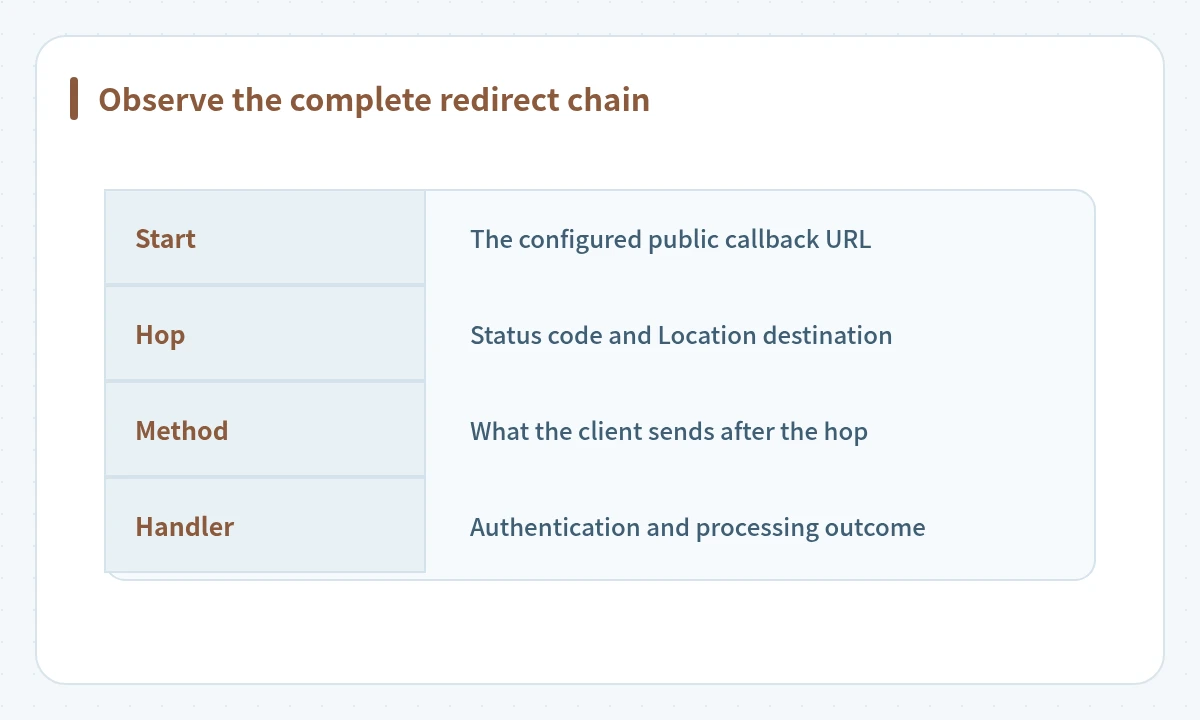
A domain migration, an HTTP-to-HTTPS rule or a trailing-slash adjustment can introduce another request. Record the starting URL, redirect status, Location and final handler. A login or browser challenge may also intervene. Your browser can have cookies and an interactive session that the provider’s server does not have.
A final 200 response hides these distinctions if your test tool follows redirects automatically. Note that tool setting, use the configured URL, and reproduce the documented method with harmless test content. Do not upload a real callback containing private messages or credentials to a public request-inspection service.
Method preservation is only one requirement
MDN distinguishes 302 from 307: a POST followed after 302 may become GET, whereas 307 preserves the method and body when followed. This does not establish that a particular callback client accepts redirects at all. Check the provider’s behaviour rather than assuming that replacing the status code resolves the integration.
| Changed element | Acceptance check |
|---|---|
| Method | The destination supports it and reads the correct input |
| Host or scheme | TLS, access rules and verification context remain correct |
| Path | The request reaches the intended message handler |
Some signature schemes include the requested URL. Follow the relevant SDK’s instructions for the public address and proxy setup; do not substitute an internal address without understanding the contract. A cross-host redirect also warrants checking how authentication is handled. Never work around the failure by forwarding secrets indiscriminately or turning signature checks off.
Response timing also belongs in the comparison. Extra hops consume time before the final handler can answer. Use the provider’s documented timeout and retry behaviour when evaluating the chain; do not compensate for a slow redirect by returning an acknowledgement before the event has reached the application’s intended acceptance boundary.
Make the final endpoint an explicit migration target
If the provider supports updating the configuration, pointing directly to the proper HTTPS handler removes a dependency on redirect behaviour. Validate parsing, authentication, the required response and the stored outcome there before changing the active binding. Give the old endpoint a deliberate compatibility window rather than leaving an unexplained second processing path.
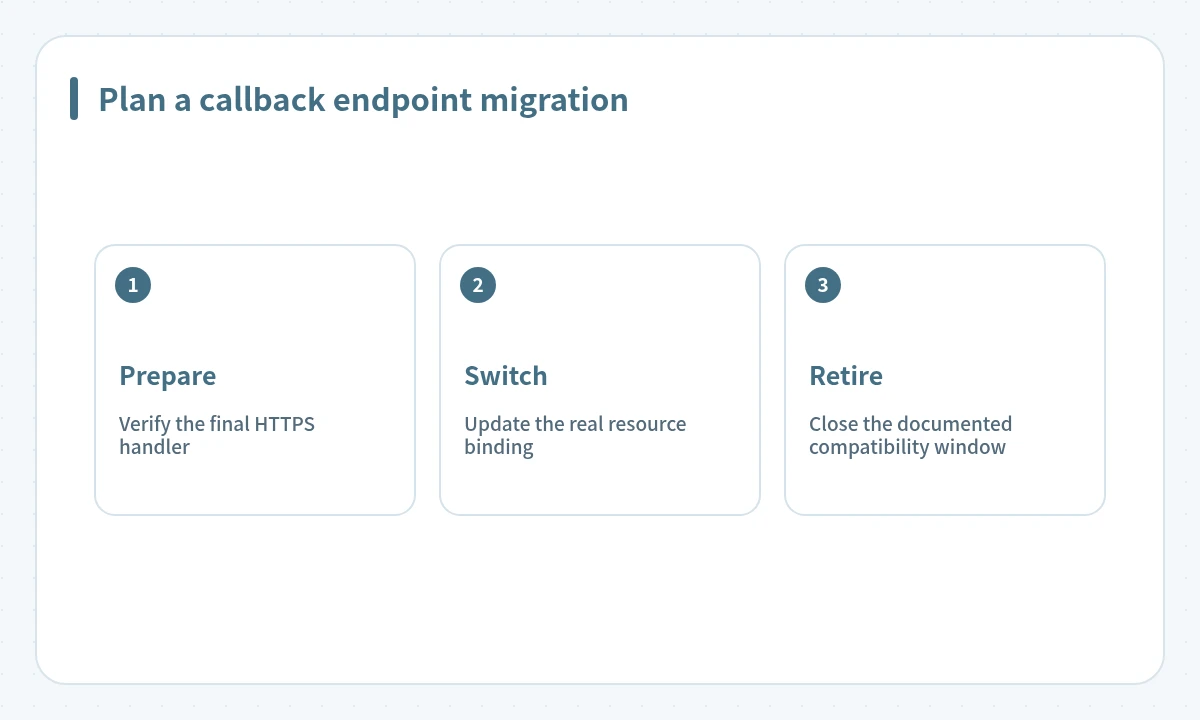
The migration test should establish which host the provider actually requested and whether the business event was handled once. Check other numbers or services for remaining old bindings. A successful request against one test resource does not prove that every production setting changed with it.
Retain enough configuration history to perform a controlled rollback. After traffic has demonstrably moved, retire the compatibility arrangement according to that plan. The useful result is a known receiving path with observable failures, not merely a browser URL that eventually displays a page.
References: MDN: 302 Found; MDN: 307 Temporary Redirect.