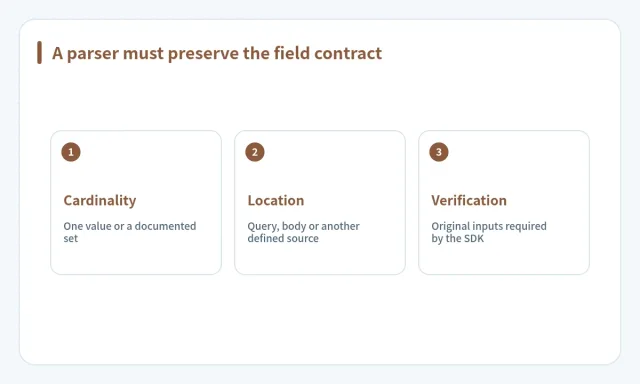
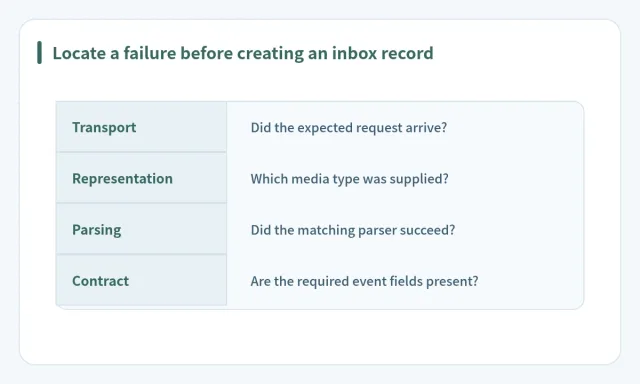
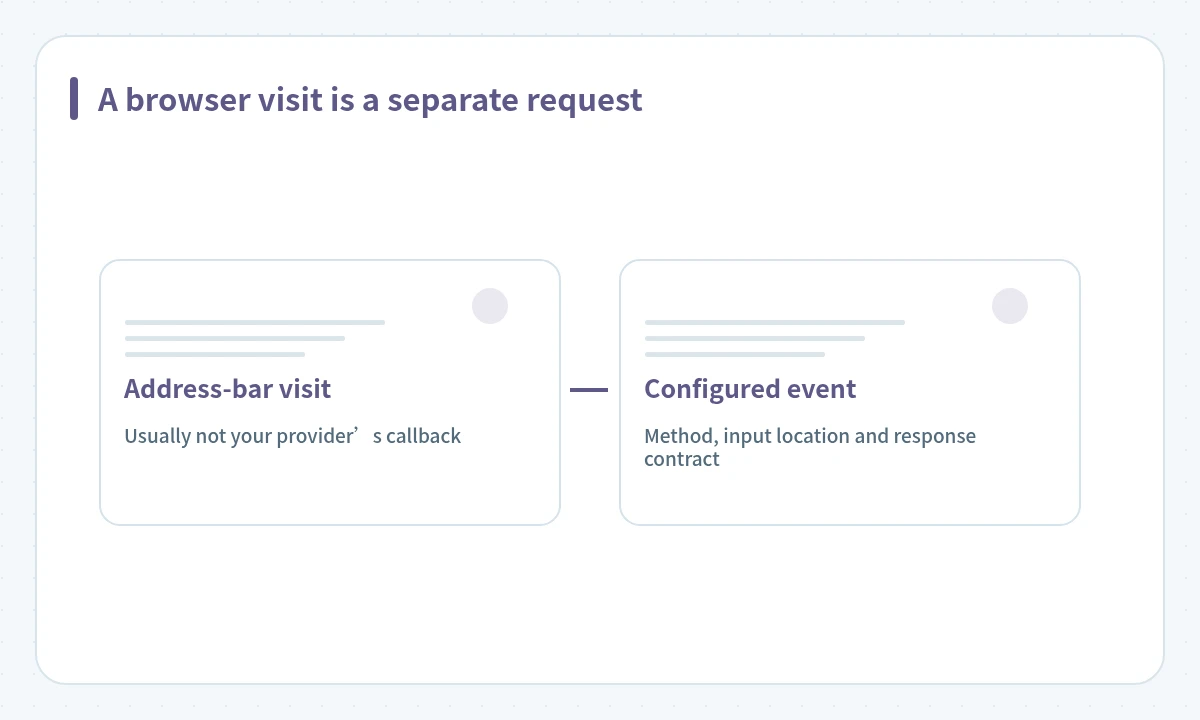
The callback sender and receiver must agree on the HTTP method and parameter location. Opening a URL in a browser does not reproduce the POST request a provider may send.
Write down both sides of the integration
Identify the configured event, URL and method on the provider side. Then identify the application route, permitted method and parameter source. Twilio’s messaging-webhook documentation distinguishes GET query parameters from the POST body. Other services may offer different choices, so use the contract for the exact integration you operate.
A browser navigation reaching a welcome page does not show that the message handler received any fields. Likewise, a POST-only handler returning 405 to an address-bar visit may be behaving correctly. Compare the observed request with the intended one before treating either response as a fault.
Avoid a “take the value from anywhere” handler
Frameworks often expose query, form and JSON input separately, sometimes alongside a merged input helper. A merged helper can conceal mistakes when the same field appears in several places. Choose the documented source and decide how ambiguous or misplaced values should be handled, instead of depending on whichever value wins internally.
| Configuration item | What to verify |
|---|---|
| Provider setting | The active resource uses the intended method |
| Application route | That method reaches the correct handler |
| Parameters | Required fields are read from the agreed location |
| Response | The result satisfies this event’s response requirements |
Query parameters are part of the URL and can appear in access logs and other records. Do not paste a real verification code into a query simply to make a broken POST integration appear functional. Where GET is supported and deliberately used, review logging and access controls. POST also needs appropriate handling; its name alone is no guarantee that sensitive content stays out of logs.
Document probe behaviour separately. A platform may call an endpoint for a configuration check that is not a real incoming-message event. Decide how the application recognises such documented checks, and ensure that a successful probe cannot accidentally create an inbox record.
Test a configuration change as a change
Use harmless fixtures to test the intended method, an unexpected method and missing required parameters. Confirm both the response and the business outcome. A route should not create a blank message because an unsupported method happened to reach shared application code.
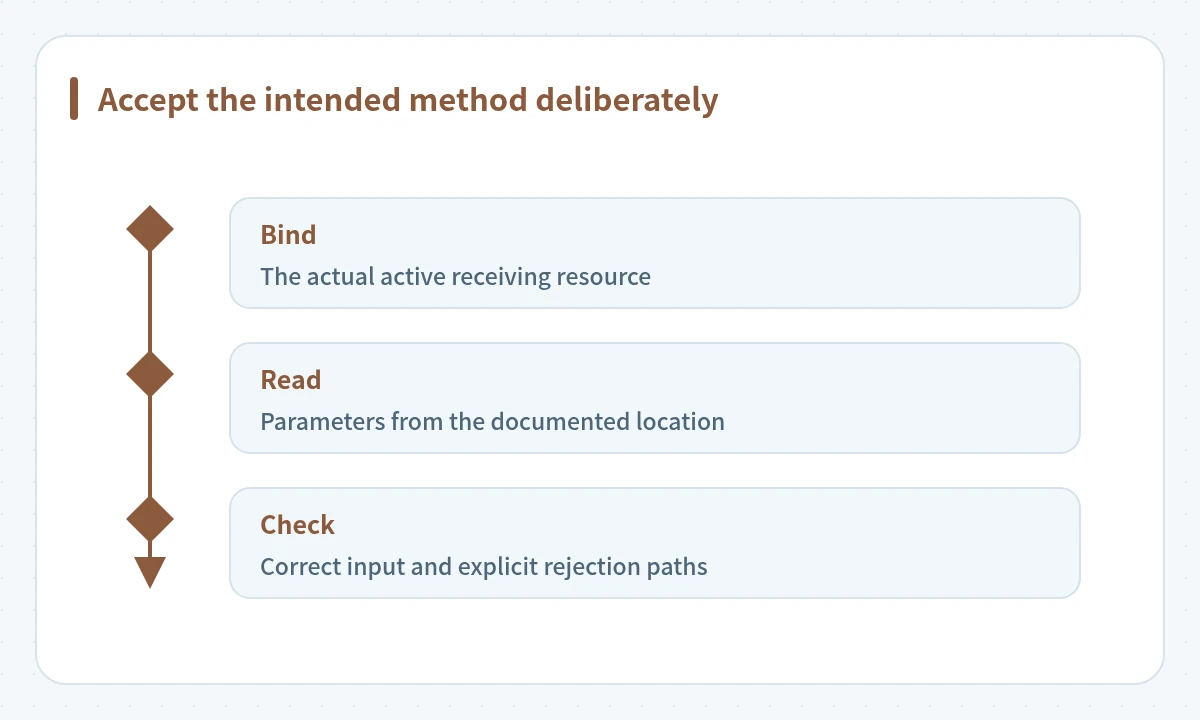
Make the provider-side change against the resource that carries actual traffic. An unused example number, a different account or an unbound service can retain a convincing-looking configuration without affecting your integration. Match the provider’s request record with your application’s correlation identifier to establish that the new setting took effect.
Keep the change time and the accepted test result together. Avoid switching settings on both sides repeatedly while diagnosing adjacent requests: one may reflect the previous configuration and the next the new one. A stable comparison makes it possible to explain a failure without collecting or sharing the entire SMS conversation.
References: Twilio: messaging webhook methods; MDN: GET requests.