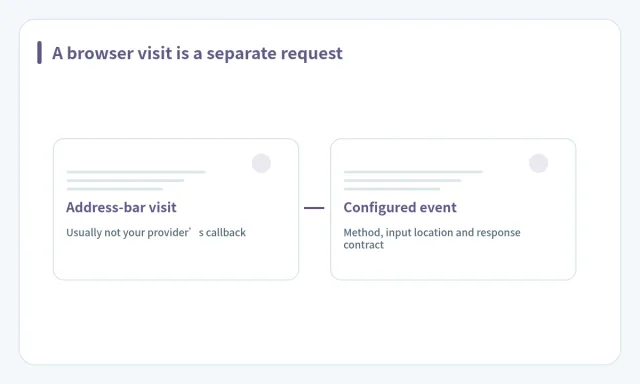
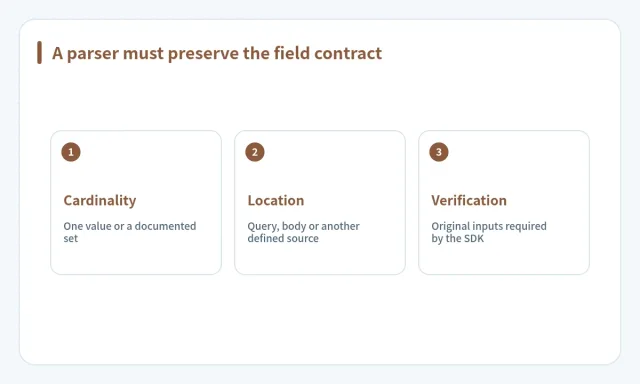
A webhook can reach a server while the application extracts an empty body. Compare the request Content-Type with the route’s parser before concluding that the sender supplied no content.
Inspect the contract before changing the parser
Start with the documentation for the particular product and event. Content-Type identifies the representation of the request content. JSON and form-encoded input require appropriate handling; an example from a different API may be the wrong starting point. Twilio’s incoming-message documentation, for example, specifies form-encoded requests. That is a product-specific example, not a rule for every messaging webhook.
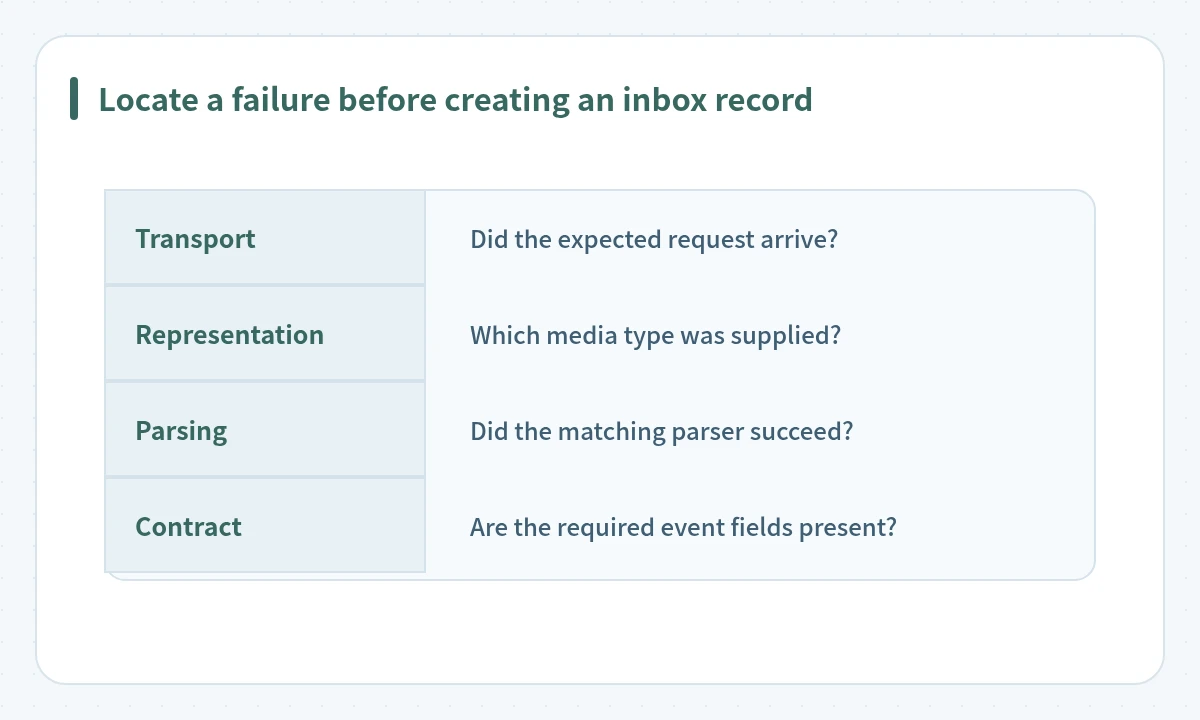
Collect enough metadata to locate the failure: method, media type, request size, parser outcome and a correlation identifier. Keep message bodies and live verification codes out of routine access logs. If a raw sample is necessary, use an authorised test containing no sensitive information in a controlled environment, with a clear retention limit.
Distinguish missing input from missing fields
| Observation | Next question |
|---|---|
| No body bytes | Were parameters expected in the query instead? |
| Bytes present, parsing failed | Does the parser match the actual format? |
| Parsing succeeded, expected field absent | Is that field defined for this event and at this location? |
| Field explicitly contains an empty string | Does the product permit this representation? |
These outcomes should not all create the same blank inbox entry. Define which fields are mandatory and which may legitimately be absent. A malformed request needs a recognisable error path, while optional fields need documented defaults. Choose the response according to the provider’s callback contract rather than returning success merely to quiet the logs.
For deployment, check middleware order as well as parser settings. An authentication layer that redirects an unauthenticated callback to an HTML sign-in screen can produce a different failure from an unsupported media type. Keep those outcomes identifiable so an operator can send the issue to the right maintainer without exposing message content.
Preserve what signature verification needs
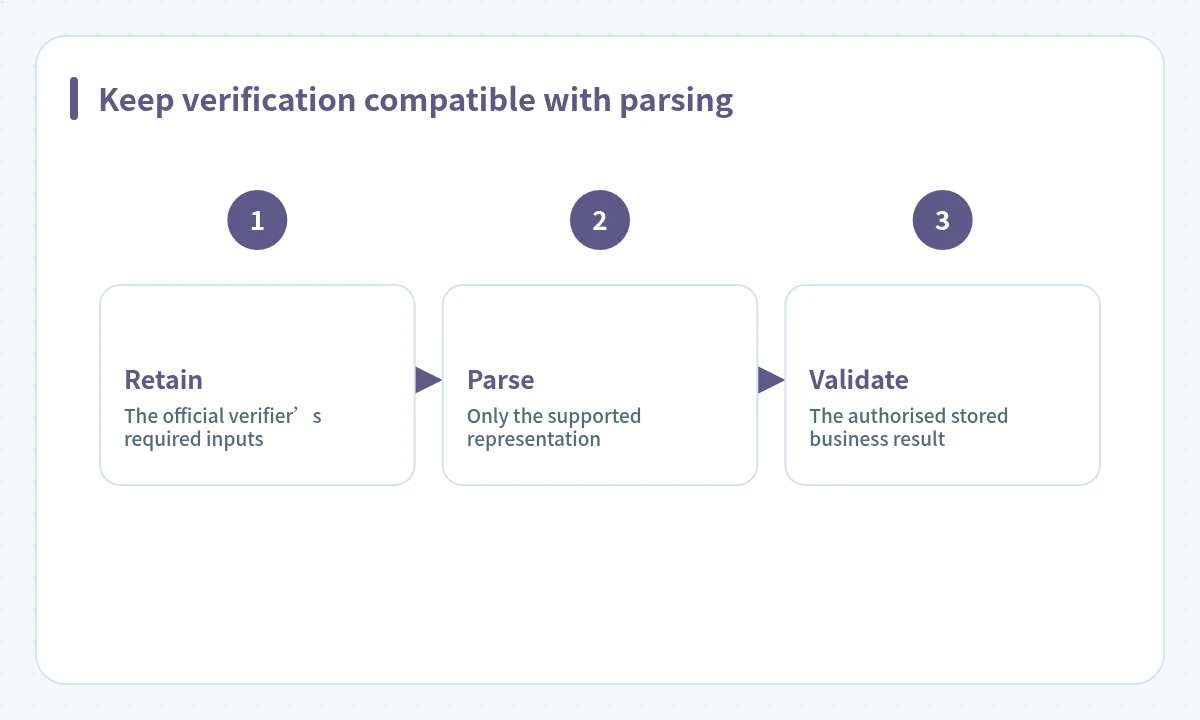
Changing middleware can affect more than field access. Check whether it consumes the input stream and how the framework retains original data for later use. Follow the official verification library’s requirements for raw bytes, parameters and the externally visible URL. Do not disable verification because a newly parsed object seems easier to work with.
A useful regression set contains a valid supported request, malformed input, a missing required field and an unsupported media type. Include both form and JSON samples if the endpoint intentionally supports both. If it supports only one, the other should exercise the rejection path rather than trigger increasingly permissive guessing.
Check the stored business record as well as the HTTP response. Confirm that the right account and recipient are attached, no blank record was created on failure, and logs contain only the approved metadata. Record the parser configuration and event version used for acceptance. That gives the next maintainer a precise test to repeat when a framework upgrade changes request handling.
References: MDN: Content-Type; Twilio: incoming-message request format.