
A badge or trophy does not answer whether a messaging product fits your task. When evaluating a simple virtual number or its supplier, identify what the award, certificate or membership actually recognises. Subject, scope and date are separate from inventory, compatibility and support responsibility.
Find a record outside the promotional claim
Look for the issuing body’s full name and its official information or verification route. Match the named recipient with the supplier or product being discussed. A similar brand name is not evidence that the contract party and award recipient are the same entity.
If the supplier uses a trading name, ask how it relates to the named organisation. Keep the explanation with the claim rather than silently treating every associated company as covered. A logo shared across several sites cannot resolve that relationship on its own.
A useful note records the precise claim and the corresponding source. Avoid copying a broad statement such as industry approved when the underlying record names only an event prize or a specific product team.
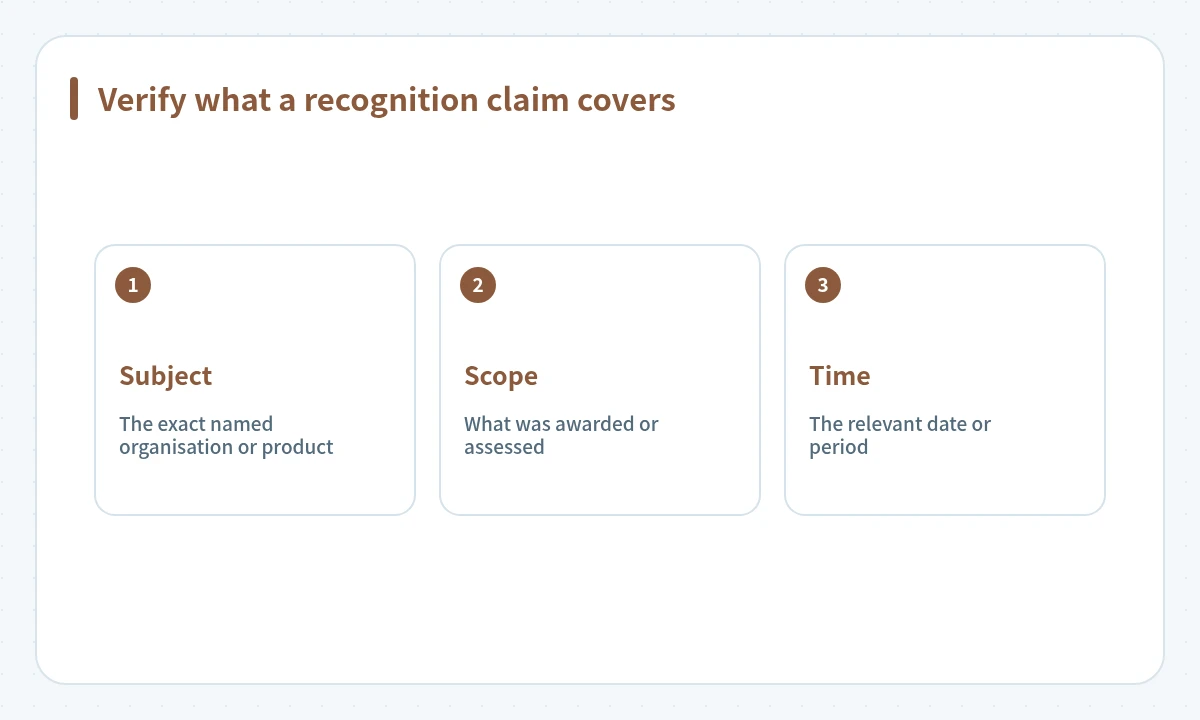
Read the scope and time together
An award for a past event is not a perpetual service authorisation. A certificate concerning one product or defined process need not cover every service the supplier offers. Review any stated reference, scope and applicable period against the actual wording used in the sales material.
Membership, recognition and technical certification can answer different questions. Do not convert one into another because their images appear together. Ask which independent body made which statement, about whom, and within what boundary.
If the record has an effective period, inspect the current claim against it. If it is a one-time award, preserve the event date instead of implying a current ongoing assessment. Dates help the reader understand the claim without automatically dismissing historic recognition.
Treat an unavailable result as unresolved
A public search may be incomplete, or the name may differ. Failure to find a record is not automatic proof of fraud. It also is not confirmation. Ask for the original explanation and a verified issuer contact route where appropriate.
Record what remains unknown, including an unconfirmed relationship or unclear scope. Do not manufacture a reassuring conclusion to finish a supplier comparison table. A limited confirmed statement is more useful than a broad reliability label unsupported by the evidence.
Keep the assessment version with its date. If a supplier later changes a claim or product name, revisit the relevant relationship rather than copying the old conclusion into a new review. An earlier accurate finding can have a narrower scope than the current proposal.
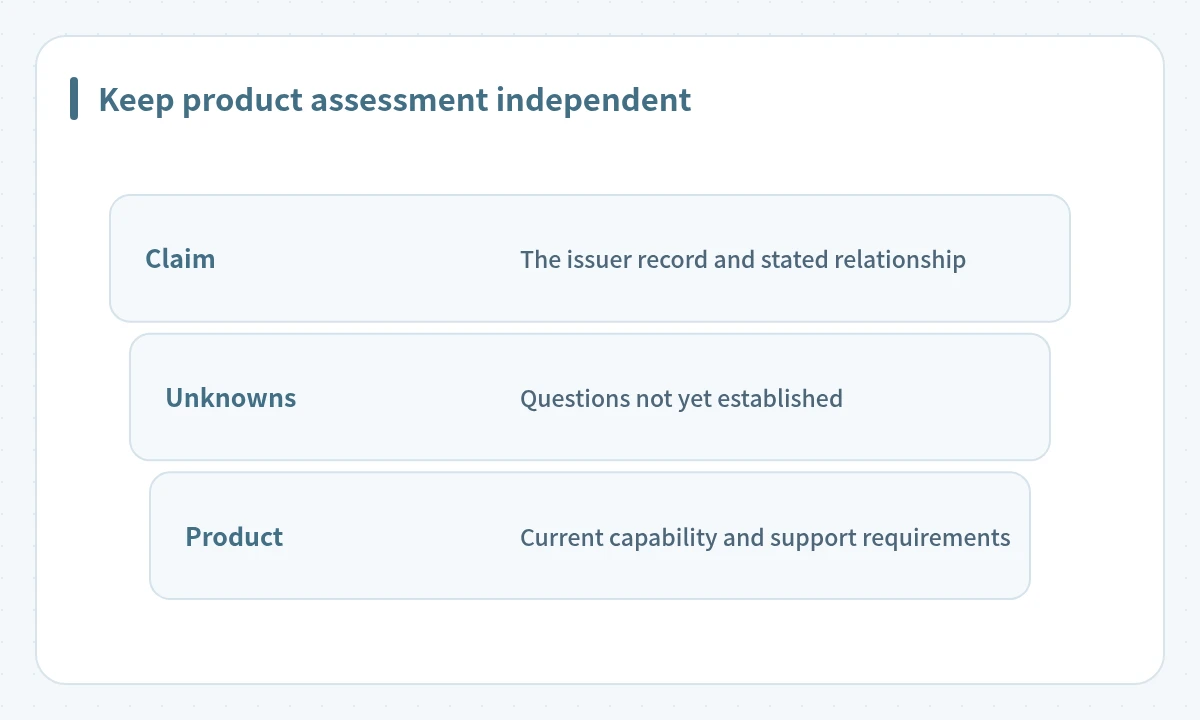
Assess the actual product independently
Even a valid award does not establish current number availability, message acceptance or support response. Those need the product’s own documentation and suitable authorised checks. A service catalogue is also different from a resource already allocated to your account.
Keep commercial terms, capability questions and support ownership separate from recognition claims. If a test is appropriate, define its resource, message type and conditions. Do not present a supplier badge as a substitute for that result.
In a purchasing note, distinguish the verified subject and recognition from unresolved product requirements. The decision-maker should be able to see why a claim matters and what it does not answer. That approach avoids both unfair accusations and misplaced confidence, while keeping the assessment tied to the task the messaging service is actually expected to perform.
