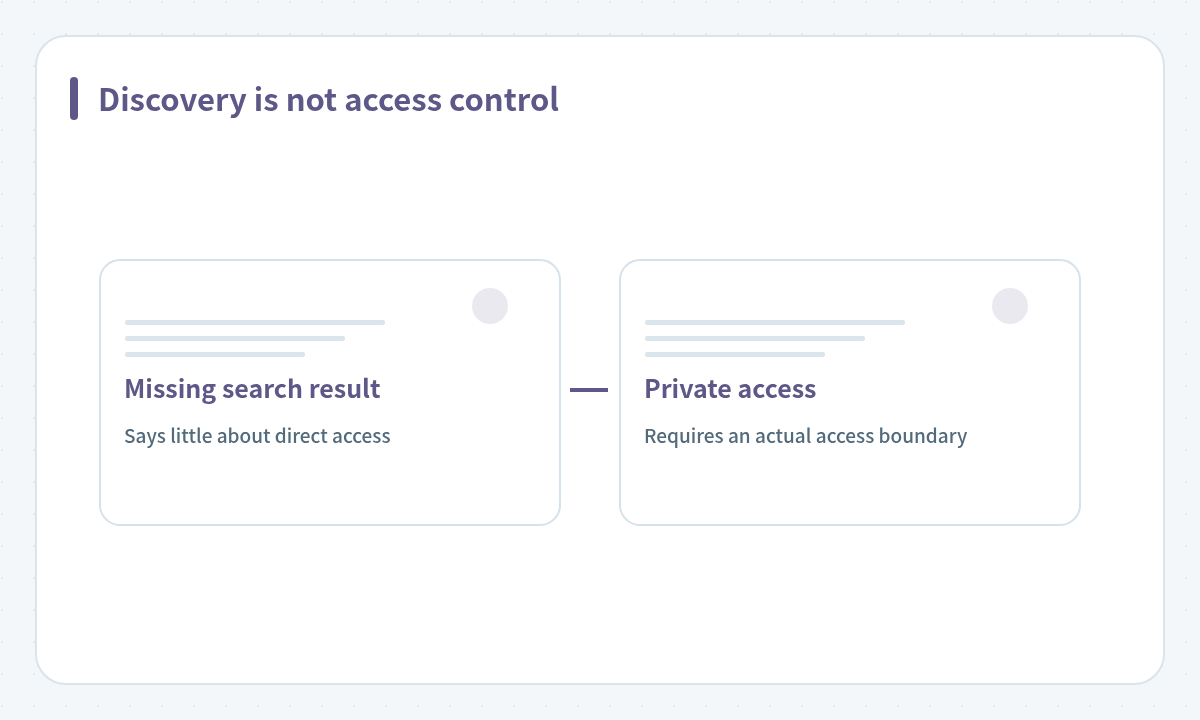
Search visibility concerns discovery. Message privacy depends on actual access, including what a person with the address can read and what authentication is required.
Search is not a complete access test
Search results are not a live inventory of every available page. A page may be new, excluded from indexing or simply absent from the results you checked. None of those observations establishes that visitors need individual permission to read it.
The reverse distinction matters too: an old search result is not proof that a page remains accessible in the same way today. A title or snippet can describe an earlier state. Use the service's current access information to understand the intended audience, without treating search results as an authorisation system.
Do not search for a live code, a full private message or another person's information to test visibility. That would move sensitive content into an unrelated system without answering the core question. You can assess the documented access model without submitting the message itself to a search box.
Robots instructions do not lock a page
Google Search Central explains that robots.txt instructions concern crawler behaviour and are not an enforceable access barrier. Its guidance points to protected access for material that needs to remain private. A page telling search engines not to crawl or index it should therefore not be treated as a private inbox merely for that reason.
This distinction is useful even if you are not configuring a website. If a service describes an inbox as “hidden from search,” ask what a person with its address can do and whether the actual contents require authenticated, authorised access. A difficult-to-guess address and an access-controlled account are different arrangements.
Avoid trying to discover other people's hidden pages as part of this check. The task is to understand the product offered to you and protect your own authorised work, not to investigate records you have no reason to read.
Public message access does not grant account authority
If an inbox is public, another visitor might see the same displayed text. That does not make either visitor the owner of the business account mentioned by a message. Receiving or seeing a code is not permission to complete an account action that you did not initiate and are not authorised to perform.
For a demonstration, use purpose-made, non-sensitive content and keep it separate from real authentication. Do not describe a public display as secure merely because a search did not find the sample. Explain who can reach the inbox through the service itself and what information is deliberately suitable for that audience.
If you discover your own sensitive content is exposed
Stop placing further sensitive material into that environment. Use the service's known support and account controls to understand the exposure and available corrective actions. Where another business account is affected, use that business's normal security or recovery process as well; changing a search setting cannot revoke an account session elsewhere.
Keep an incident note limited to the relevant address, time and type of content, with the private values removed. Do not spread screenshots containing live codes while asking people whether they can see the page. Removing a page also cannot establish that every previously made copy has disappeared.
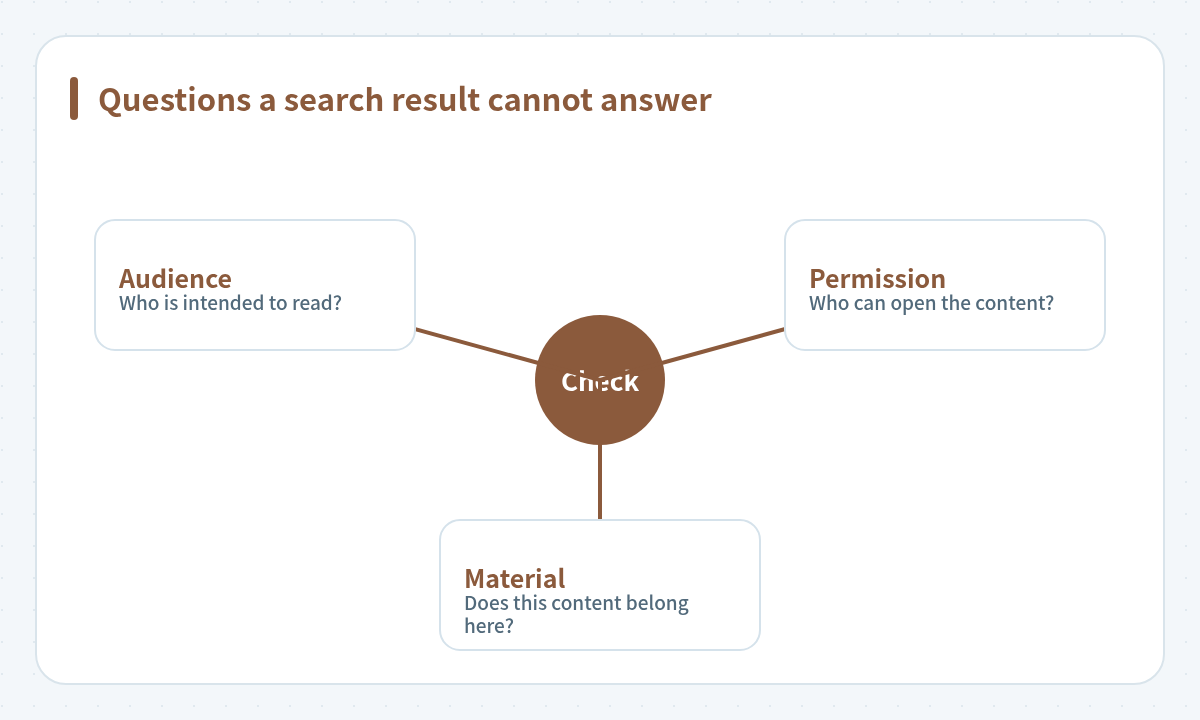
For the crawler distinction, see Google's robots.txt introduction. The practical decision remains about access: who is intended to read the inbox, what prevents somebody else from reading it, and whether the material belongs in that arrangement at all. Being absent from a search result answers none of those questions on its own.