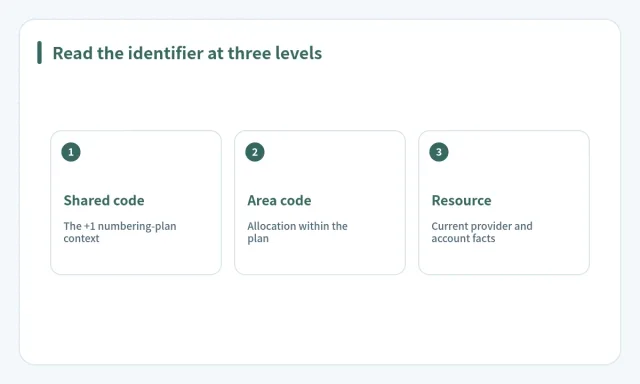
When a field requests a full UK international number, distinguish +44 and the national significant number from the domestic trunk prefix. Check whether the form expects one complete value or separate country and national-number fields.
Do not stack two different representations
A UK domestic presentation can include a leading 0, while the international mobile format places the relevant number after +44. The patterns 07… and +447… illustrate this relationship only; they are not operational contact numbers or evidence that every resource beginning with those digits supports the same SMS functions.
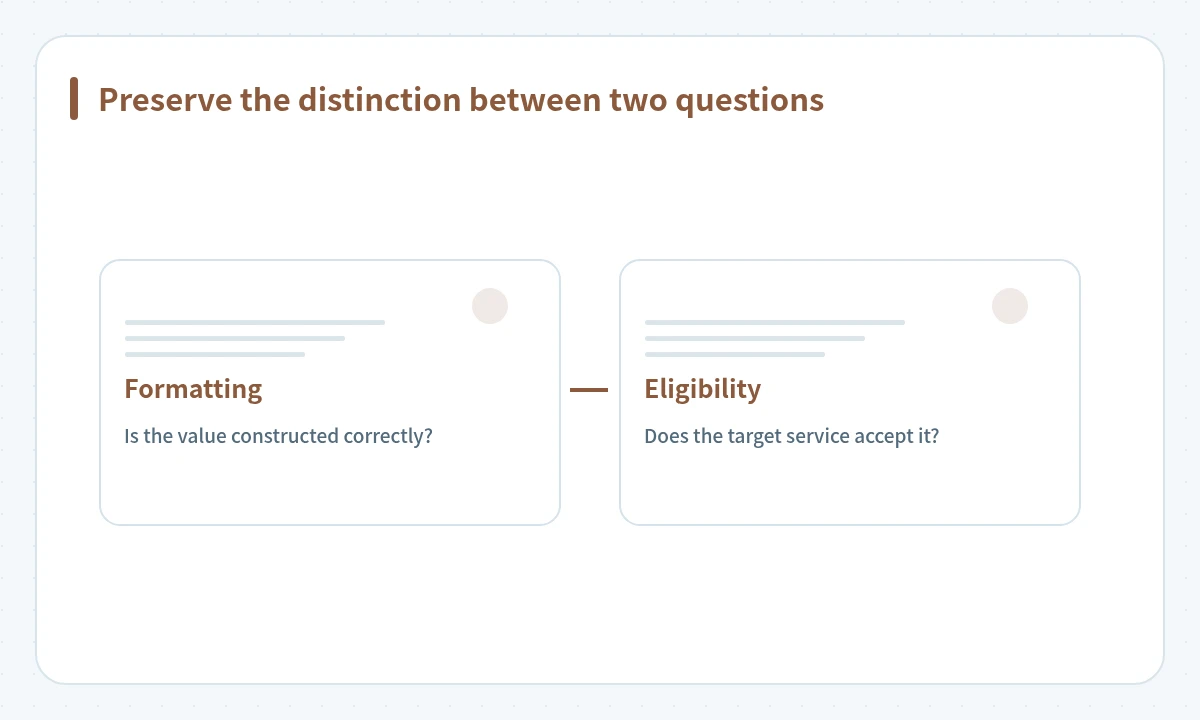
Ofcom’s international-format notice published through ITU provides numbering context, while Google’s libphonenumber metadata documents the relevant parsing prefixes. They do not decide whether an individual verification website accepts a virtual, mobile or other resource type. Keep format and eligibility as separate checks.
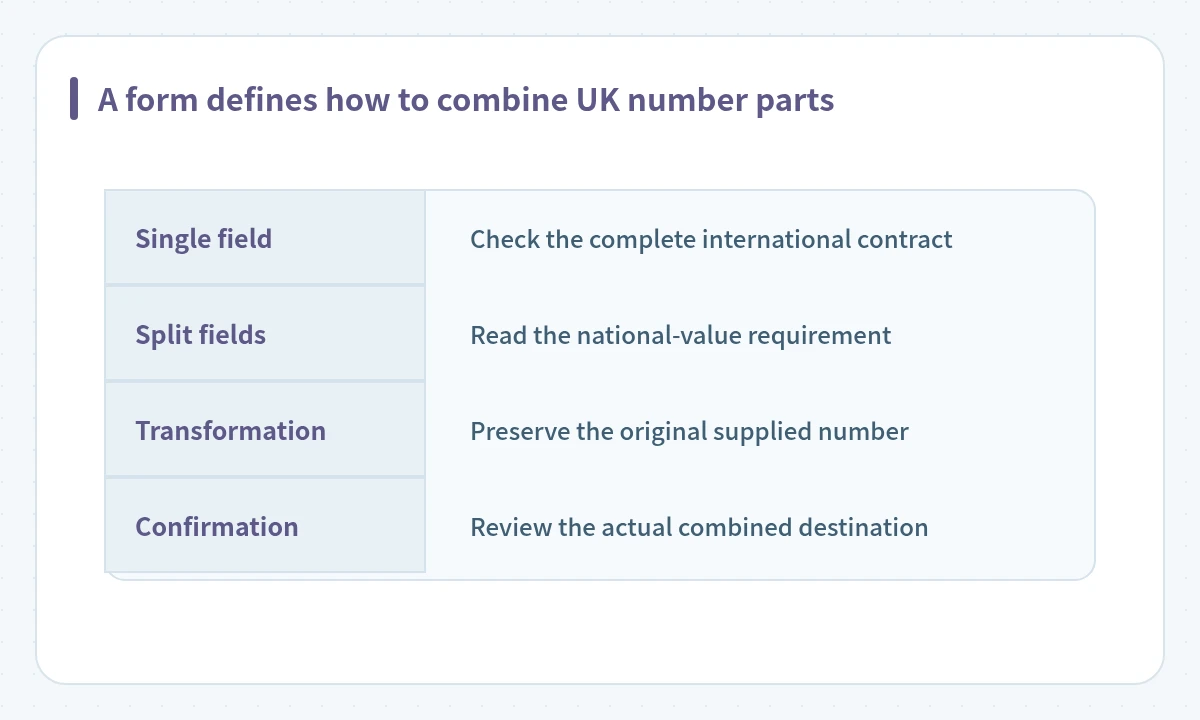
| Form layout | What to read before typing |
|---|---|
| One international-number field | Whether the complete +44 value is required |
| Country selector plus number field | Whether the second field expects domestic or significant digits |
| Automatically formatted entry | What value the form actually confirms |
| Saved browser autofill | Whether it still belongs to the intended resource |
A UK country selector does not guarantee that the form repairs every prefix combination. Some interfaces transform the display, while others preserve the typed value. Follow the field’s documented example instead of testing several variants through repeated live verification requests.
Preserve the supplied resource value
Start from the number given in the authorised provider record and identify its presentation. If it is already international, do not add +44 again. If explanatory punctuation marks a domestic prefix, understand that notation before entering the number; brackets and explanatory labels are not part of the recipient address.
Keep the original value available in a protected internal record where necessary. Perform a deliberate conversion according to the destination’s contract, rather than editing digits until a validation warning disappears. A server-side application should likewise use an appropriate maintained parser instead of a global rule that deletes every leading zero from every country’s numbers.
Changing the country selector after entering the digits also deserves a fresh review. An interface can retain the old field value while changing how it is interpreted. Before sending, confirm the combined destination again rather than assuming the visual selector and saved number have stayed synchronized.
Check the destination after the form accepts it
Review the displayed confirmation and the intended account. Browser autofill may insert an earlier resource while the country selector retains another setting. Matching only the final few digits is not a sufficient check when several resources are in use.
If the target service rejects the resource type, use its permitted alternative rather than supplying an untrue country. If it accepts the request but no message appears, investigate the actual sending and receiving path. That is a different task from resolving a duplicated prefix.
For support, describe the field layout, selected country, supplied format and non-secret error. Use a clearly fictional pattern to explain a formatting defect where possible. There is no need to provide an active verification code, account password or someone else’s full number to establish whether a field combines country and national parts correctly.
References: Google libphonenumber: parsing metadata; ITU bulletin: Ofcom UK international mobile formats (PDF).