
Records missing after an API region change are not necessarily deleted. Compare account, environment and resource scope; a number’s country and a backend storage region describe different things.
Identify what the configuration switch actually changes
A network edge can affect the route into a service, while a processing region may define an isolated resource scope. Providers use these terms differently. Twilio’s regional documentation distinguishes region-specific and globally accessible resources and notes limits on product availability. It does not establish that every messaging feature operates in every region.
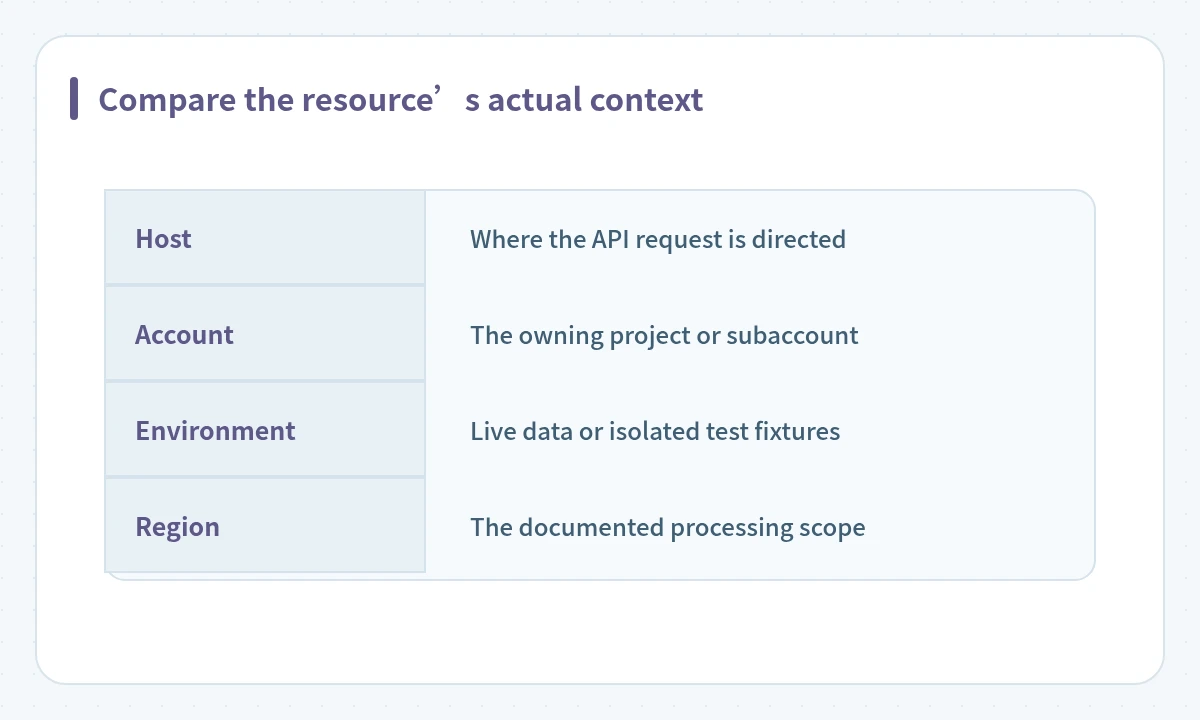
Compare the original request context with the current one: host, SDK settings, account or subaccount, credentials and resource identifier. A console region selector alone is not enough to establish where an API client is sending its requests. Keep the product’s documented resource model beside that comparison.
Investigate an empty result without changing live routing
| Scope item | Question |
|---|---|
| Account or project | Does it own the requested resource? |
| Environment | Are these live records or test fixtures? |
| Processing region | Where was this resource created? |
| Product support | Is the operation available in the target scope? |
A 404 or empty list does not uniquely identify which item is wrong. Check a known record you are authorised to read, with a traceable origin. Randomly changing regions until some data appears makes the result difficult to interpret. If credentials are scoped too, use the provider-supported arrangement rather than copying a secret to unfamiliar hosts.
Restoring a correct read configuration may recover access without moving anything. Do not provision a new paid number or alter incoming routing merely to test a history lookup. A diagnostic request should have a clearly bounded purpose and no unintended effect on actual receiving.
Avoid using the reader’s physical location to infer the backend scope. Travelling or changing a local network does not, by itself, identify where historical API resources were created. Use resource metadata and recorded configuration rather than a country label inferred from the current browser connection.
Treat migration as a separate piece of work
A destination region may require different resources, credentials or settings. Historical records may have their own migration restrictions. Inventory what is shared, what needs rebuilding, what has a supported transfer path and what cannot be moved. A successful lookup in the old scope answers none of those migration questions automatically.
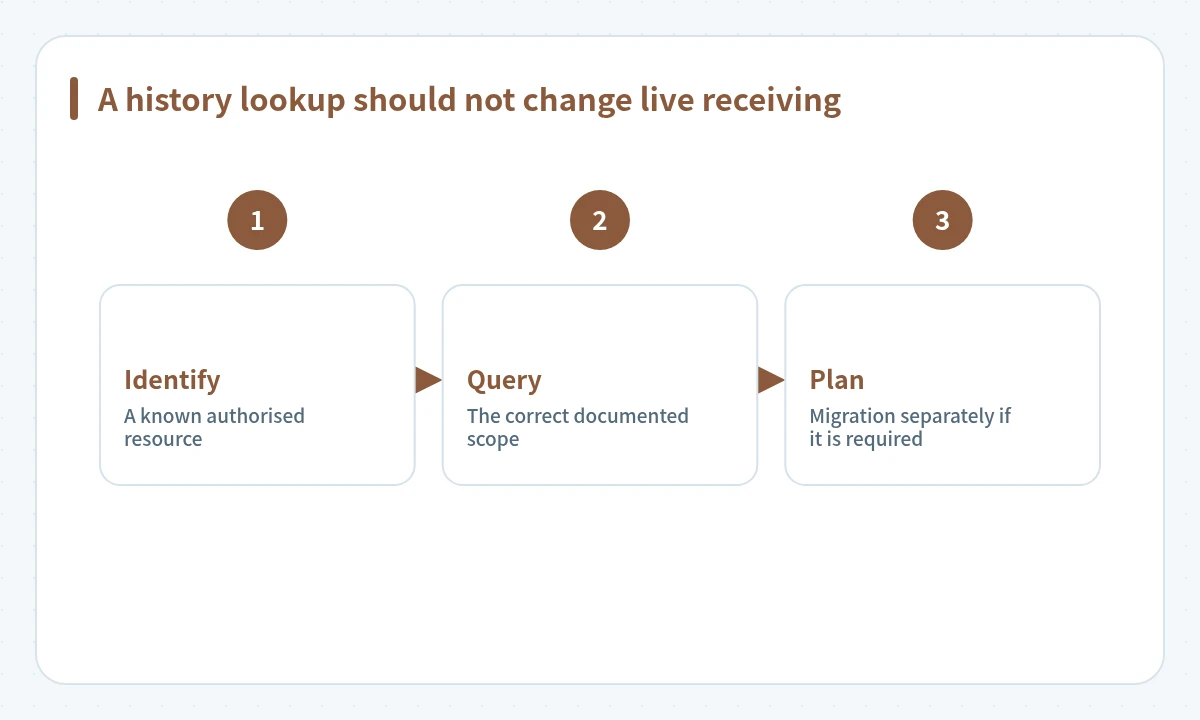
Keep the old and new scopes, the verification resource and the observed result in the change record. State whether the change affects only a client’s queries or actual workload routing. Include the product limitations found during the check rather than describing a region switch as a universal performance improvement.
Where the intended region does not support the required function, retain a confirmed working arrangement and ask the provider about supported options. That keeps a query mismatch from becoming a wider, unverified infrastructure migration while preserving the information needed to plan a later change.
Reference: Twilio: region isolation and resource scope.
