
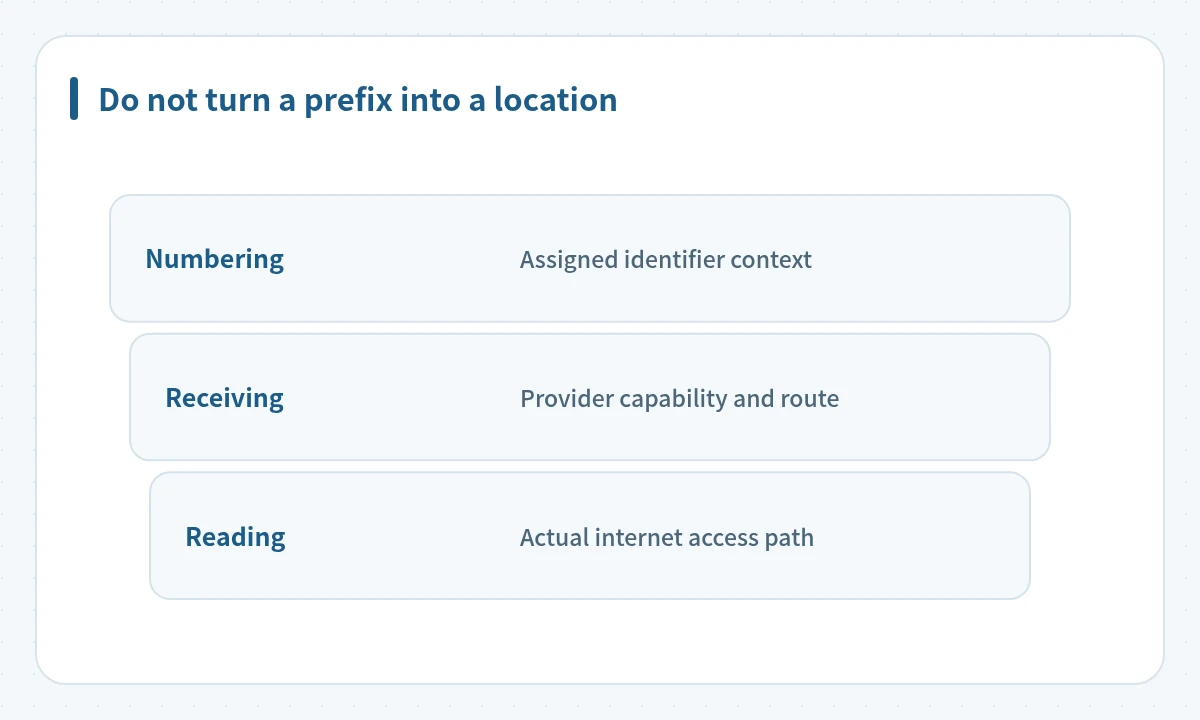
A telephone prefix describes a numbering context, not the reader’s present location. A person can read messages while travelling without changing the receiving number, so the prefix does not establish their location, language or availability.
Distinguish assignment, access and routing
The numbering plan tells you how a number is structured and assigned within a telephone system. The receiving service determines how that resource handles messages. The reader’s internet connection determines how they reach the web interface. Those are related operational facts, but none is a substitute for the others.
For example, a person may retain an existing number after moving or use a hosted service from several devices. This illustrates why a prefix is weak evidence of present location; it is not a claim that every number is portable or accessible from every country. Provider eligibility and access conditions still need to be checked.
Ask for the facts the task needs
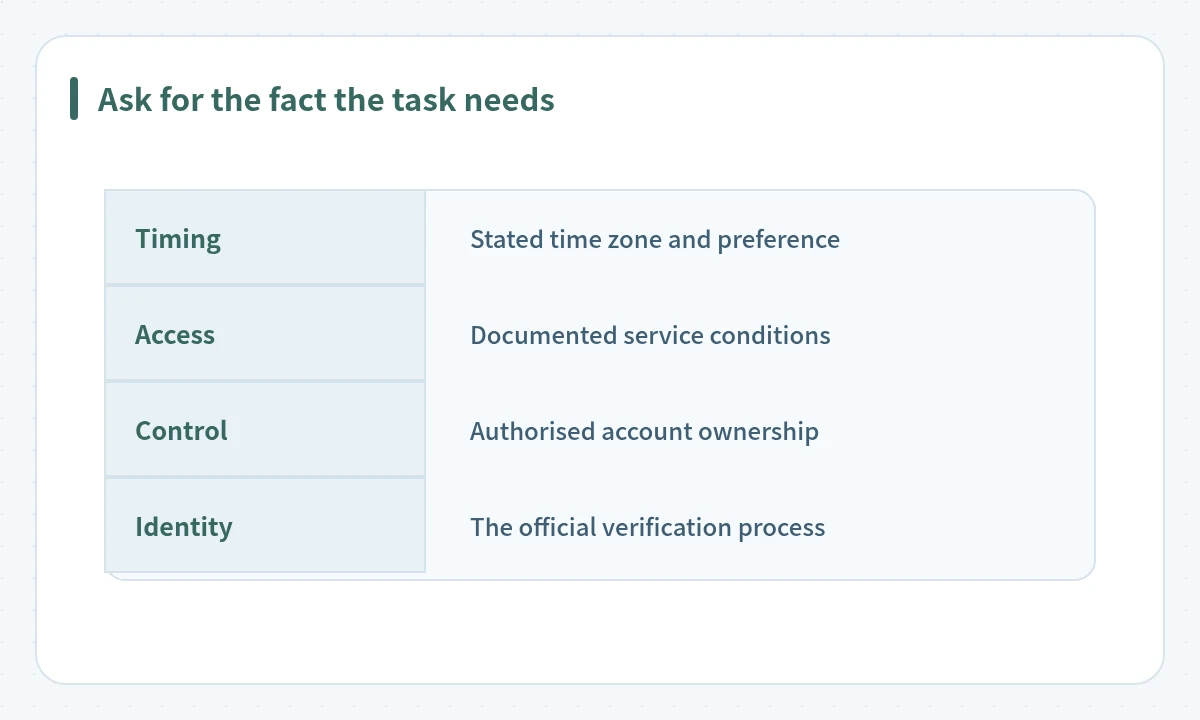
When arranging a service notification, ask for the recipient’s stated language, relevant time zone and preferred contact window where appropriate. You do not need a detailed travel history to schedule an ordinary reminder. Use the minimum information necessary and allow the preference to be updated.
For troubleshooting, ask which resource is receiving, what service is sending and which access path is failing. If geographic restrictions may matter, consult the actual service’s current rules. Do not assume the recipient is in the number’s assigned region and then diagnose a routing failure from that guess.
| Question | Better evidence than the prefix |
|---|---|
| When should a reminder arrive? | The recipient’s stated time zone and preference |
| Which route can receive the message? | The receiving provider’s documented capability |
| Who controls the resource? | The authorised account and ownership process |
| Where can the inbox be accessed? | The service’s actual access conditions |
Keep geography out of identity claims
A familiar country code does not authenticate the sender, prove the reader’s residence or establish eligibility for another service. Similarly, a foreign-looking number does not by itself establish fraud. Follow the target service’s legitimate verification and eligibility process rather than using a prefix as a shortcut.
If a form rejects a number, preserve the exact non-secret error and check the accepted number types and format. Do not change the country selection to an untrue value simply to pass validation. The useful resolution is understanding the requirement and using an authorised supported option.
For reports, label inferred and supplied information separately. “Numbering region” and “recipient’s stated time zone” are clearer fields than a single column called “location.” Where a fact is unknown, leave it unknown instead of converting a prefix into personal data it does not establish.
A stable number can be helpful for continuity, but continuity of the identifier does not guarantee continuity of access, receiving capability or the person responsible for it. Review those conditions directly when the task changes, especially after travel, a provider change or a team handover.
