Number allocation, inbox history and a verification request can expire at different times. Identify what each clock measures before committing a temporary receiving task.
Find the event that starts the clock
A service might define access from allocation, order confirmation or another specified event. Do not substitute the moment you first open the inbox unless the actual terms say that is the start. Reading a record later cannot be assumed to restart the resource's lifetime.
Look for an explicit start and end condition in the product description and current order. If an interface displays a countdown, establish what it is counting down to. It could describe a pending request rather than the entire number arrangement. A familiar clock icon does not define the contract or the receiving capability.
Write down unresolved wording before proceeding. “The number is temporary” does not answer whether an existing request can finish near expiry, whether incoming records remain readable or whether the same number can be kept. Those are questions for the actual provider, not blanks to fill with assumptions from another product.
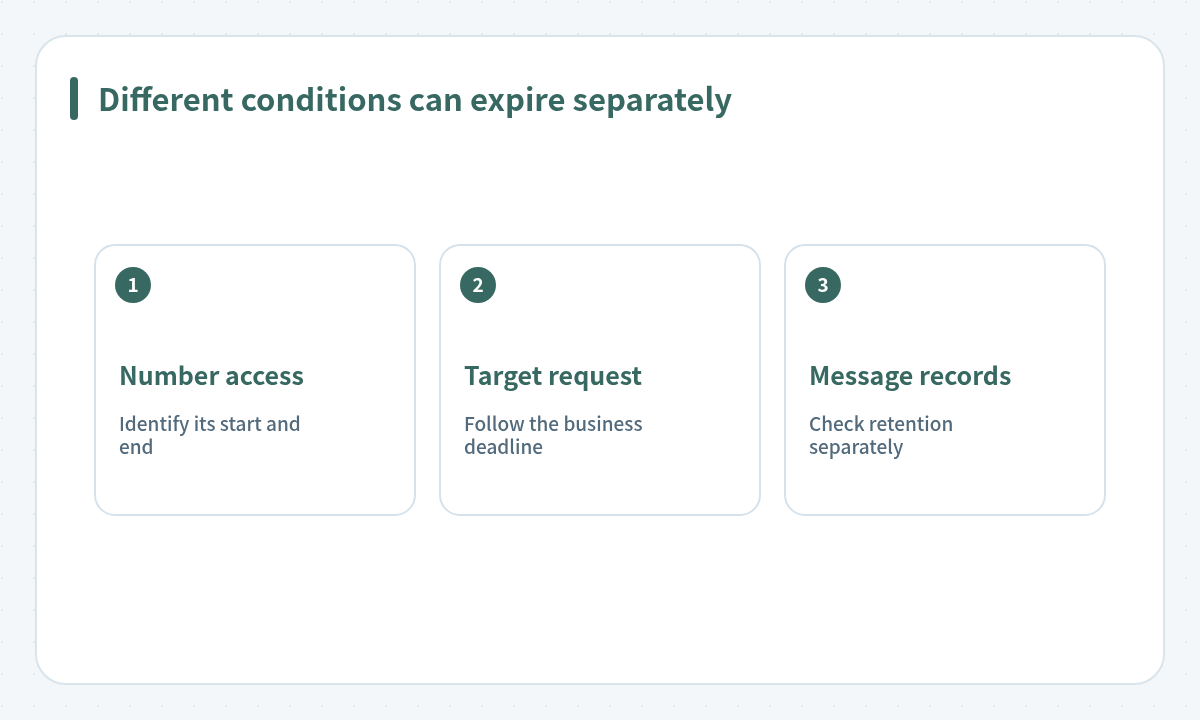
Keep the verification deadline separate
The target business controls the request you are trying to verify. A code can expire even while receiving access remains active. Conversely, a message might still be visible after a number's usable period ends, without giving you any right or ability to receive a replacement.
Follow the target page's instructions about current requests and retry conditions. Do not treat every newly displayed message as a fresh opportunity to complete an earlier action. Check the account and purpose, and use the normal restart process when the request is no longer valid.
If a business requires future verification or recovery through the same number, assess that dependency before choosing temporary access. A clearly short initial action can still create an ongoing account relationship. The useful question is what the complete task requires, not how little time entering the first code appears to take.
Read what expiry changes
Does the end condition remove number use, inbox access, record access, or more than one of them? If the documentation does not distinguish them, ask. A retained screenshot is not continued receiving access, and a visible historical row is not evidence that the resource is still assigned to you.
Also distinguish ending access from stopping any future renewal arrangement. Whether renewal exists, whether it is automatic and how it is cancelled depend on the actual service. Do not assume either that every temporary product renews or that closing a browser cancels an arrangement.
Questions about eligibility, charges, refunds or interrupted access should be answered by the current official terms and order information. This guide cannot supply those policies for an unspecified provider. Keep the relevant confirmation without copying payment credentials or unrelated private messages into a shared note.
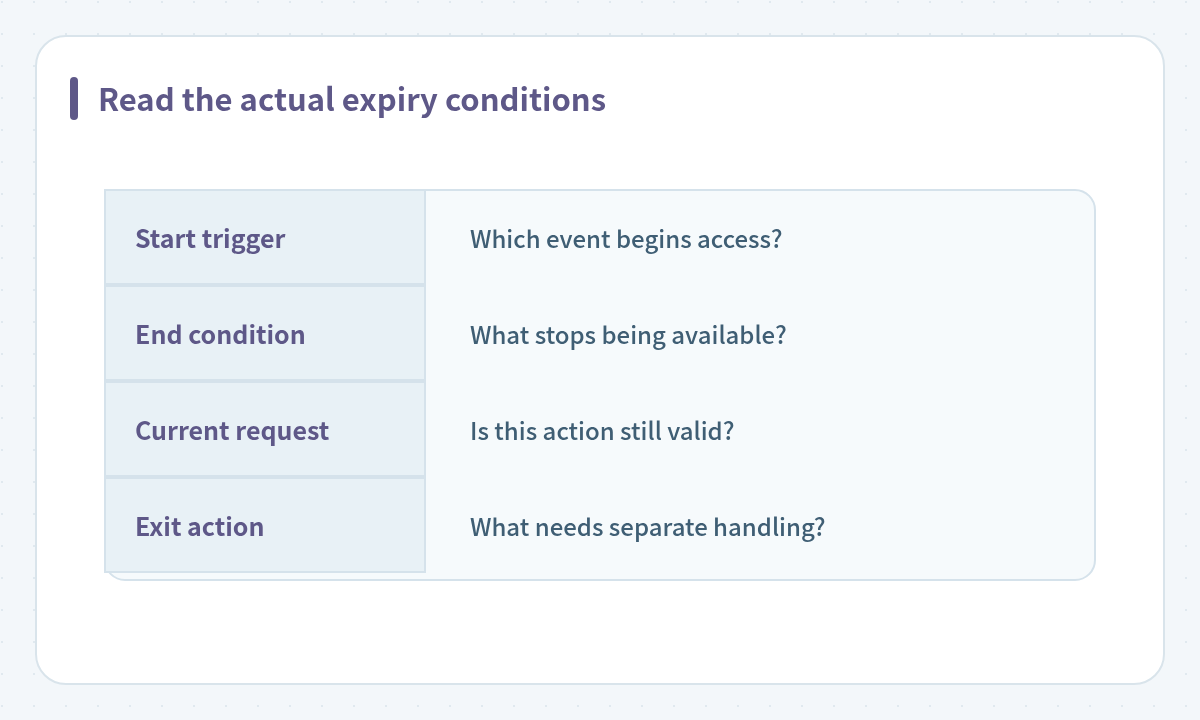
Put the three clocks on separate lines
Record the provider’s resource start and end conditions, the documented history-access condition, and the target request’s current deadline. Preserve the provider’s wording when it is unclear rather than translating every countdown into number lifetime.
A readable old message cannot extend receiving rights, and active number access cannot revive an expired code. Resolve an uncertain condition before starting a task that depends on it.
Check the last usable step before beginning
Prepare the target service and the receiving path before starting a time-limited task. Confirm that you can access the correct inbox and that the intended number is the one entered at the target. Do not use live verification requests simply to learn where buttons are.
If there is a known interruption, an unresolved access problem or a deadline you cannot realistically meet, pause before committing the task. A fresh browser tab cannot extend either service's confirmed conditions. Ask for clarification where the wording is incomplete instead of trying to race an unidentified timer.