An unexpected message does not grant authority over the account it names. Confirm your own receiving context, leave codes unused and use an independently known correction route where appropriate.
Establish what you actually know
Confirm the number and account you are legitimately using. Check whether the message explicitly names another person, refers to an unfamiliar service or merely contains an ambiguous greeting. A familiar sender label is not proof of authenticity, and an unexpected message is not enough to explain why the sender used that number.
There may be several possible causes, such as a mistyped contact detail or an outdated record, but do not present a guess as the established cause. You do not need to discover the previous user's identity to decide not to act on their message.
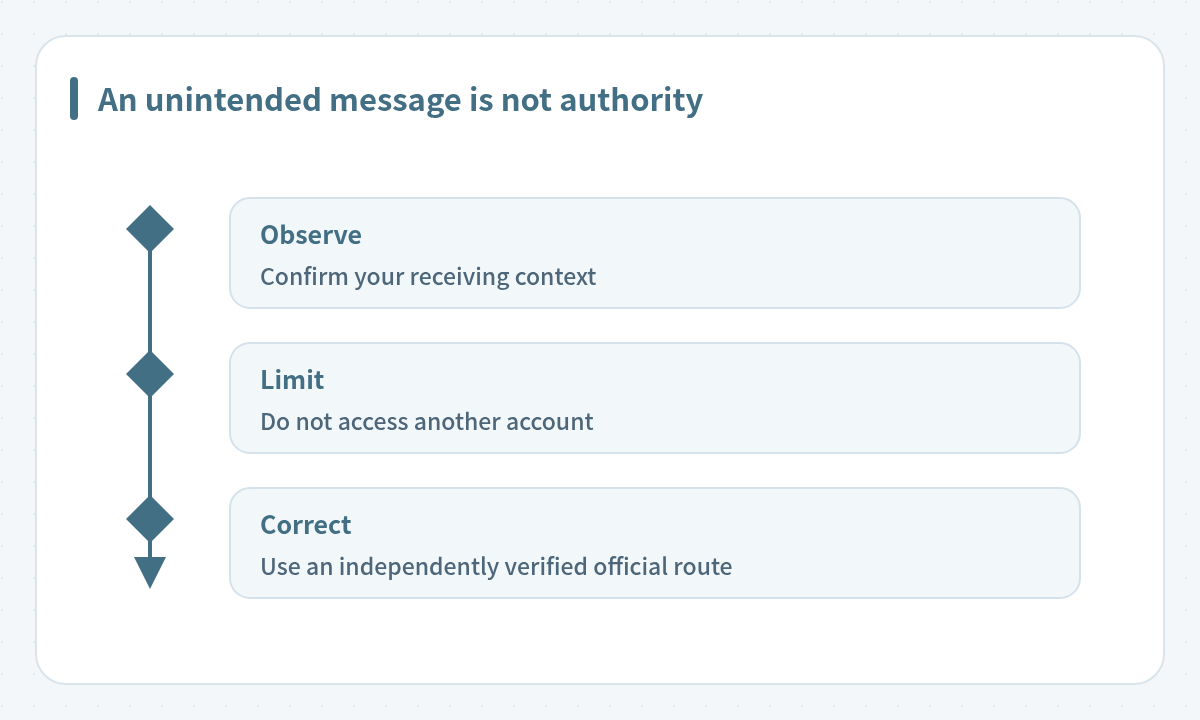
Keep the original for as long as it is genuinely needed for the correction process, subject to the service's rules and your authority. A minimal note of the date, receiving resource and general message type may be enough. Avoid creating screenshots or shared tickets that expose another person's appointment, order or account information unnecessarily.
Do not use the message as an account access invitation
Do not enter a code, follow a password-reset link or attempt to sign in to find out who the message belongs to. Even if the resource is currently allocated to you, that does not establish authority over a separate business account associated with the number.
Also avoid replying with personal information to an unfamiliar sender. A reply could disclose more than is needed, and a web receiving service may not support replies at all. If a known organisation needs a correction, find its official contact route independently rather than relying only on the message's embedded link or contact instruction.
The useful request is limited: explain that you are receiving notices not intended for you and ask for the appropriate contact-detail correction process. Do not request disclosure of the other account's owner or ask support to transfer that account to you. The organisation should handle its own verification and record changes through its established procedures.
Ask for correction, not disclosure
The request can simply explain that notices not intended for you are arriving and ask for the organisation’s contact-detail correction process. It should not ask who owns the account or request that it be transferred.
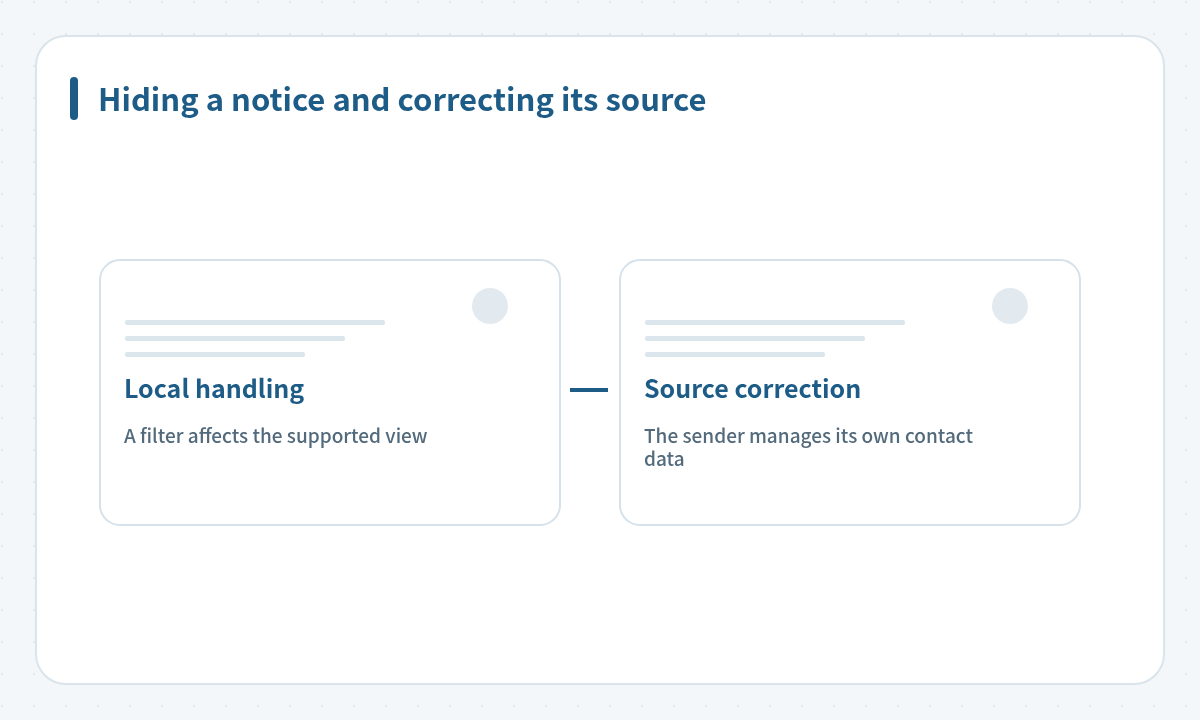
A local filter may reduce what appears without correcting the source. Keep that result separate, and report repeated traffic with minimal non-sensitive references rather than publishing another person’s messages.
Separate nuisance handling from the source correction
If the inbox offers a supported filter or block, it may reduce what you see, but read its exact effect. Hiding a message locally does not prove that the originating organisation corrected its records or stopped sending. A filter could also hide a future message that you legitimately need, so choose scope deliberately.
For repeated inappropriate traffic, use the receiving provider's documented reporting route where available. Give only the necessary non-sensitive references and describe the pattern you observed. Do not publish the number together with full private messages as a way of asking strangers to identify the sender.
If a message appears to concern an immediate real-world issue, the presence of the SMS still does not establish that you are its intended recipient. Use independently verified official channels appropriate to the situation; do not make decisions about another person's account from a short notification alone.
After a correction request, judge the result by what the responsible organisation confirms and what you subsequently observe. Do not promise that a number change, block or deletion will instantly remove every external association. Each system controls its own records.