
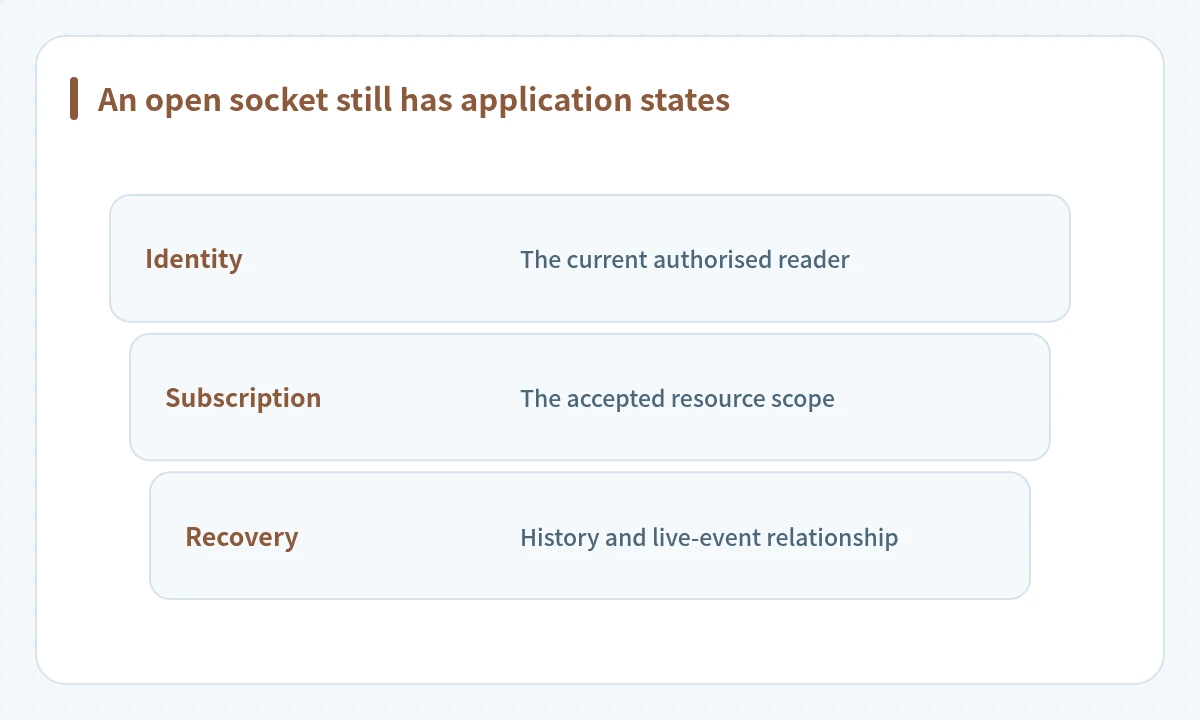
An open WebSocket does not establish that an inbox has subscribed to the correct resource. Check transport, authentication, subscription acknowledgement and recovery as separate application states.
Name the state the connection indicator describes
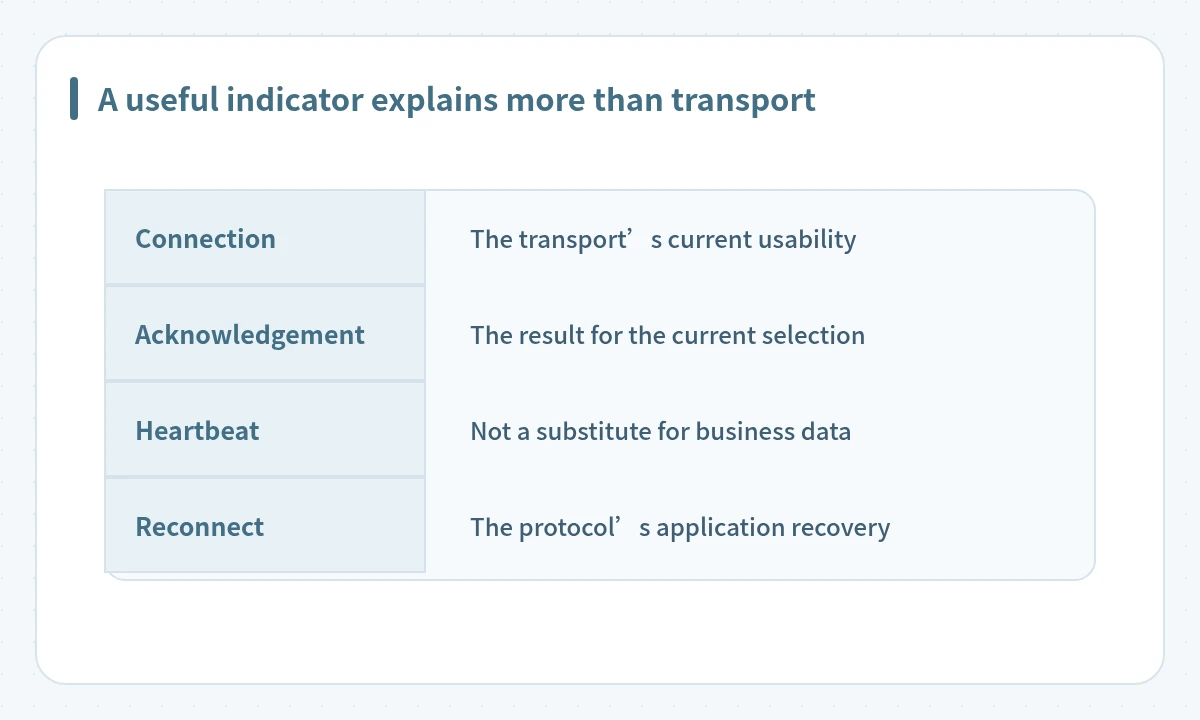
A convenient virtual number interface can show a live connection while its account or number subscription is still being negotiated. MDN documents the WebSocket connection states. The application's own protocol determines how authentication and subscription are confirmed, so transport readiness should not silently stand for business readiness.
Inspect whether the subscription request was sent and what resource the response actually names. A single online badge hides useful diagnostic distinctions. Missing new events should not be attributed immediately to a sender when the receiving page has not established its own subscription result.
Associate acknowledgement with the current request
Use the protocol's supported request relationship to identify a pending, accepted or rejected subscription. Rapidly changing the selected number can leave an earlier acknowledgement arriving late. That older result must not replace the state of the current selection or put the previous number's events into the new view.
- Check whether the transport is usable.
- Confirm the current identity and accepted subscription scope.
- Inspect the documented recovery state for the disconnected interval.
After reconnecting, follow the protocol's rules for renewing authentication and subscriptions. Do not assume application state from the old connection survives automatically. Keep long-lived credentials out of publicly recorded URLs and use the supported authentication design.
A heartbeat can help observe a transport, but it does not show that the selected resource has a new record or that a verification task succeeded. The interface should distinguish a usable connection, a pending subscription and a genuinely quiet subscribed resource.
Where history and live events use separate paths, verify their relationship too. A successful subscription can leave an earlier interval unresolved. Keep the synchronisation state explicit instead of treating the first live event as proof that every previous message has already reached the list.
Check how a subscription is replaced or cancelled when the selected resource changes. The old connection may remain temporarily alive under the design, but its events need an explicit destination rule. Verify that an acknowledgement for the new resource is not confused with a transport reconnect for the previous one. These relationships make the state display useful during rapid interaction rather than only after the page has been left untouched for a while.
Rehearse failures in the actual interface
Use an isolated environment with harmless identifiable records to test authentication failure, a rejected subscription, resource switching and reconnection. Check both the state display and which events appear. No private event should cross into an unrelated account or selection during the transitions.
Keep a limited subscription reference, connection phase and error category in diagnostics. Provide a concrete next action when synchronisation remains incomplete. A green transport indicator is useful within its scope; a clear application state is what lets a user understand whether the particular inbox is actually ready to show the work they are waiting for.
