
A webhook response of 410 calls for an endpoint investigation before another blind retry. Establish whether the configured resource has been deliberately retired and use the provider's actual delivery contract to plan recovery.
Identify what is gone
A simple temporary text number integration can involve a callback endpoint, an account and the receiving number itself. An HTTP result for one URL does not establish the state of all three. RFC 9110 describes Gone in terms of a target resource that is no longer available and is likely to remain so.
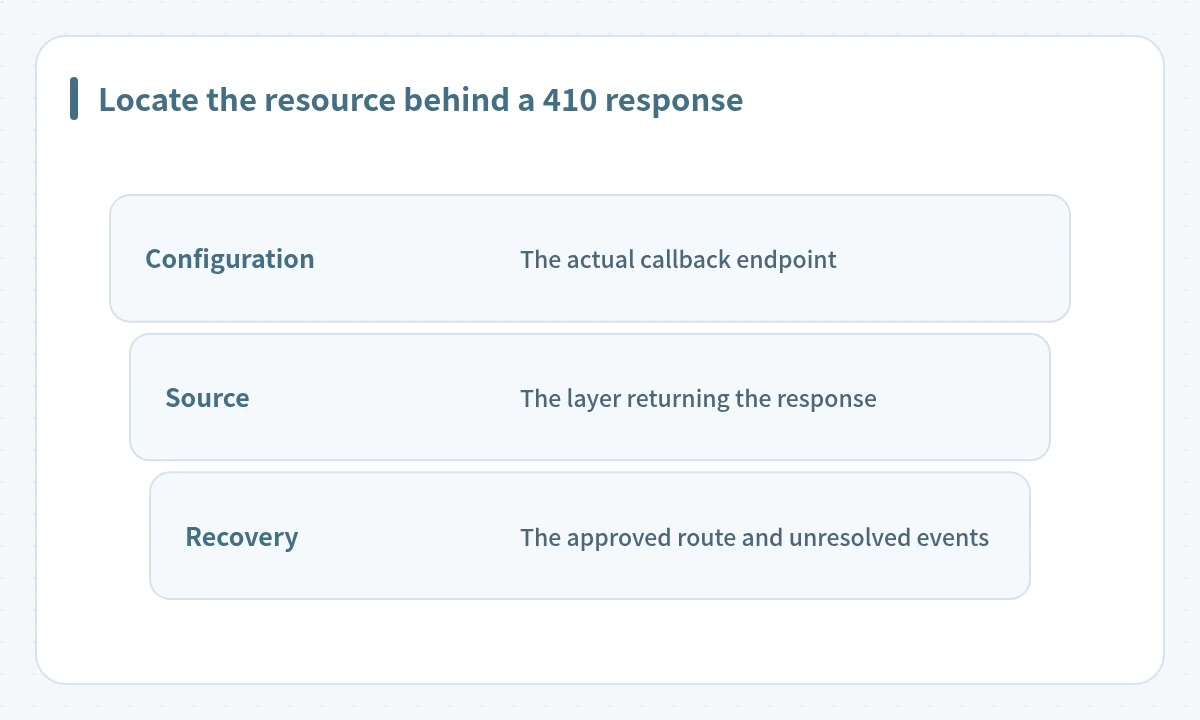
Locate the component producing the response: the application, gateway or another intermediary. Check the exact path and deployed configuration. A healthy public home page does not prove that the separate endpoint saved in the provider's settings still exists or serves the intended protocol.
Find the currently approved receiving route
If the integration moved, confirm the replacement endpoint and authentication requirements through the supported change record and provider configuration process. Do not guess a new path from an old example or forward callbacks to an unrelated page merely because it returns a successful status.
| Evidence | Question |
|---|---|
| Active configuration | Which endpoint is actually in use? |
| Response source | Which layer reports unavailability? |
| Migration record | Is there an approved replacement? |
| Delivery contract | What happens after this failure? |
HTTP semantics and provider retry policy are separate references. The standard does not tell you a particular service's attempt count or recovery interface. Read that service's documentation before assuming that indefinite repeats will restore delivery or that no further attempts can occur.
Preserve the original event relationship
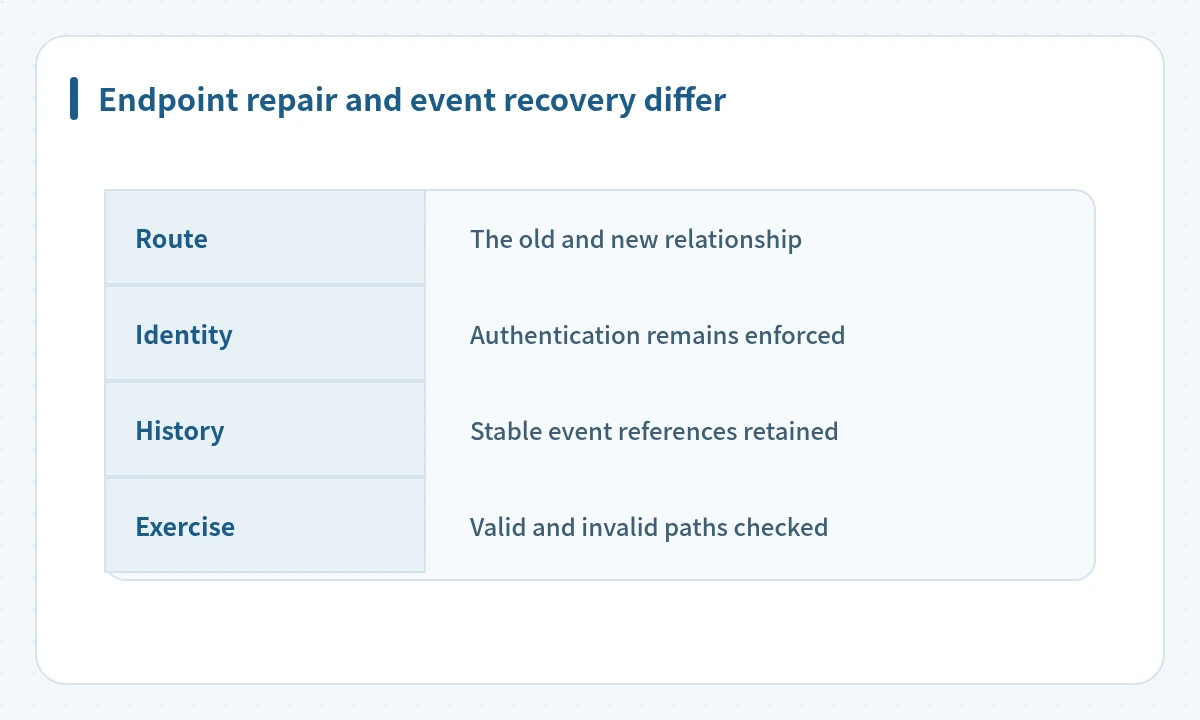
Establish which events were acknowledged and which remain unresolved. Use the supported lookup or redelivery mechanism and keep their stable identities. Restoring an endpoint should not cause the same business effect to be applied twice because a new local task was created for every failed attempt.
Do not erase the failure history simply because a later test works. An endpoint repair and completion of the earlier pending events are different outcomes. Keep a limited investigation record that explains both, especially if several configurations were active during the transition.
Check whether the configured address belongs to the intended environment. A test endpoint can be deliberately retired while the production receiver remains active elsewhere. Record that distinction before asking a provider to redeliver events. The replacement route must match the event’s account and environment; copying a successful address from another integration can produce a more serious resource mismatch than the original visible failure.
Test retirement and recovery deliberately
In an authorised environment, exercise the old endpoint, the approved replacement and an invalid source. Confirm that authentication remains enforced and that a request cannot receive success just by bypassing the intended routing. Monitor continued calls to the obsolete address rather than observing only the replacement's healthy traffic.
Keep paths, times and event references limited to the diagnostic need. Update credentials through their formal management process, not a public issue discussion. Close the incident with an explicit account of the active configuration and remaining work, so a successful sample does not conceal an unexplained backlog.
