
Unexpected amp text in a webhook parameter name can come from copying an HTML-escaped address into a field that expects a raw URL. Compare the saved configuration with the actual request before deleting matching text from every parameter.
Trace the address through its representations
A no sim temporary sms number integration can expose configuration through a web interface while receiving callbacks through a separate HTTP endpoint. The page's visible text, its link attribute and the URL saved by the provider are different observation points. Establish which one supplied the address you copied.
HTML character references belong to an HTML interpretation context. They are not a general substitute for URL value encoding. If an escaped separator is retained literally in a raw configuration value, the receiver can see a different query field name from the one the application expects. Inspect a harmless request at the actual handler to confirm the symptom.
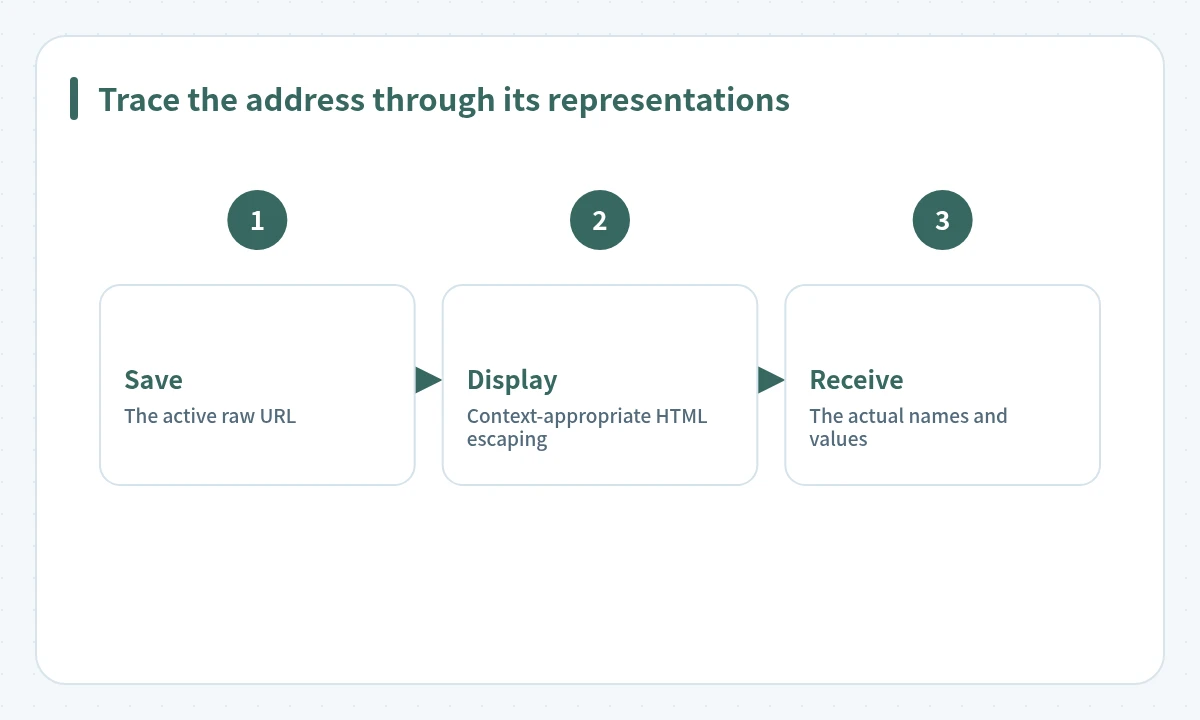
Correct the transformation boundary
Identify which setting accepts a raw URL and which output needs HTML attribute escaping. Use the framework's supported mechanisms at each boundary. A correct page display does not prove that a copied configuration has the same underlying value, so check what the provider actually saved after the edit.
| Observation | What to inspect |
|---|---|
| Configuration | The active raw address |
| Page link | Its display and attribute context |
| Incoming query | The received names and values |
| Signature | The protocol-defined verification input |
Do not repeatedly decode every parameter until a desired result appears. A legitimate value can itself contain punctuation or text resembling an encoding. Global replacement can repair one separator while changing another field's meaning. Fix the source that introduced the wrong representation and preserve a limited configuration reference for investigation.
Keep authentication intact after the change
If the callback's signature includes the receiving URL or query, recheck the precise input under the provider's specification. A parameter becoming readable is not a reason to disable verification. A public configuration identifier also cannot establish which account an unauthenticated caller may write to.
Use controlled fixtures for multiple query fields, special characters inside a value, a missing field and an invalid source. Confirm that parsing and source validation both produce their expected results through the real handler rather than approving only a standalone URL parser.
Check address generation wherever the configuration is reused. An editor, a deployment script and an integration export may each serialise the same value. Correcting the displayed field alone can leave a later automation restoring the escaped version. Identify the authoritative configuration source and verify a round trip through its supported save and reload process. This keeps the repair at the representation boundary instead of relying on someone to manually clean the address after every update.
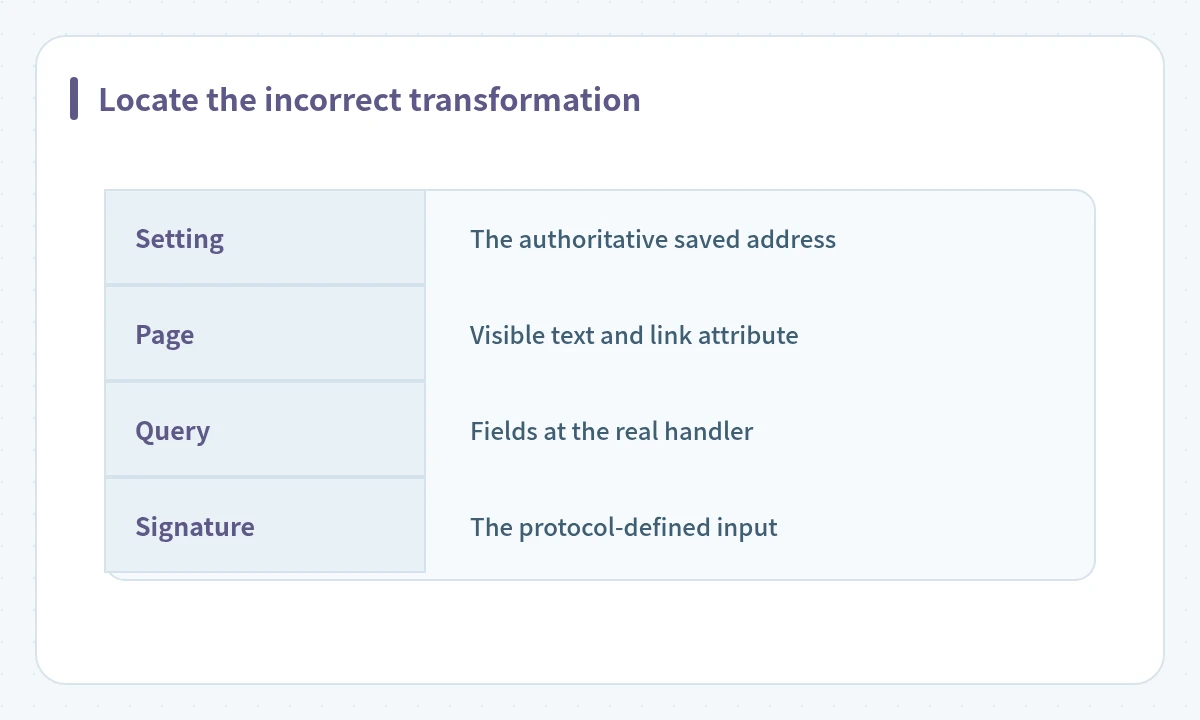
Retire the incorrect configuration deliberately
Update the active provider setting through its supported process and observe whether requests continue reaching the previous address. Keep their references associated with the same integration so operators can explain which configuration produced each result. Avoid leaving two interpretations active indefinitely.
Report only the address details necessary to demonstrate the encoding boundary. Full secrets and capability-bearing links do not belong in a public support thread. Once the corrected request works, verify any unresolved events through the supported lookup or recovery route instead of assuming the configuration repair automatically completed the earlier work.
