
A weather alert needs a stated location, time and reliable source. Describe any business impact separately instead of using weather information alone to promise a delivery or service outcome.
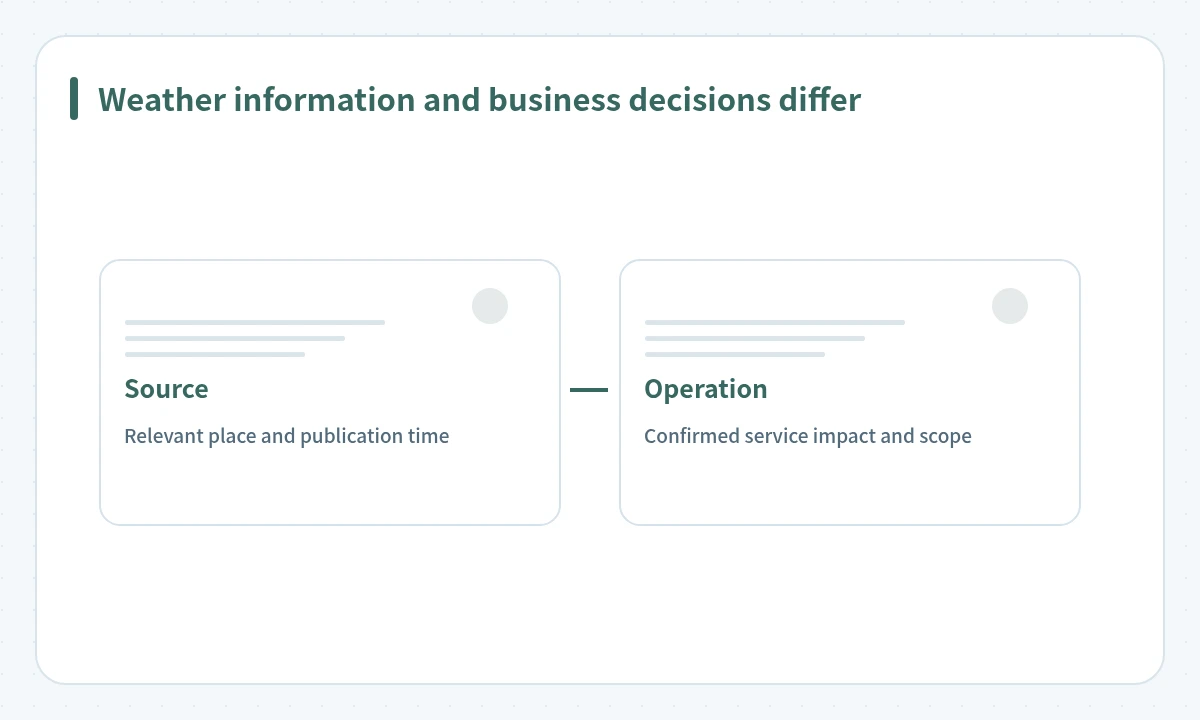
Use a relevant source for the weather fact
Consult the responsible, reliable information source for the location and retain its publication time. A forwarded screenshot can be old or incomplete. Seasonal expectations are also different from a current warning and should not be presented as one.
The message does not need to reproduce a forecast. It can state the confirmed operational change and direct the user to the appropriate current information. Do not assemble independent emergency instructions from fragments of marketing copy.
Keep professional weather or emergency guidance with the responsible official service. A business notification team should not invent a safety conclusion, a guaranteed reopening time or advice beyond its actual role.
Confirm what the business is changing
Rain in a region does not establish that every parcel is delayed or every location is closed. Ask the relevant operation which services, addresses and time windows are affected. Use the known business location rather than inferring it from the phone prefix.
Separate confirmed changes from items still being assessed. If no new delivery slot has been assigned, say where the customer can check current arrangements instead of manufacturing a precise time. The intended next step should remain usable when information changes.
The business record should link the notice to the source version and operational decision. That helps distinguish a change in weather information from a change in fulfilment. Neither should be reduced to an unexplained delayed flag.
Recheck queued notices before release
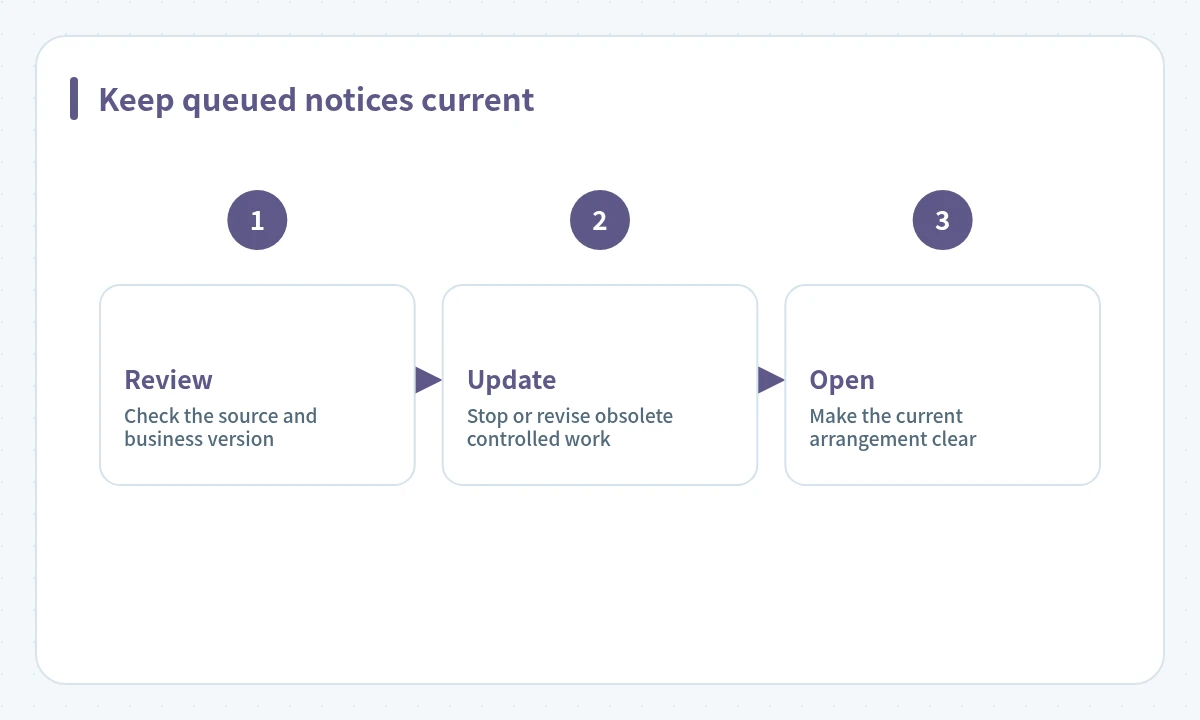
A notice can become outdated while waiting. If the source has changed or an alert has ended, inspect whether the proposed text and operational impact still apply. Moving the send time forward without reviewing the content can publish a stale statement.
For a correction, identify what changed and where the current arrangement is available. Repeating the original notice adds traffic without resolving the discrepancy. A corrected destination page should not leave an old text’s task impossible to interpret.
For organisations serving several places, make the affected-location selection reviewable. A broad audience chosen from telephone prefixes can reach people whose business location is elsewhere. Use the authorised address relationship relevant to the task, without expanding the message into a location-tracking exercise.
Test freshness with a fictional event
In an isolated workflow, create a sample operational change, queue its notice and then update or close the event. Confirm that remaining controlled work is stopped or revised as intended. No actual severe-weather situation needs to be invented for this exercise.
Inspect what the customer sees when opening the earlier message after the update. The current page should make the latest business status clear, with a suitable reference to the earlier change where necessary.
Keep unrelated promotions out of the notice. The reader is trying to understand delivery, opening hours or an appointment, not an opportunistic offer. Retain a short record of the affected scope, information version and confirmed outcome so another operator can maintain the notice accurately. A reliable update process matters more than dramatic wording about the event.
