
A test label in a message does not isolate a test audience. Before a notification workflow is enabled, check the list source, environment and final execution boundary so a rehearsal cannot quietly reach real contacts.
Use explicitly authorised test resources
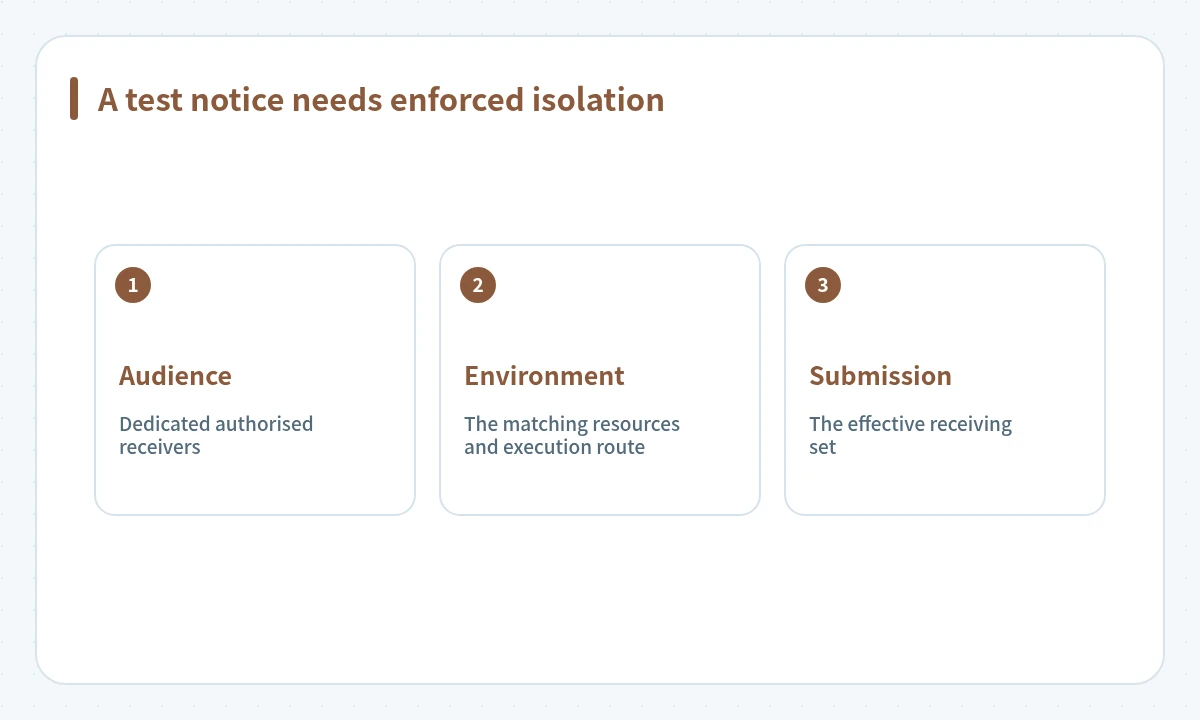
A reusable personal sms inbox workflow may be exercised with dedicated accounts and controlled numbers. Record who authorised the scope and which paths and effects are permitted. Do not select convenient customer records or an old staff contact as an unreviewed testing shortcut.
Keep environment resources identifiable. If a real external provider must be involved, confirm the applicable resources and permitted exercise separately. A local simulation is valuable within its scope, but its result should not be described as observed live delivery.
Review the final receiving set
Templates and audiences can come from different tools. Validate the actual merged result at submission, including list replacement, default selection and empty-list handling. An empty test audience must not silently fall back to all customers because a helper considers that a useful default.
- Confirm the environment and approved receiving resources.
- Inspect the effective count, source and exclusion rules.
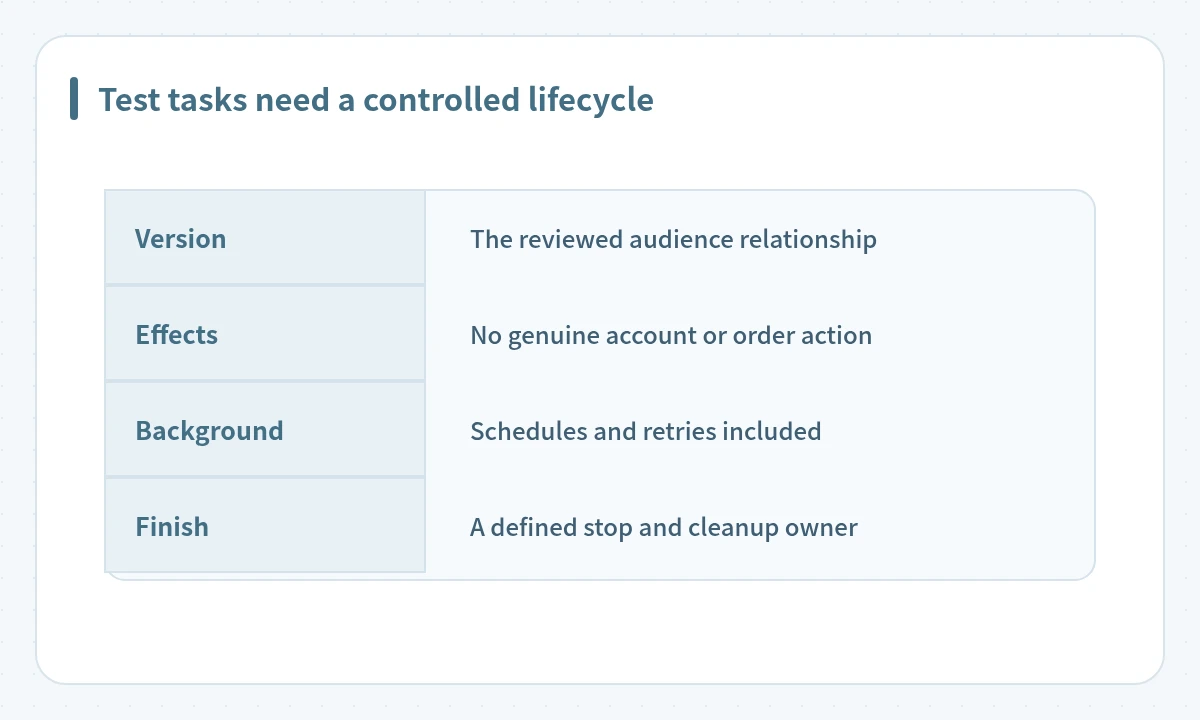
- Keep the exercise away from genuine account or order effects.
- Stop a task before execution when these checks fail.
A page labelled test mode is not sufficient evidence. Inspect the actual execution route and credential configuration. The interface can look like a demonstration while an incorrect setting directs the work to production resources.
Include background work in the boundary
Scheduled jobs, retries and restored queues can outlive the editor screen. Give test tasks an explicit identity, stop condition and cleanup owner. A rehearsal should not reappear days later against an obsolete receiving list simply because the originating browser was closed.
When a configuration changes, decide what happens to already queued test tasks. Keep their resource relationship explicit rather than allowing them to inherit a new default environment. The approval that covered one exercise does not automatically define the scope of a later restored job.
A test audience preview should identify the effective list version rather than only its friendly name. A reused name can refer to new contents after an import. Bind the authorised exercise to the reviewed version or another supported integrity relationship, and make a changed audience require the appropriate fresh check. This prevents an approved small rehearsal from inheriting a later expanded list while its old approval still looks valid in the task display.
Keep the handover evidence useful and limited
Record the environment, audience reference, template version and actual processing outcome. A shared report does not need the full number list or private message bodies. Use non-sensitive examples for reviewers while retaining restricted references sufficient to explain a failure.
Before formal enablement, confirm the audience and configuration again through the approved workflow and retire rehearsal resources under their defined process. Test and production tasks can exercise similar logic while still having different authority. Durable isolation should be enforced by the actual resource and execution design, rather than depend on someone remembering to change a temporary button every time.
