
A count in a multilingual notification needs more than a translated noun after a number. Confirm the counted object and let the target language determine the complete wording, including the surrounding instruction.
Define what the number measures
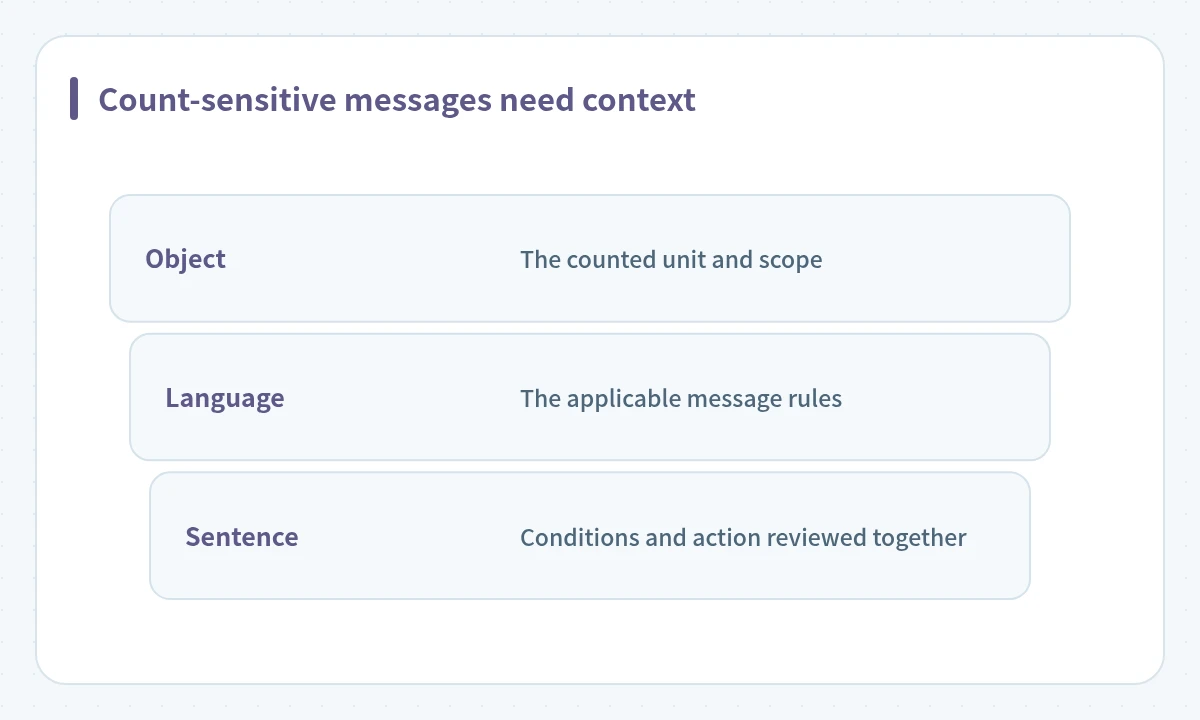
For an instant virtual phone line receiving supported notifications, a count might describe unread messages, remaining uses or parcels. Those are separate facts. Give the translator the object, unit and time scope, along with the action the reader should take. A variable named count without that context invites a grammatical sentence that describes the wrong thing.
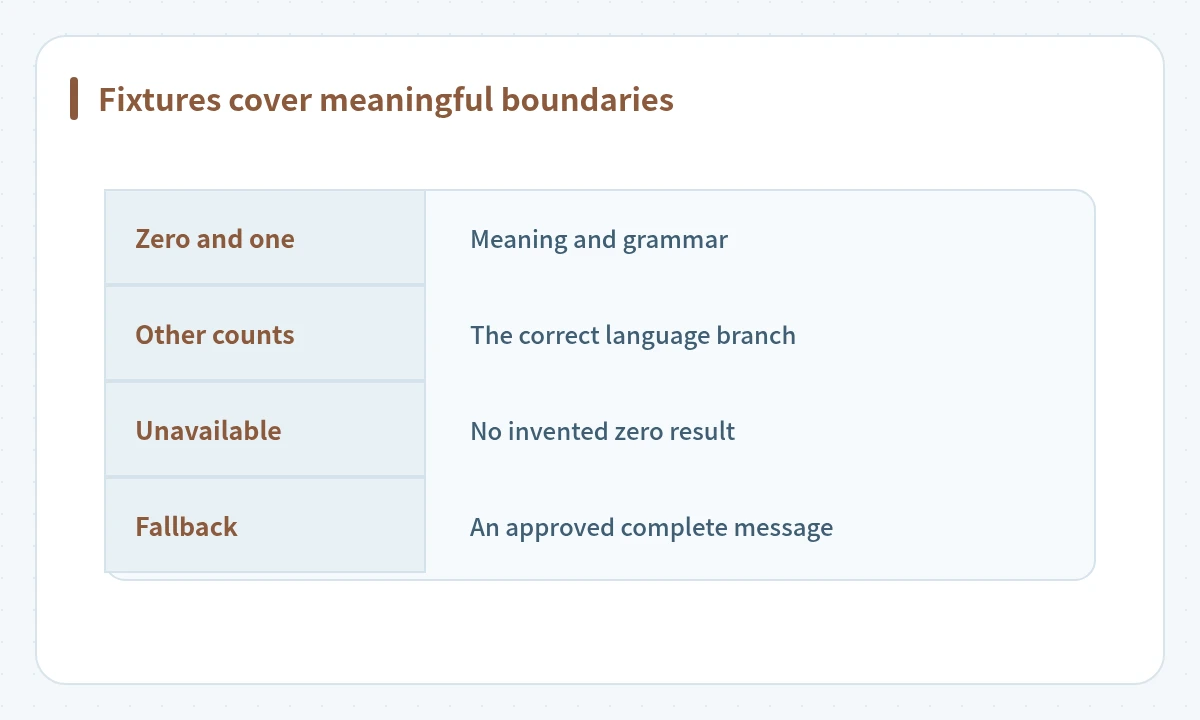
Keep the headline and body tied to the same intended state. If they query the source independently, activity between reads can make them disagree. An unknown count should use a defined unknown or count-free message, rather than silently becoming zero. Zero is a meaningful observation, while unavailable data is a different result.
Use language-sensitive message selection
ICU's message-format documentation describes plural selection as a language-dependent formatting mechanism. It should not be reduced to one universal singular-versus-plural switch. Where that library is used, follow the supported version's syntax and build complete message alternatives around the required variables.
| Fixture | What to inspect |
|---|---|
| Zero and one | Meaning and grammatical agreement |
| Other counts | The target language's applicable branch |
| Unavailable value | A clear result that does not claim zero |
| Changed unit | A separate correct business description |
Have someone who understands the language and task read the result as a whole. A technically selected branch can still be unclear about whether it describes all items or only those remaining. Check dates, qualifying conditions and the instruction alongside the number, rather than approving a noun in isolation.
Make fallback messages deliberate
When a translation is missing, use an approved complete fallback or hold tasks that require the unavailable language. Do not assemble a heading in one language, a unit in another and an untranslated action label. Raw formatting syntax should become a visible controlled failure in testing, not a message delivered to a recipient.
Keep translator instructions separate from customer text. Explain variables and constraints in the editing workflow, then verify that those notes are absent from the rendered message. A helpful internal comment should not leak into a notification because it occupies the same storage field as the final copy.
A message can combine a displayed count with an instruction that refers to a different subset. For example, a summary and the action might use total items and outstanding items respectively. Keep those inputs separately named and explain them to the translator. The language formatter cannot repair an incorrect business calculation, so verify the numbers before reviewing grammar. Clear variable meanings reduce both translation mistakes and unnecessary special cases in the template.
Test combinations after shared changes
Retain representative fixtures for each supported language and important value boundary. When a shared variable changes type or meaning, rerun the templates that consume it, including scheduled and background entry points. Previewing the most common language alone can leave another rendering path broken.
Record the language, template version and failing branch when investigation is needed. Use non-secret sample data to reproduce grammatical problems. This keeps the review focused on wording and business meaning without requiring anyone to collect a customer's entire message history merely to demonstrate an incorrect plural form.
Reference
ICU documentation: Formatting Messages
