
An SSE reconnection needs a defined position from which to resume. The stream's last event ID is part of its recovery protocol, not automatically the SMS message identifier or a permanent entitlement to retrieve history.
Identify the stream's position and scope
An instant online mobile number interface may use server-sent events under its implementation. MDN describes the event ID field and connection recovery behaviour. The application must still establish whether its server supports replay from that position, how long the relevant events are retained and which subscription the position belongs to.
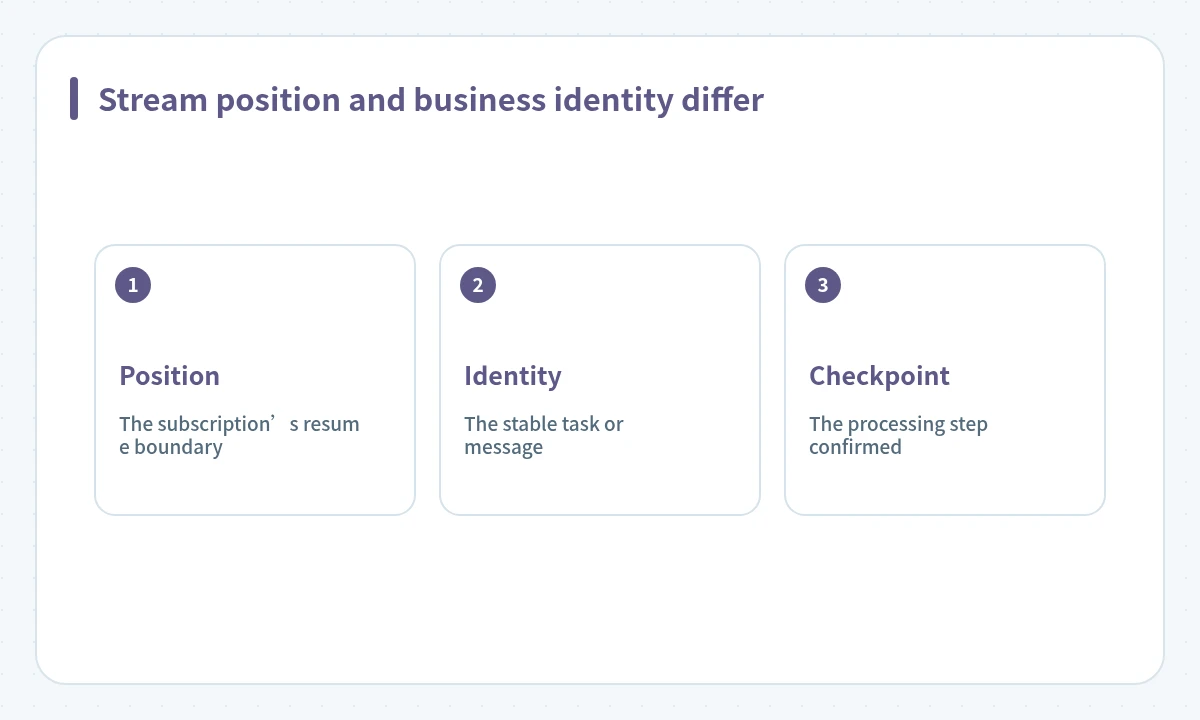
Keep business identity separate. One message can produce several events, and an event can appear again during recovery. Store the result under the appropriate stable business relationship instead of merging entries merely because their displayed text looks identical.
Define what the saved position confirms
A stored position can mean received, displayed or processed depending on the design. Make that choice explicit. Saving it before a required effect is complete can lose work after a crash; replay without duplicate-effect controls can repeat an action that already finished.
| Object | Review |
|---|---|
| Stream position | The recovery boundary for this stream |
| Business identity | The stable message or task relationship |
| Save point | The processing step actually confirmed |
| Retention | The supported outcome for an old position |
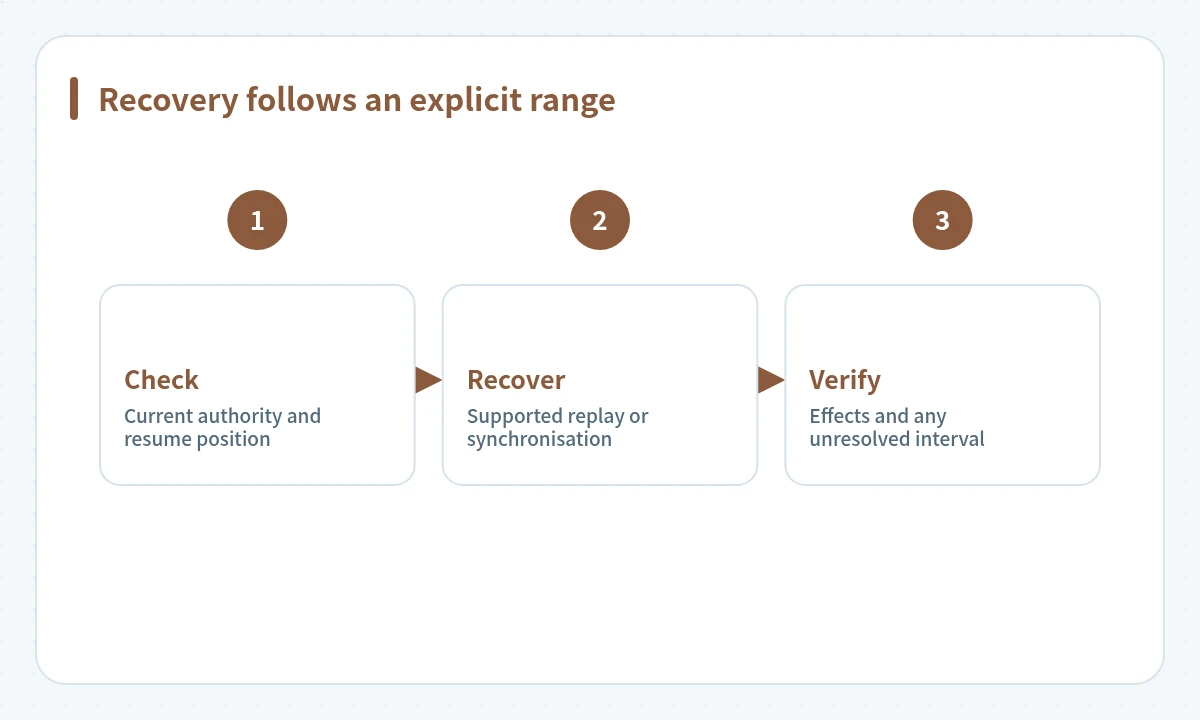
The resume value does not replace authentication. A new connection still needs its current account and resource checks. Switching accounts should not carry the previous account's stream state into another resource merely because the same browser is being used.
Use a defined synchronisation path when replay is unavailable
If the server no longer retains the requested events, follow the product's supported way to read current state or an appropriate history range. State the boundary clearly. Do not claim every disconnected interval has been recovered without evidence, and do not repeatedly submit an expired position forever.
Coordinate the state read and the resumed stream according to the actual protocol. A gap or overlap between those stages needs a defined treatment. A helpful recovery report identifies the range observed and any unresolved interval instead of using the connection's colour as proof of completeness.
Define who owns the recovery checkpoint when several tabs or workers consume a stream. A position saved by one consumer may not describe another consumer’s completed work. Use the supported subscription model and avoid making a shared browser value an undocumented global checkpoint. Keep the ownership decision with the processing contract, so a second tab opening cannot silently advance the first tab past an event it has not handled.
Interrupt processing at controlled points
In an authorised environment, exercise a disconnect before receipt, after saving a business result and before saving the resume position. Inspect the effects after reconnection. Include duplicate events, an unavailable position and changed access so the test covers more than a transport returning to life.
Record limited position references and processing outcomes with harmless fixtures. Private message bodies and long-lived credentials should not enter public URLs or troubleshooting posts. The goal is to explain both stream recovery and the business result, rather than count any newly arriving data as confirmation that the intended work is complete.
