
A browser-delivered inbox should not contain the provider’s management secret. An online digital phone line may need a backend integration, but code and configuration sent to the browser are available to its user. Compression, obfuscation and hidden buttons do not preserve secrecy for a credential already delivered there.
Keep user access separate from provider authority
The browser can authenticate to a controlled backend, which checks the intended user, resource and operation before contacting the provider. Do not replace exposed credentials with an unrestricted forwarding endpoint that accepts arbitrary destinations or actions.
A provider may also define public identifiers or restricted client tokens. Follow that product’s documented design. A public project reference and a privileged management secret are different objects even if both are called keys in parts of the interface.
Make the required authority explicit. A page that shows a limited list should not cause the backend to use a much broader operation without checking why it is needed and who may request it.
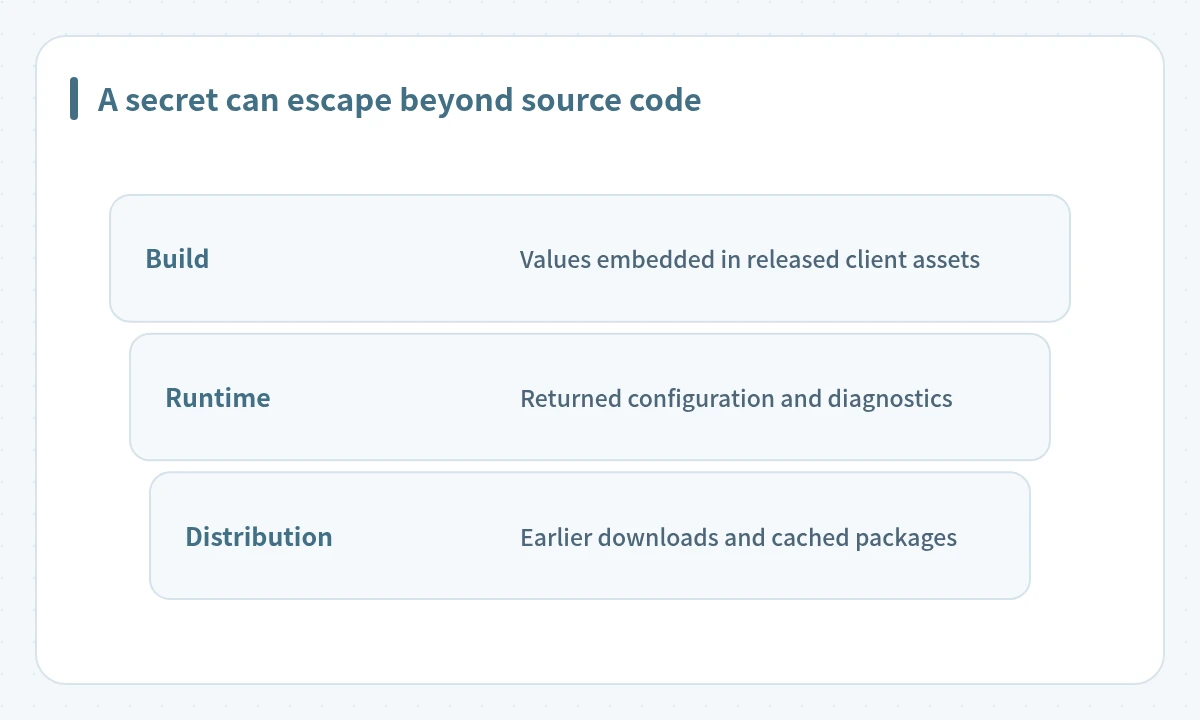
Inspect where environment values end up
Placing a secret in an environment variable does not establish that it stays on the server. Build systems can embed selected values into a client package. Review the actual released files and returned configuration, not only whether the source contains a literal credential.
Error pages, debugging endpoints and source maps can create other disclosure routes. Use a dedicated fictional marker to inspect the build and deployment path. Do not publish a real secret in a screenshot to prove that the release contains it.
The same review applies to examples and temporary diagnostics. A value added for a short investigation can remain in a generated asset long after the original file was removed from the source tree.
Bound the backend integration
Fix the allowed upstream service, operations and resource mapping. Apply current authorisation and reasonable request limits. Return only the data the frontend task needs, rather than echoing the full upstream diagnostic or authentication response.
Give the credential a clear owner, storage location and revocation procedure. Protect deployment tools, backups and test configurations according to their actual access. Moving a secret to another uncontrolled file does not solve its management problem.
Inspect the released response in a fresh normal session, not only a developer’s local build. Deployment configuration and cached assets can differ from the source tree. A fictional marker makes this verification possible without distributing a working credential during the check.
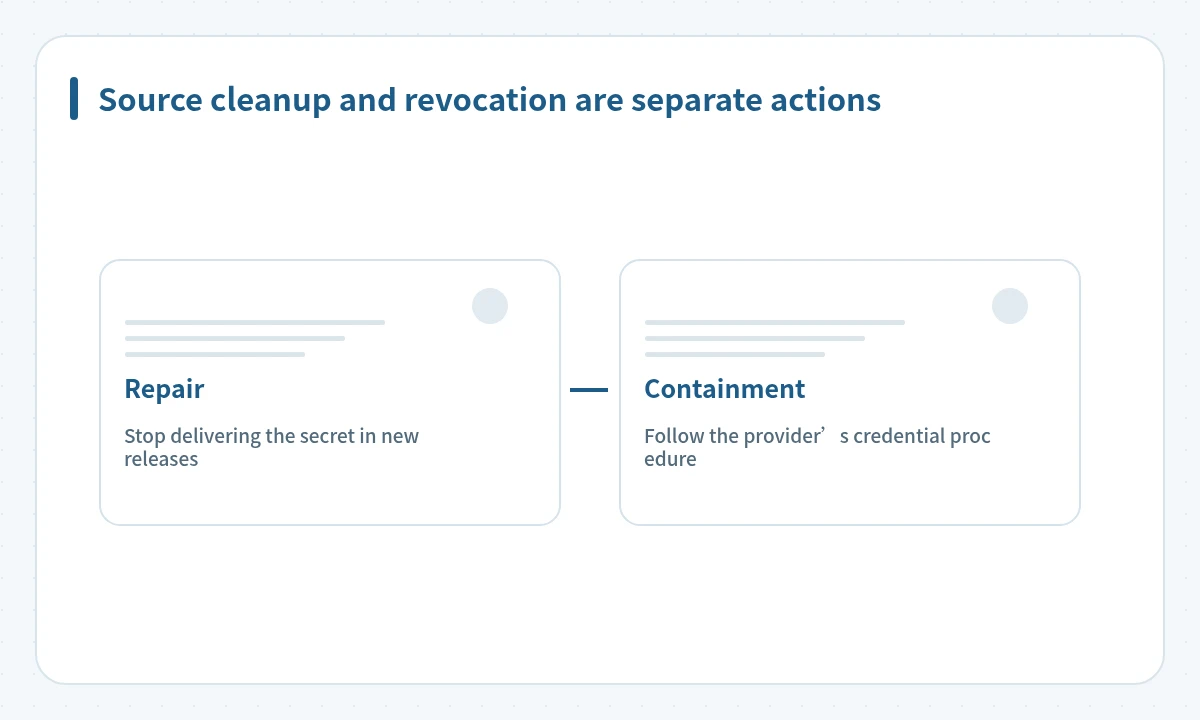
Respond to exposure at the credential level
If a real secret was delivered to users, removing it from the current page does not remove earlier downloads or cached copies. Follow the provider’s revocation or rotation process, investigate relevant use and confirm that the replacement is not exposed by the next release.
Retain the credential reference, handling time and verification result without repeatedly copying the secret into the incident record. Distinguish the source repair from the separate management action that limits the exposed credential’s usefulness.
A controlled test can inspect build output, runtime configuration and the permitted backend route with fictional markers and harmless resources. Close the change when that route enforces the intended authority and no privileged secret is delivered to the browser. A cleaner source file alone is not sufficient evidence of either result.
Reference: OWASP: secrets management.
