
Visually similar text can fail a search because of different Unicode representations, but check the query scope and original characters first. Normalisation follows defined equivalence rules; it is not an instruction to replace every lookalike character with one preferred spelling.
Separate appearance from defined equivalence
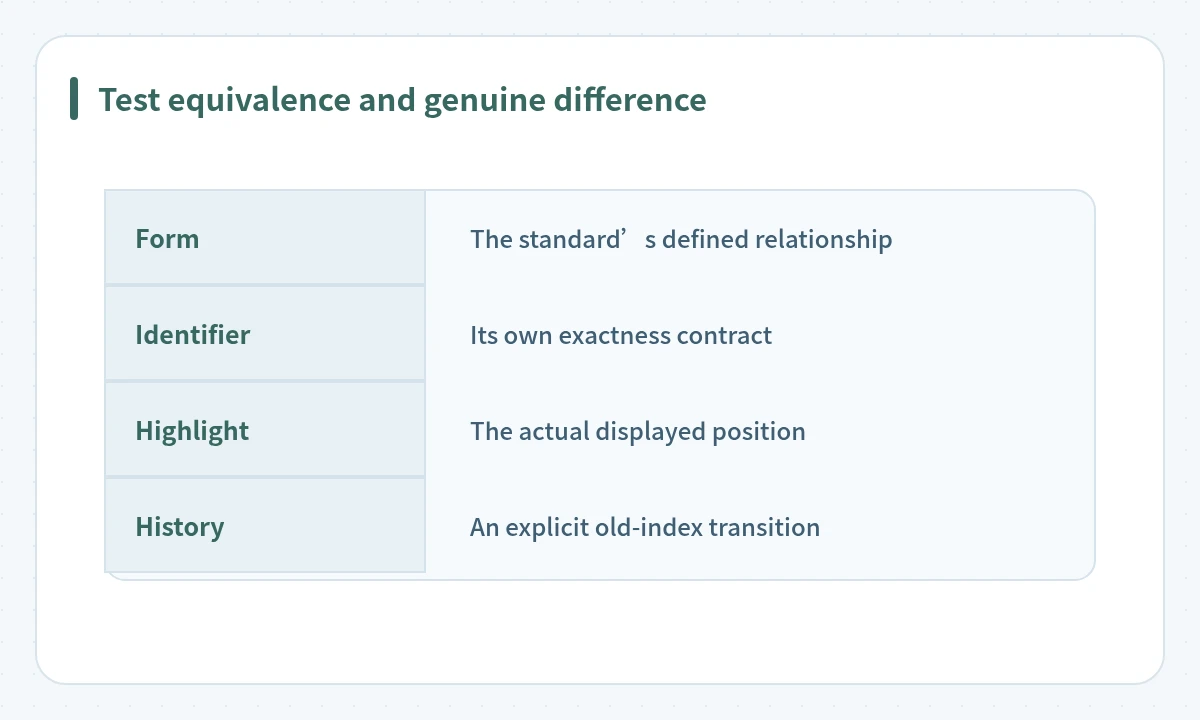
A web based online sms service may retain text in more than one representation across its processing path. Unicode's normalisation specification defines forms and related equivalence. Some sequences can be equivalent under a defined rule, while two similar-looking letters can remain genuinely different.
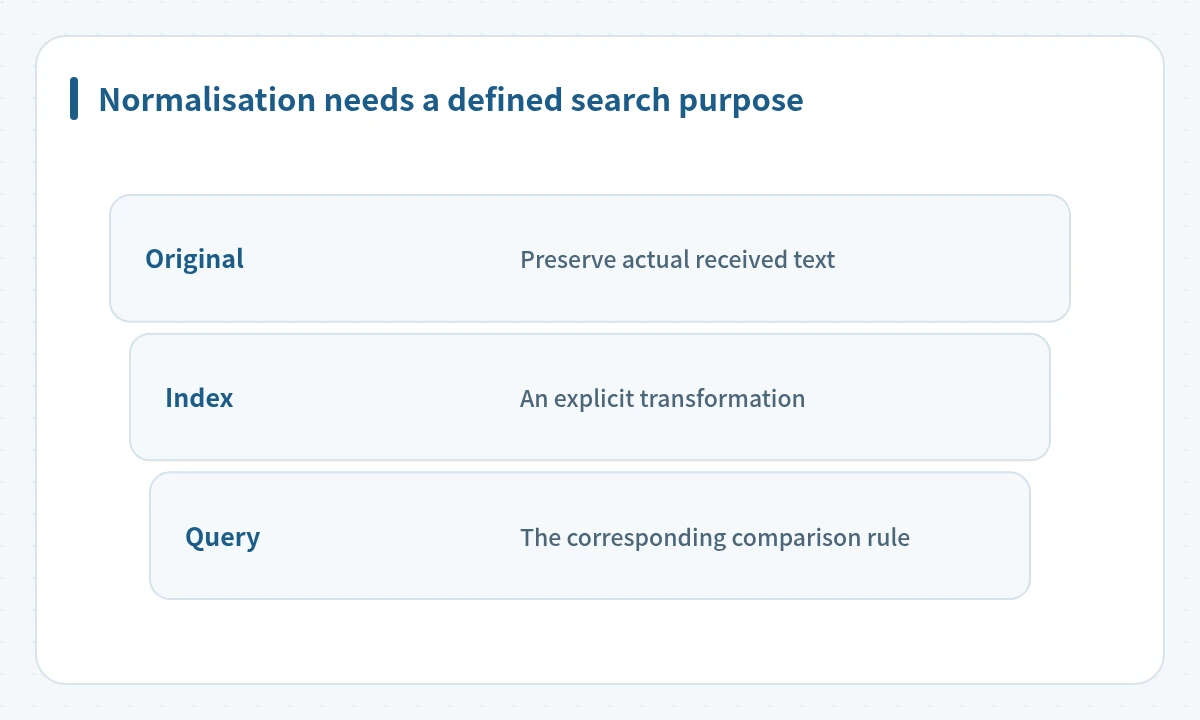
Preserve the authorised original and identify the index's actual transformation. Storage, query input and display using incompatible rules can produce missing matches or a match that cannot be highlighted accurately in the shown text.
Define the intended search behaviour
Ordinary prose search and exact identifier checking can need different contracts. Do not rewrite verification strings, signatures or opaque references merely to make search convenient. A compatibility transformation is not automatically an appropriate security comparison rule.
| Object | Handling focus |
|---|---|
| Original | The actual received content |
| Index | An explicit reproducible transformation |
| Query | The corresponding search rule |
| Highlight | A mapping to the real displayed position |
Case, accents, compatibility characters and canonical equivalence are separate dimensions. State which behaviour the product supports instead of giving an ignore-differences option an unexplained universal meaning. A user should know whether a match is exact or deliberately broader.
Plan the existing index transition
When the rule changes, define which older records need an authorised rebuild and how mixed results are handled during that period. Updating only the new-write path does not establish that all historical entries now use the same representation.
Keep the index version or supported migration relationship available to operators. Rebuilding a search representation should not silently change the original message or the stable identity used by other business tasks.
A separate search representation can preserve the original while supporting an explicitly chosen comparison. Keep its purpose visible to the data-access layer so a convenient normalised field is not reused later for an exact security check. Review consumers that join, deduplicate or display identifiers, since they can accidentally inherit a broader equivalence rule from a search helper. Use harmless fixtures showing both the intended matches and deliberately different values that must remain distinct. The acceptance result should explain those boundaries rather than simply report that more records were found. This allows a useful search improvement while keeping original text, stable record identity and unrelated authentication decisions within their own contracts.
Record the selected normalisation form as part of the index contract. A change from a canonical form to a compatibility form needs its own review because the intended equivalence can broaden. Do not treat two library options as interchangeable defaults merely because the first test phrase produces the same visible result.
Compare both equivalent and different fixtures
Use synthetic sequences with defined equivalent forms, genuinely different characters and exact references. Inspect both search results and highlighting. Private inbox exports and real verification codes are unnecessary for a public character-analysis tool.
A focused report states the rule version, limited original values and expected match. The useful repair is explainable search appropriate to the need. Original-message preservation and authentication still follow their own requirements, so similar appearance cannot become an unintended equivalence rule for a different operation.
