A business reference, receiving-number resource and message identifier can all belong to one task. Keep each exact value tied to its source rather than merging them into an unexplained ID.
Name the object before copying its reference
A business reference might identify an order, booking or verification attempt. A receiving provider may assign its own identifiers to resources or messages. The browser may also display a record address whose meaning is specific to that interface. None of those labels should silently substitute for another.
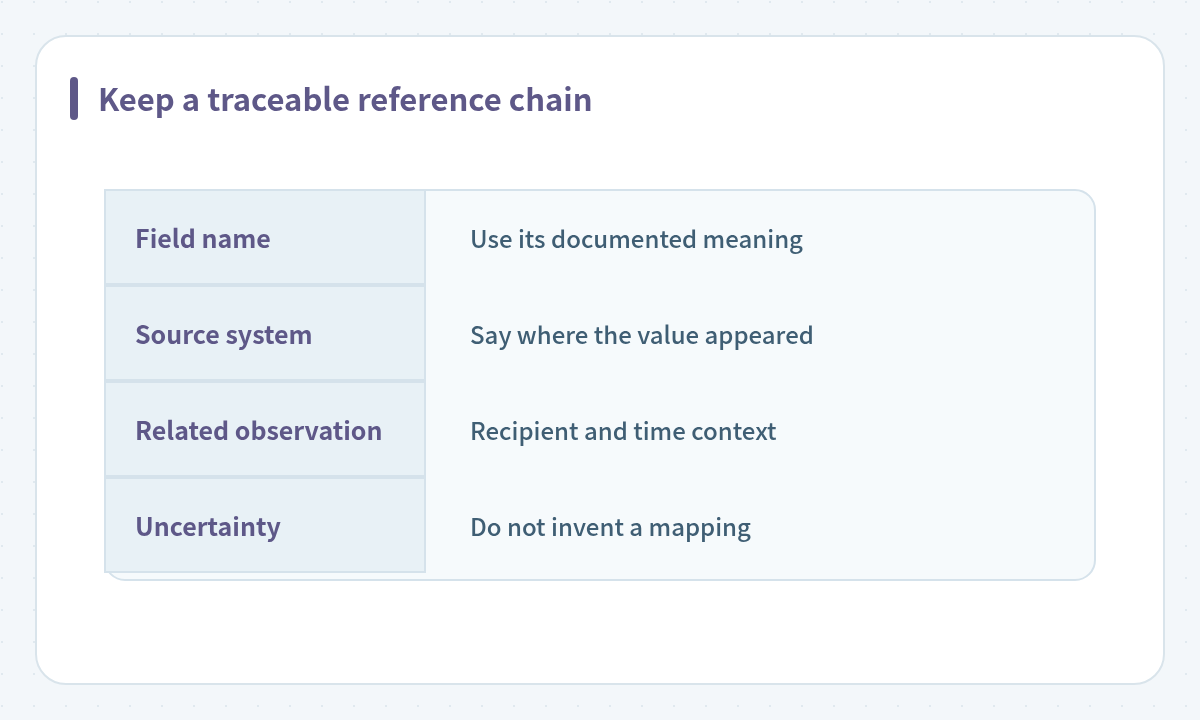
Read the field name and the product documentation where available. If the interface simply says “reference,” record where it was shown and what action produced it. Do not rename it “delivery ID” or “request ID” just because that would make the report easier to write.
Identifiers are also different from secrets. A diagnostic reference is not a reason to include an access token, password or live code in the same support message. If you cannot tell whether a value is a public reference or access material, ask through the known support route before sharing it.
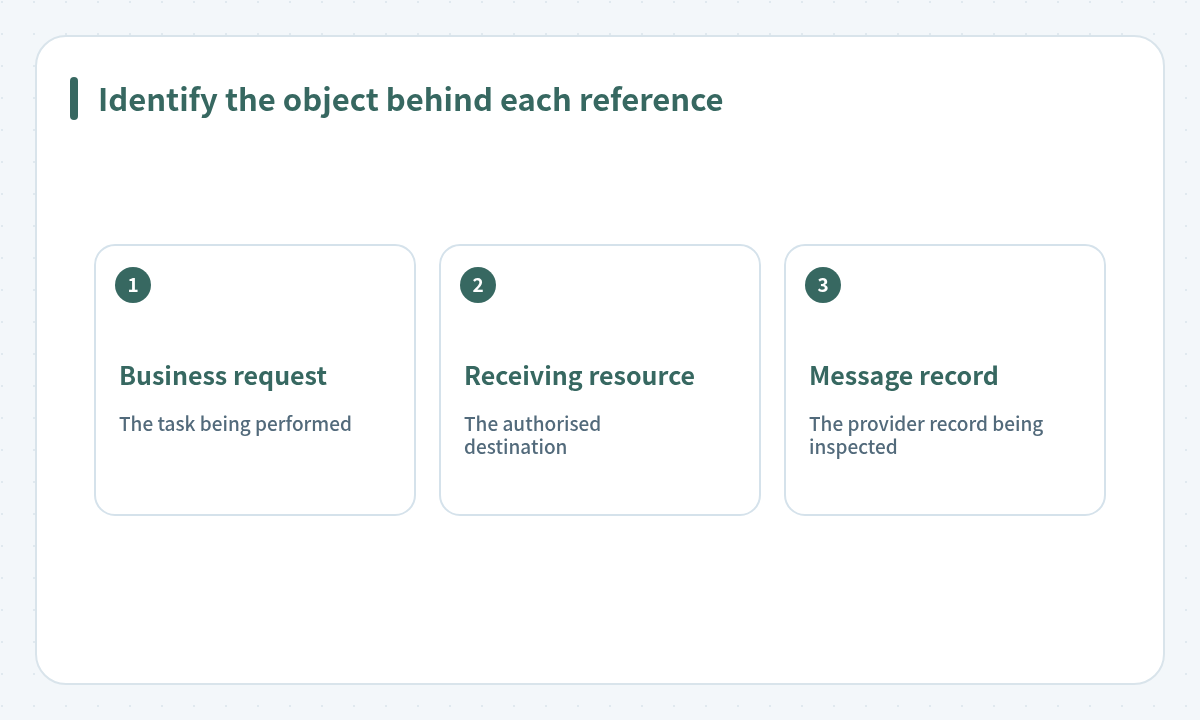
One business task may have several related records
A task might involve retries, separate notifications or more than one authorised recipient. The actual relationship depends on the services involved. Do not assume that one business reference must correspond to exactly one receiving row, or that several rows necessarily mean the business action happened several times.
Compare the recipient resource, the message context and the documented time fields alongside the relevant reference. Keep a record of which system supplied each observation. A list position or an identical sender label is not enough to establish a relationship between records.
For a simple support note, use separate labelled fields rather than concatenating everything into a new string. A provider reference, a business reference and an observation time can be sufficient to begin an investigation without copying the full message body. The required scope should follow the actual problem.
Preserve the exact value and its source
Copy a documented identifier accurately. Do not remove leading characters, change its case or convert it to a number merely because another field looks different. If it needs masking for an initial enquiry, make clear that the displayed value is masked and use the provider's approved channel for any necessary full reference.
An interface may offer a convenient link to a record, but that link is not necessarily the identifier itself. It can include temporary parameters or depend on your current session. A stable documented reference and a private session-bearing address should not be treated as interchangeable ways to let someone investigate.
Ask what the search field accepts
If a reference returns no result, confirm the field searches that kind of identifier in the correct account and interval. A body-text search need not recognise an internal message reference.
Explain the reference you hold and where it appeared. Do not create another business request just to obtain a different string, or share a session-bearing address as though it were a public diagnostic reference.
When a search does not recognise the reference
Check whether the search field expects that kind of identifier and whether you are in the correct account, resource and date range. A search that covers only message text may not match a provider's internal reference. Do not conclude that a record vanished before establishing what the search actually queries.
If support requests a different reference, explain the value you already have and its source. Do not invent a mapping or repeatedly submit new business requests just to generate another identifier. New attempts add records without clarifying the relationship in the original task.