
A newly saved SMS record can be absent from a subsequent read even when the write was committed. In a system that reads from an asynchronous replica, investigate the actual read destination before creating another copy of the record.
Establish the write result first
An sms enabled web phone number is only one part of the receiving workflow. The application's record still needs a stable reference and a confirmed storage result. Separate request acceptance, transaction completion and page display. A friendly success banner may describe an earlier stage than the one you are trying to verify.
Check the account, number and environment for both operations. An unnoticed workspace filter or a test endpoint can resemble replica lag. Rule out these scope differences before changing the database topology. Keep a limited diagnostic reference rather than pasting the full private message into each investigation note.
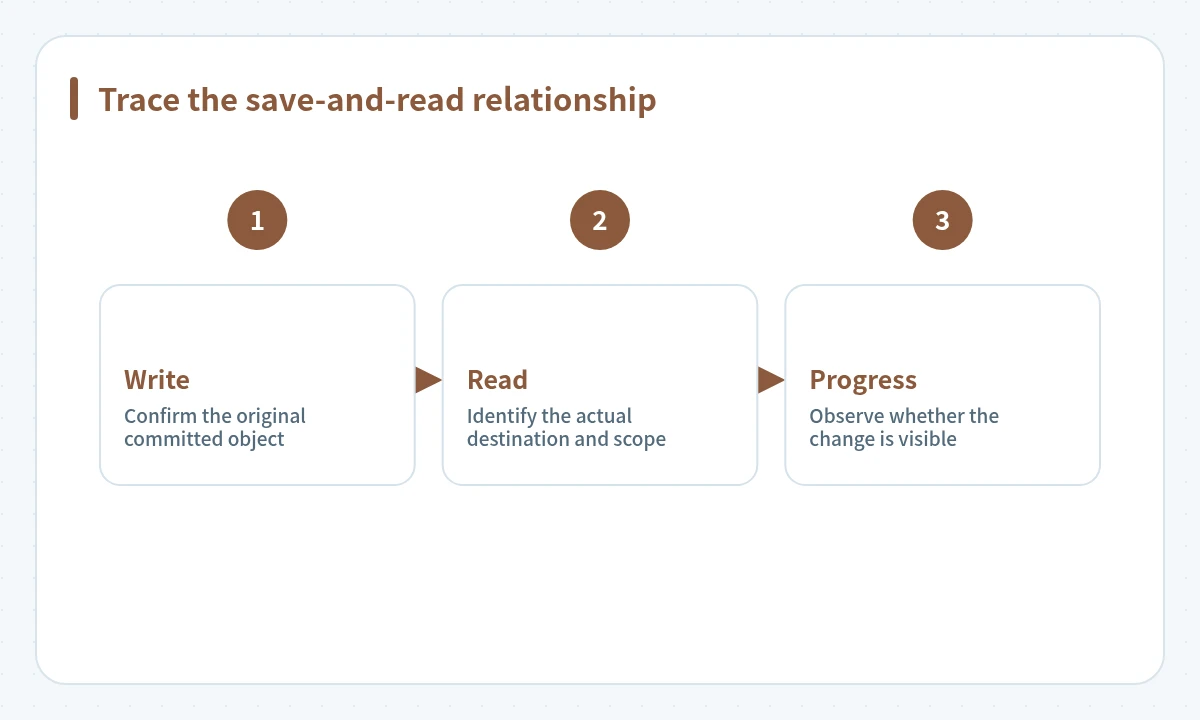
Find out what the reader can see
An asynchronously maintained replica can trail the write source. PostgreSQL's hot-standby documentation discusses queries against a recovering standby; the useful operational lesson is to inspect the actual deployment's replication state and guarantees. Do not transfer a metric name or a consistency promise from one database product to another.
| Evidence | Question |
|---|---|
| Write reference | Was the intended transaction committed? |
| Read destination | Which data node served this query? |
| Replication state | Has the relevant change been applied? |
| Query scope | Are the account and filters equivalent? |
Repeatedly creating the item is a poor visibility check. Those requests can produce genuine duplicates after the replica catches up. Use the original reference and the supported lookup path while keeping an unclear result separate from a confirmed absence.
Choose a consistency policy for the task
A save-and-confirm interaction may need a different read policy from a historical report. Depending on the architecture, options can include reading from the write node or using a supported consistency marker. Assess capacity and failure behaviour before choosing. Routing every query to the primary without review can exchange a visibility issue for a wider availability problem.
If waiting is part of the design, define its limit and the outcome when that limit is reached. The interface should communicate a pending synchronisation check or a clear failure, rather than displaying an empty list as though a definitive search had completed.
Check connection reuse when tracing the read destination. A pool or proxy can make the apparent application setting differ from the server that handled the query. Use approved operational diagnostics to establish that relationship, without exposing credentials. Preserve the observation time alongside the result so another operator can compare it with replication progress. A later healthy reading should not erase the evidence needed to explain the earlier visibility gap.
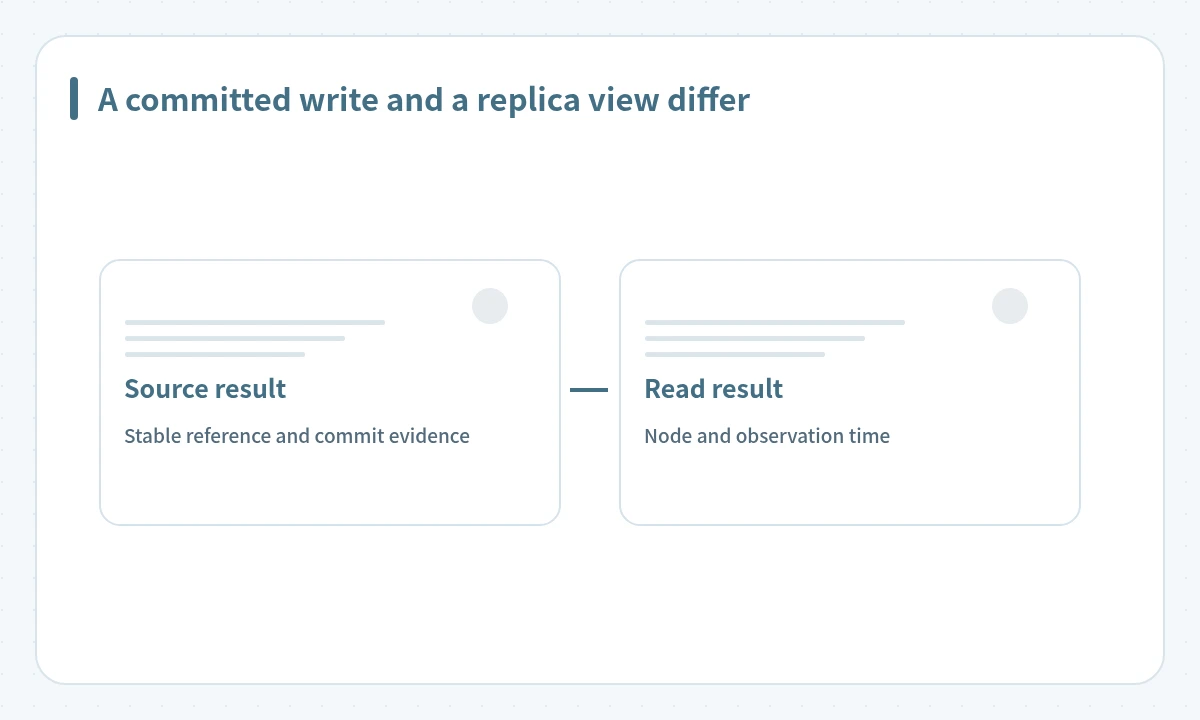
Exercise lag in an authorised test environment
Use controlled records and a supported way to delay replica progress. Verify the save response, follow-up query and eventual display together. Include the case where replication does not recover within the permitted interval, so the error path is as understandable as the normal one.
Monitor write failures, replication delay and query-scope mistakes as distinct observations. Preserve the node and task references needed by operators without exposing internal hostnames in customer-facing errors. The goal is an explainable read-after-write experience, not a page that appears correct only because an operator kept refreshing until the data arrived.
