
An SMS list total can disagree with a summary card because the two queries describe different scopes or moments. Establish the intended counting contract before deleting records or forcing the display to show the same number.
Name the counted object
A no sim sms receiving number can have messages, conversations, unread entries and background tasks. Those counts are not interchangeable. Label each total with its unit and apply the same account, number, date, archive and deletion conditions when the product intends a direct comparison.
Permission rules belong in the aggregate as well as the list. A total must not disclose inaccessible records simply because a count query omitted the account boundary. Start with a small controlled dataset to separate a basic filter mismatch from an issue involving concurrent updates.
Understand the queries' view of time
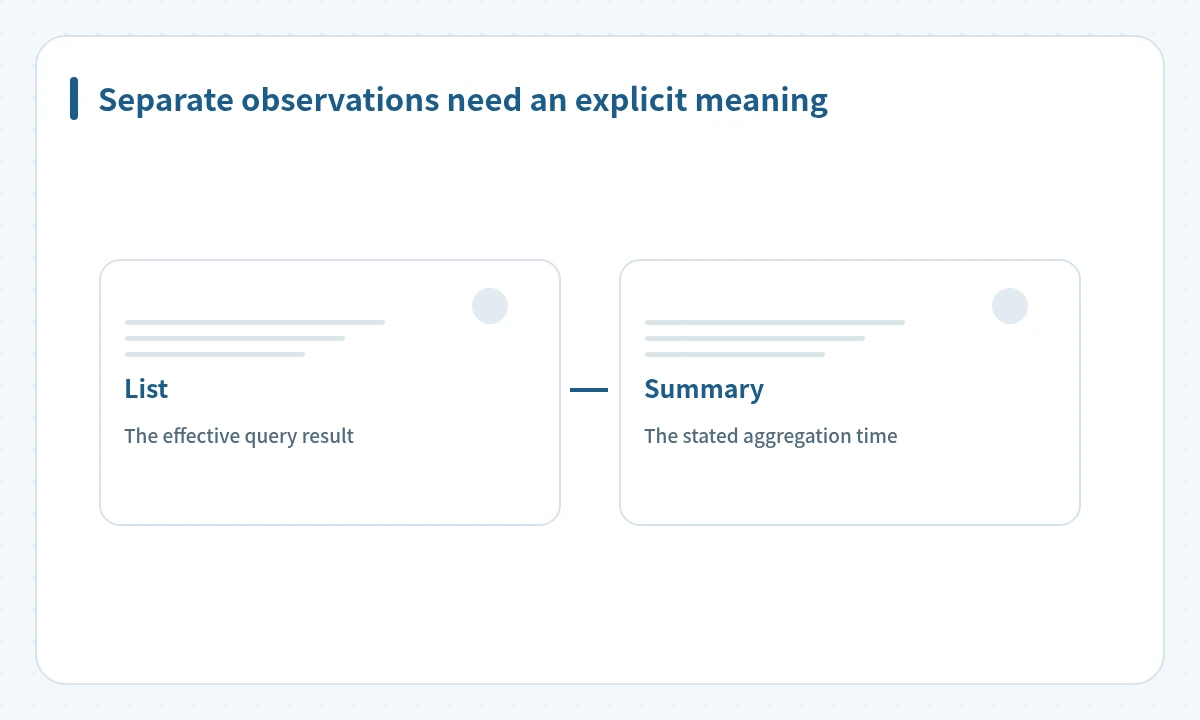
PostgreSQL's transaction-isolation documentation explains that what a read observes depends on the isolation level. Inspect the database and transaction design actually used by the application. Two independent reads do not automatically describe one snapshot, particularly while new records arrive or existing records change state.
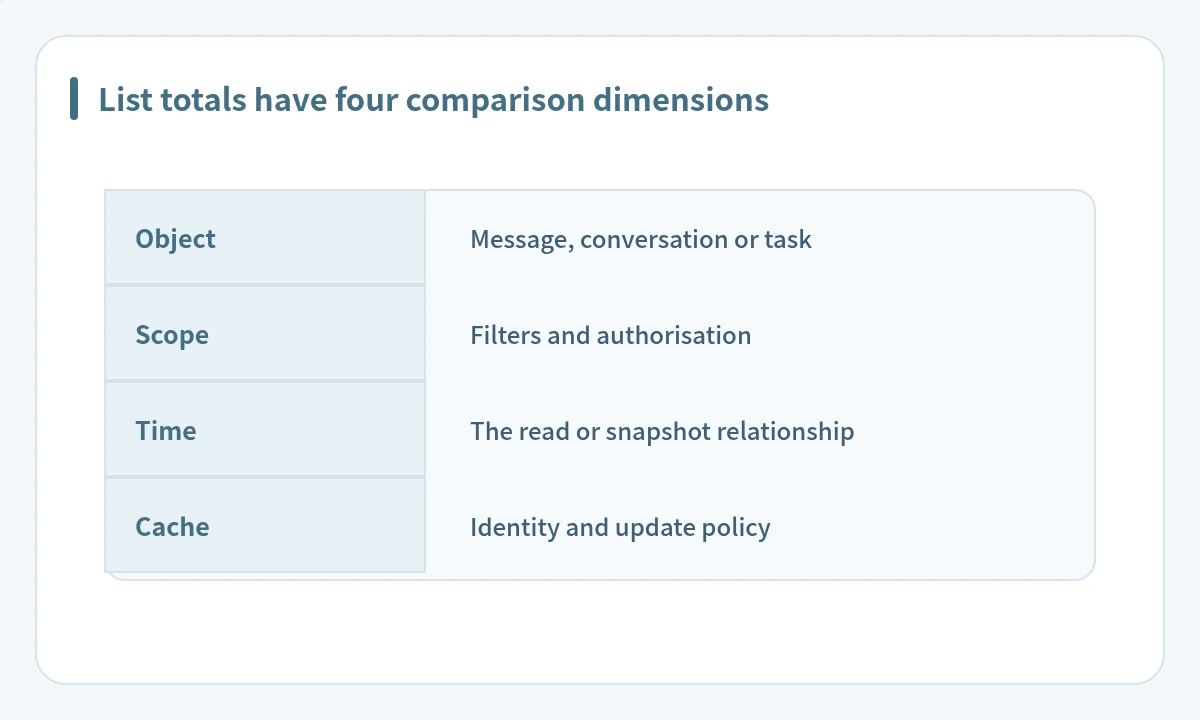
| Dimension | Keep explicit |
|---|---|
| Object | Message, conversation or task |
| Scope | Filters and authorisation |
| Time | The applicable read or snapshot relationship |
| Cache | Its identity and update policy |
If the product promises an internally consistent list response or export, assess a query and transaction design that provides that property. If the display permits independently refreshed summaries, identify their update times. An approximate or slightly older value should not be presented as an exact current observation.
Bind cached totals to the effective query
A cache entry needs the relevant resource and filter identity. Changing the number or date range should not retain a total from the previous selection. Review invalidation for the state changes that affect counting, instead of relying on an occasional full-page refresh to hide stale values.
Check client-side request ordering too. A correctly calculated older total can arrive after the response for a newer selection. The display needs to associate results with the query that produced them, rather than assuming the last network arrival always belongs to the current screen.
When a total is intentionally approximate, choose wording and pagination behaviour that reflect that choice. Do not let an estimate drive destructive actions or serve as the sole proof that a collection has been completely reviewed. The list’s own completion mechanism should remain authoritative under the API contract. This keeps a performance-oriented counting decision from silently changing what an operator believes has been inspected.
Verify concurrent change deliberately
In an authorised environment, add, archive and remove controlled records while exercising the relevant list response. Confirm that the result meets the product's stated consistency rule. Inspect the final page boundary so a high displayed total does not imply that another accessible page exists when the server has already reached its end.
Keep effective filters, query time and a limited request reference in the investigation record. Private message contents are usually unnecessary for a counting defect. The repair should make each number explainable within its actual scope, rather than make two unrelated observations accidentally equal during a quiet test interval.
Reference
PostgreSQL documentation: Transaction Isolation
