
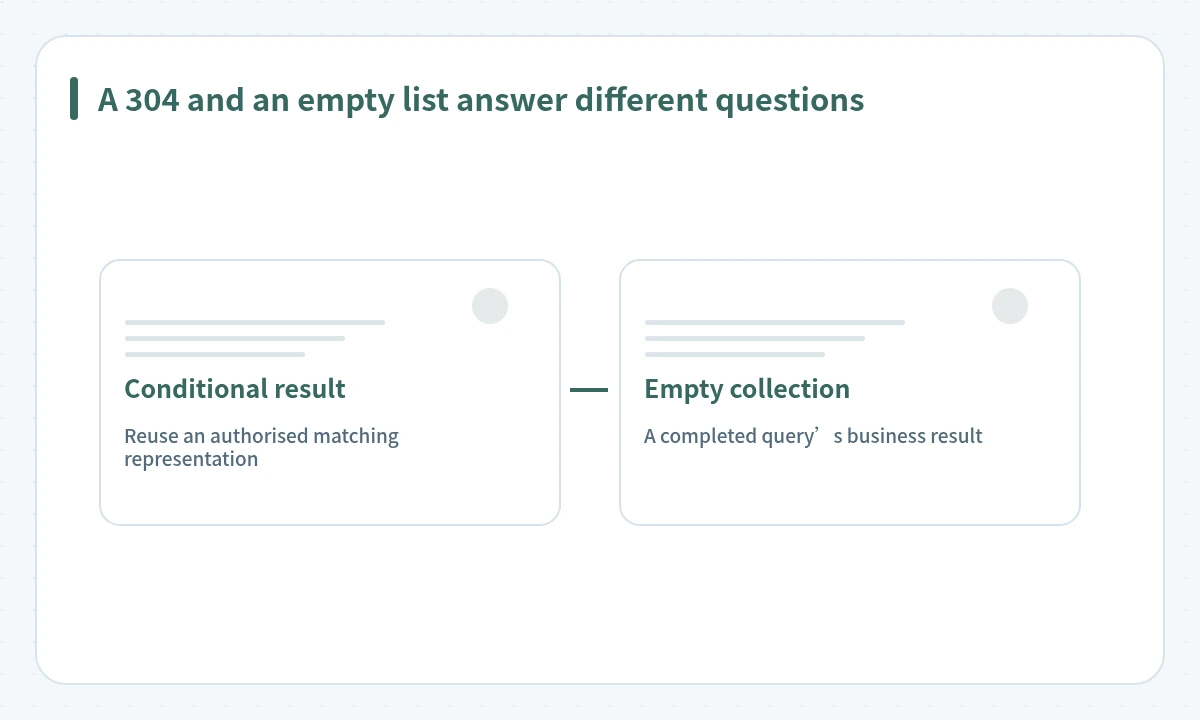
A 304 response is not a new empty SMS list. Establish whether the request was conditional and whether the client has a usable cached representation for the current account and query before deciding what the page should display.
Read the response in its caching context
An instant online sms number inbox may obtain its data through the browser's cache handling or an application's own data layer. MDN describes Not Modified in relation to conditional requests and reuse of an existing representation. Treating every response as fresh JSON can produce a parsing error or clear a previously populated list incorrectly.
Inspect the actual request conditions and identify which component owns the cache. A normal unconditional fetch and a revalidation request can visit the same path while requiring different handling. The absence of a response body should not be converted into a business statement that there are no messages.
Bind the representation to the right scope
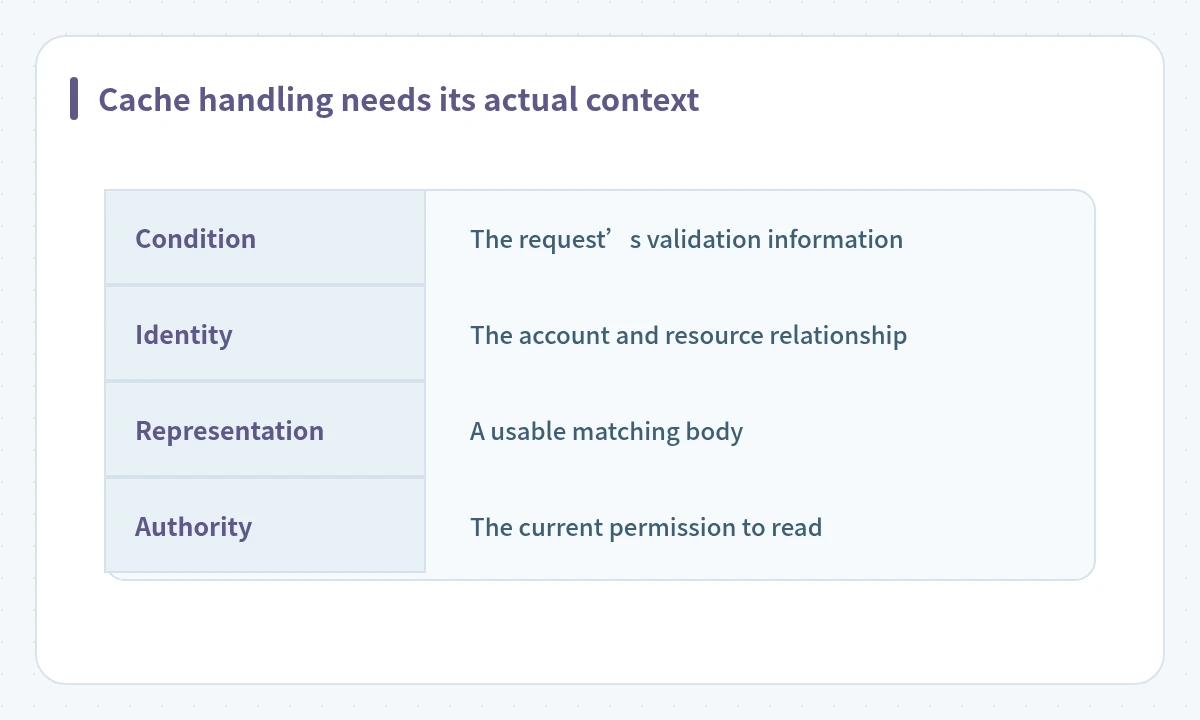
Check how the cached item and its validator relate to the number, filters and authorised account. Switching resources can make a previous representation inapplicable. A cache identifier that is too broad can become a privacy problem, not merely a stale display.
| Evidence | Question |
|---|---|
| Request condition | What validation information was supplied? |
| Cache identity | Which resource and permission scope does it represent? |
| 304 handling | Which layer supplies the usable representation? |
| Authority | Is the current reader still permitted access? |
Freshness is not authorisation. A signed-out user or a person whose resource access was removed should not retain access merely because a validator still matches. Review private-cache behaviour and the service's supported permission checks together, rather than treating an unchanged body as a continuing grant.
Handle a missing local representation explicitly
If the data layer receives a conditional result but lacks the corresponding usable body, follow its supported refetch or error path. Do not invent a zero-item result. The interface should distinguish an unavailable response from a completed query that genuinely found no records.
Keep a cached list associated with the effective query while a new request is pending. A user changing the selected number should not see the old result presented as the new selection. The loading and failure states need enough context to make that distinction understandable.
If a permission change invalidates a private representation, verify the application’s supported invalidation and sign-out behaviour explicitly. Removing the visible list alone can leave another view using the same data layer. Keep the investigation scoped to the authorised test account and inspect the relevant transitions. This provides a concrete check that caching follows the intended resource lifecycle instead of relying on a refresh that happens to hide the problem.
Test the combinations that change meaning
Use harmless fixtures for the first read, unchanged data, changed data, account switching and a cleared cache. Compare the network observation with the final page, because a developer-tool status alone does not explain which representation the user actually received.
Keep diagnostics to a query reference, response category and cache-handling result. Full credentials and private inbox bodies are unnecessary for this investigation. The useful repair preserves correct reuse within an authorised scope and provides a clear result when that reuse is unavailable, without forcing every branch into a misleading successful empty list.
