
Moving a number between accounts does not establish that its settings, history and users moved too. Define the transferred objects and verify the receiving path under the new account’s authority.
A resource transfer is not an account merge
An internal provider transfer, a carrier port, an account merge and a new sign-in method are different operations. Their supported scope can differ even when the number ultimately appears in another interface. Read the actual product rules for the operation you intend.
Twilio’s account-transfer guidance provides a concrete example: a transferred number can require configuration and messaging settings to be established again. Its account-merging guidance also lists objects that do not move with the number. These details belong to that product; they are not universal promises about every hosted inbox.
| Object | Question before transfer |
|---|---|
| Phone resource | What approvals and effective time are required? |
| Receiving configuration | Which callback, notification or inbox route is retained? |
| Historical records | Where do they remain and how long are they accessible? |
| People and credentials | Who will administer and access the new account? |
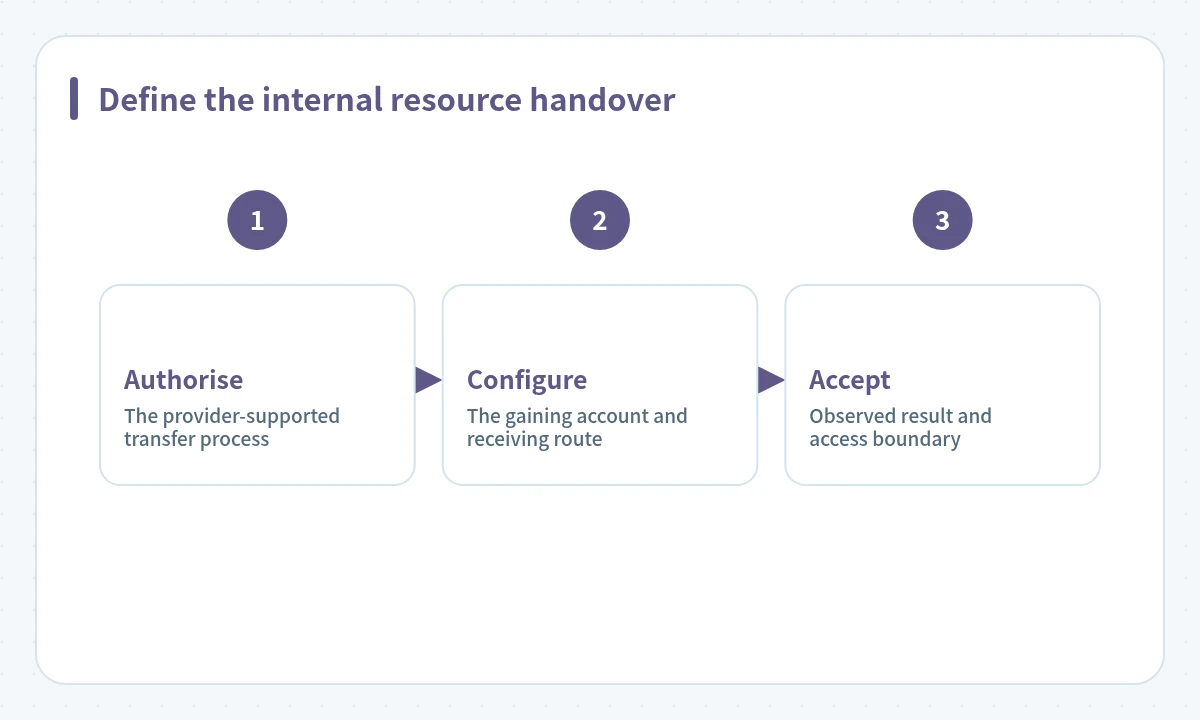
Make the handover an authorised operation
Both sides should follow the provider’s documented ownership checks. A message containing a phone number is not sufficient authority to transfer control. Share the appropriate non-secret account and resource references through the supported process, not login passwords or recovery keys.
Where an application uses an API, inspect resource identifiers, permission scopes and the receiving route under the gaining account. An old endpoint still responding does not prove it serves the new resource correctly. Copying an obsolete account secret into a new workspace is not a substitute for establishing the right configuration.
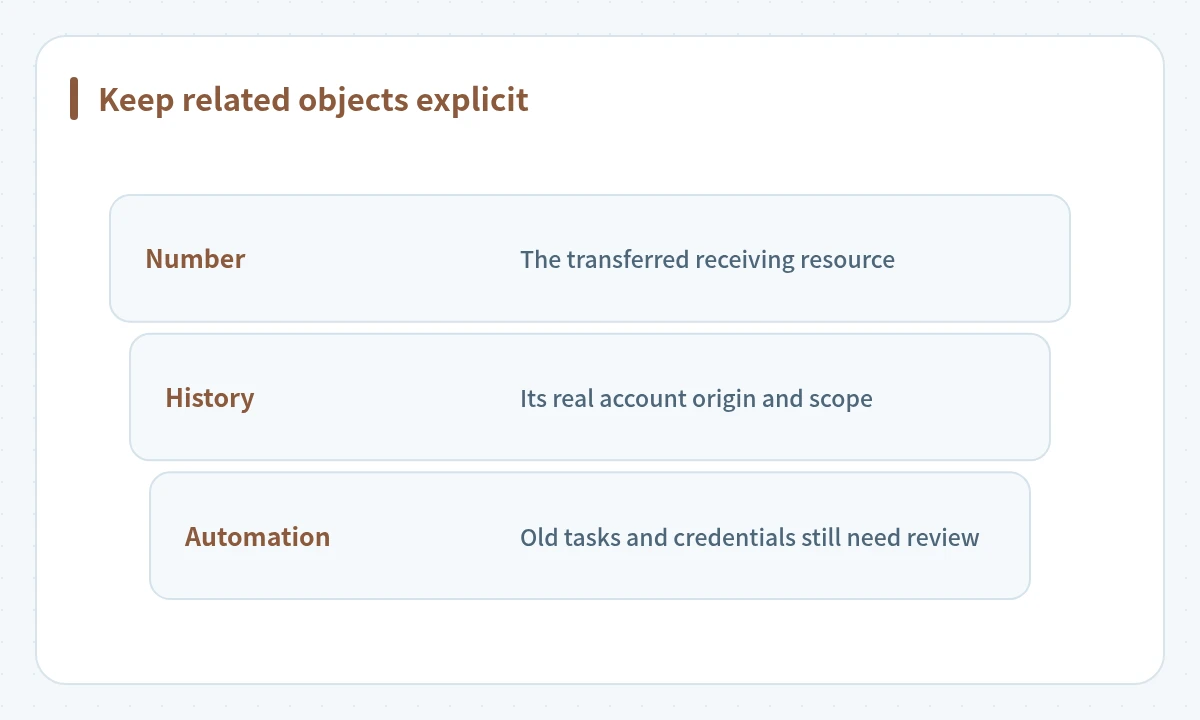
Agree on the treatment of events already in flight at the handover. A callback created before transfer may arrive later, depending on the actual system. The responsible operators need a documented way to associate it with the correct historical resource and current access policy, rather than assigning private content according to whichever dashboard is open.
Verify the new association, not just the visible digits
Where authorised, send a harmless ordinary text through the intended path and locate the matching receiving record in the gaining account. Check the resource, time and content. Review access as well: the new responsible users can perform their needed actions, while former unauthorised paths do not receive new private content.
Keep historical files labelled with their real origin and scope. Changing an old account label in an export does not make the file a native record of the new account. An archive being readable and an application offering searchable imported history are different acceptance results.
If the old account retains jobs, callbacks or credentials, assign someone to review them. A successful resource transfer does not guarantee that every former polling task or notification stops automatically. Avoid leaving old processes continuously failing or sending sensitive events to a retired destination.
Record the confirmed results and unresolved items before closing the handover. This includes any separately required registration or configuration step in the provider’s instructions. The useful final state is an authorised receiving resource with a tested route and clear ownership, rather than merely the same digits appearing on a new dashboard.
References: Twilio: transferring phone numbers between accounts; Twilio: account merging and transferable objects.
