
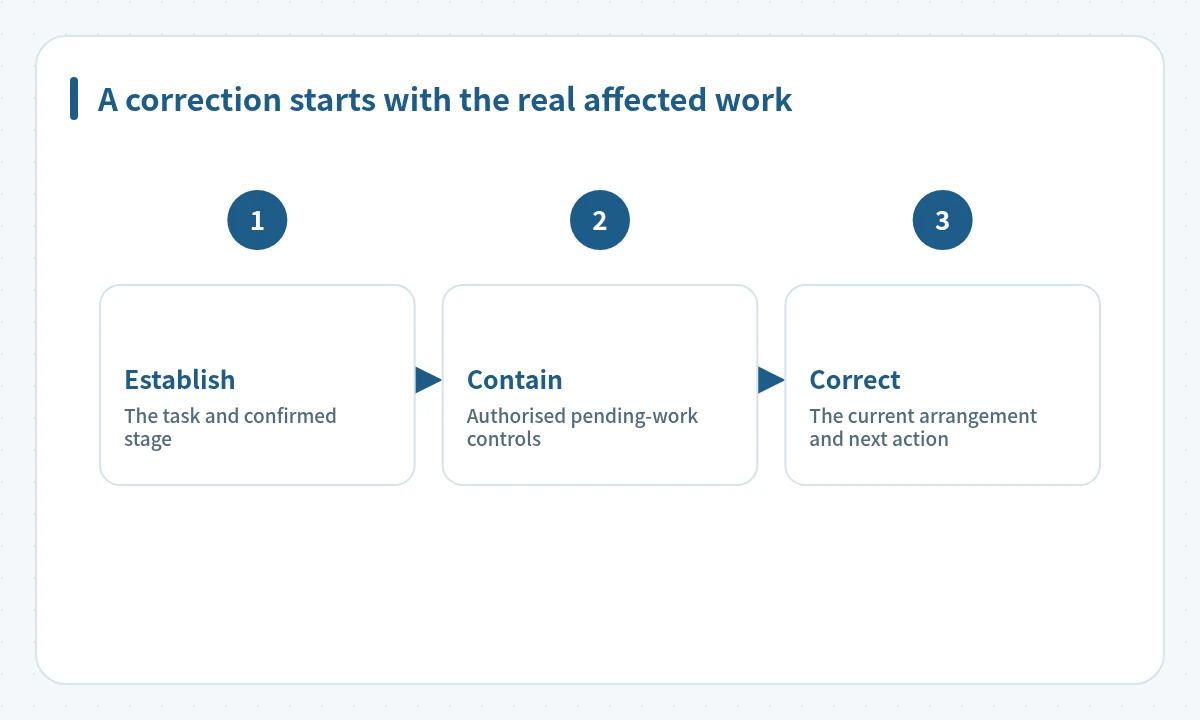
A correction notice should reduce continuing confusion without repeating the original disclosure. Establish the affected task and remaining work before sending another message that copies private content or identifies an unintended recipient.
Check what can still continue
A dedicated online text inbox workflow can have queued, accepted and completed operations. Inspect the notification and audience version involved. Pause pending work through the authorised process where supported, and keep it distinct from delivery that has already occurred.
Confirm the factual scope before choosing correction recipients. Broadcasting a limited issue to every contact can create another unnecessary exposure. Keep unverified assumptions out of the correction instead of presenting a complete investigation that has not actually been performed.
Write around the current action
Explain which arrangement should now be used and what the intended recipient needs to do. A limited reference or date can help locate the task without reproducing an account, address or other irrelevant private detail from the mistaken message.
- Identify only the necessary affected scope.
- Give the clear current arrangement rather than a vague denial.
- Use a known route for individual questions needing verification.
- Never ask for passwords or active verification codes as the correction step.
If the original notice exposed a usable access route, let the authorised owner assess the relevant access or credential action. The correction text itself cannot revoke information already obtained or undo an operation already performed.
Separate confirmed facts from uncertainty
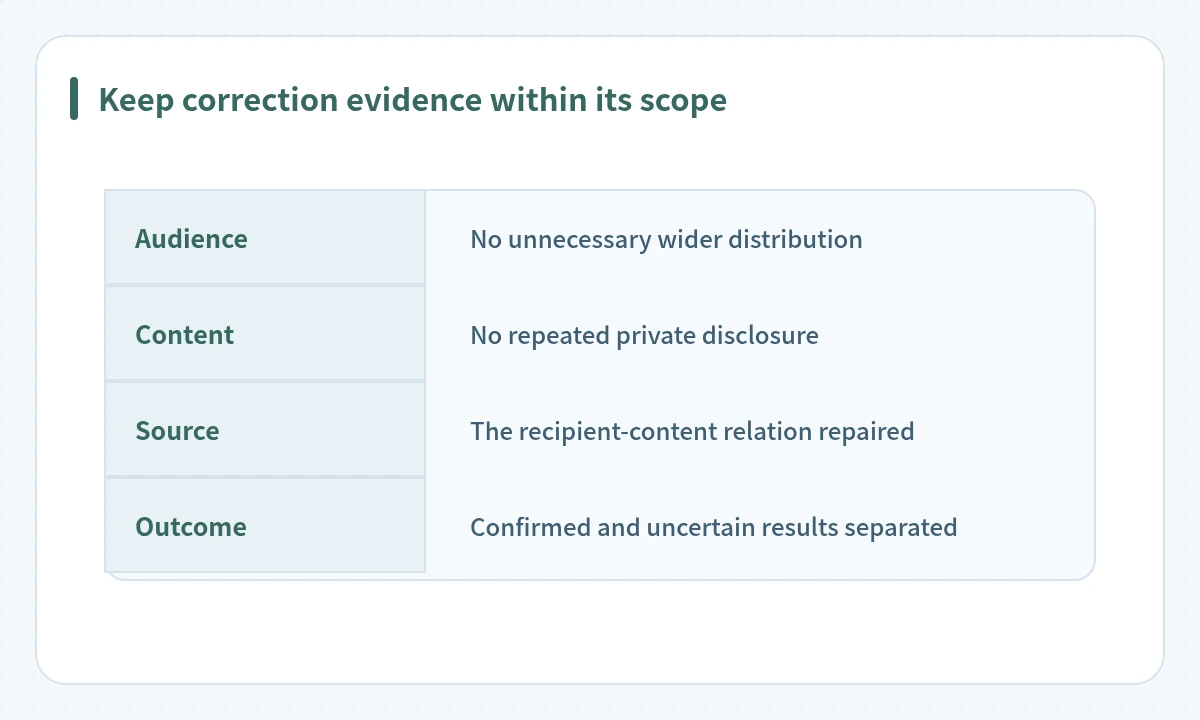
Record which operations are confirmed, which results remain unclear and who will investigate. API acceptance, delivery status and a user's action are separate observations. Do not manufacture viewing or deletion results merely to make a report sound finished.
Keep the responsible operational record restricted. People deciding the next action need sufficient evidence, but a broad coordination group does not automatically need the full private message. Use limited references to connect the investigation and correction.
A correction can refer to an earlier message with a limited date or task reference instead of quoting its full contents. Check that the reference helps the intended recipient distinguish the affected arrangement without giving an unintended reader more private detail. If an updated task is waiting to send, ensure it uses the corrected source relationship rather than a cached copy of the mistaken data. Inspect that final output in the authorised workflow before resuming. The corrective action then addresses both the message people read and the input that will produce the next one.
Where the intended recipient needs no action, say so clearly in the supported correction. Requiring everyone to reply merely to acknowledge an informational fix can create extra messages and encourage disclosure that the original issue did not require.
Verify the source of the mistake
After correcting a list mapping, template variable or resource relationship, exercise the same path with harmless data. Changing the apology or explanatory sentence does not establish that the original routing defect is gone. Inspect the actual generated recipient and content relationship.
Provide the necessary stakeholders with the real result and next step. Retain private material under its authorised handling process. A useful correction narrows confusion and addresses the actual remaining problem, rather than converting an initially limited error into a more widely distributed copy of the same information.
