
A multilingual greeting should use confirmed name information rather than guess gender, family-name order or personal relationship. When the relevant preference is unavailable, a natural neutral opening can keep the notice clear without inventing familiarity.
Preserve the source field's meaning
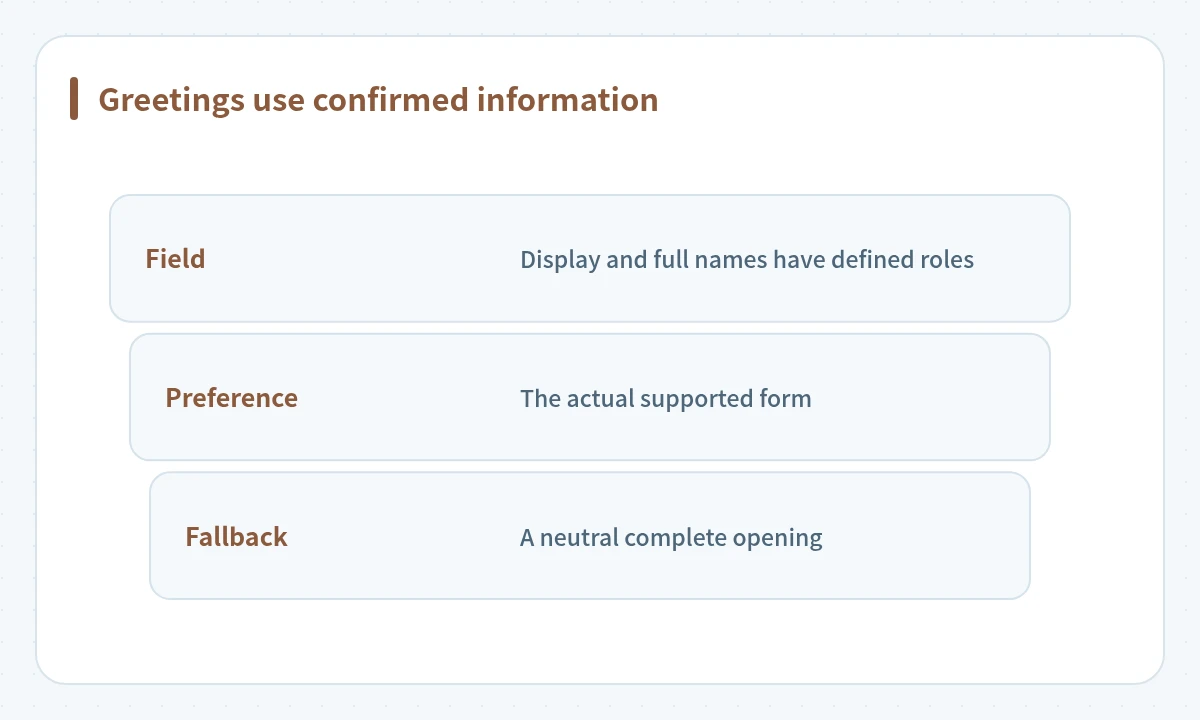
An instant browser text inbox notification may draw from display-name, full-name and preferred-greeting fields. Establish their actual definitions. Splitting every full name at spaces into two fixed parts can misrepresent a person's information, just as reordering their spelling for a convenient template can.
Use a supported preferred form where the person actually supplied one. Without it, do not manufacture a title or nickname. The message still needs to communicate its task; an attempt at personalisation should not occupy the space needed for the matter and next action.
Read the complete sentence
Languages can place greetings and punctuation differently. Review the rendered notice rather than inserting fragments into one universal position. If an optional name is absent, use an approved complete greeting-free version instead of leaving an isolated label or punctuation.
| Field | Handling |
|---|---|
| Display name | The documented presentation purpose |
| Full name | No unsupported split or reversal |
| Preferred greeting | The confirmed supported expression |
| Missing information | A complete neutral alternative |
An incorrect greeting is not evidence of the recipient's identity. If the audience relationship is unclear, inspect the source before sending. Replacing the name with a vague opening does not repair a message that was associated with the wrong task or contact.
Translation should not rewrite identifiers
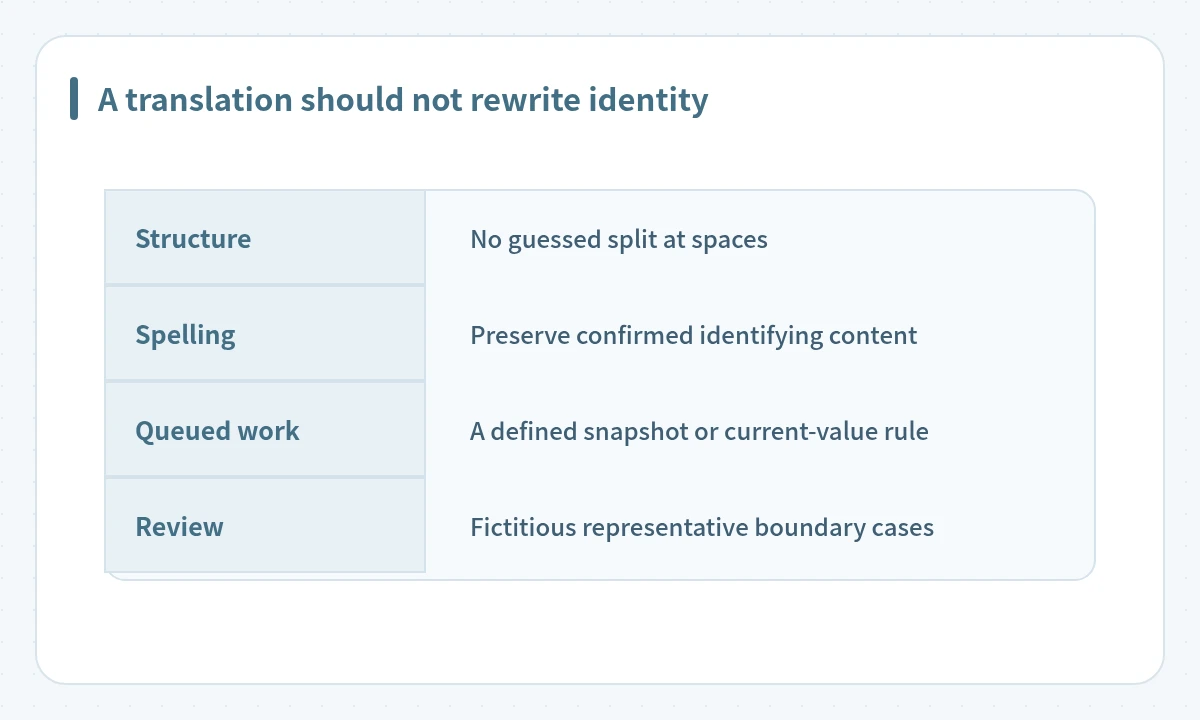
Keep names, business references and other exact identifying text in the product's supported representation. A machine-generated pronunciation or translated meaning should not silently replace the registered value or create a separate person's contact record.
Where the service genuinely supports a separate transliterated display field, keep its source and purpose explicit. Do not infer that preference from a country code. A receiving number's region does not establish how its user wants to be addressed or which language they read.
Review how a changed preferred name affects queued notices. The design should specify whether the task uses an approved snapshot or the current confirmed display value, so an operator can explain the result. Do not quietly rewrite historical records to make them appear to have used the new preference. Keep the actual source and version relationship limited to the authorised workflow. This makes a personalisation correction manageable without turning an ordinary greeting change into a broad identity merge or an unsupported translation of the person’s registered information.
Review representative boundary cases
Use fictitious single-part names, multi-part names, different scripts and missing optional greetings. Read the whole output for naturalness. Language reviewers do not need an exported customer list simply to identify whether the fallback sentence is grammatical.
Record the field definitions and approved alternatives so a source change prompts the right review. The aim is a greeting consistent with the information actually known, followed promptly by the useful business content. Personalisation should not conceal missing data or reduce the clarity of a notification that could have been accurate with a straightforward neutral opening.
