
A pre-insert check cannot eliminate a concurrent unique conflict. Two tasks can both observe that a record is absent, then attempt to create the same business object before either has seen the other's write.
Define the unique business relationship
A no sim disposable sms inbox integration needs an explicit identity scope, such as the account and source relationship appropriate to its contract. The same short identifier from different sources should not merge unrelated records. A repeated task should not create unlimited objects merely because its display label changed.
PostgreSQL's constraints documentation describes storage-level uniqueness. Check the actual database's definitions, null handling and conflict behaviour rather than assuming every product uses identical rules. The business identity needs to be settled before choosing the fields for an enforcement mechanism.
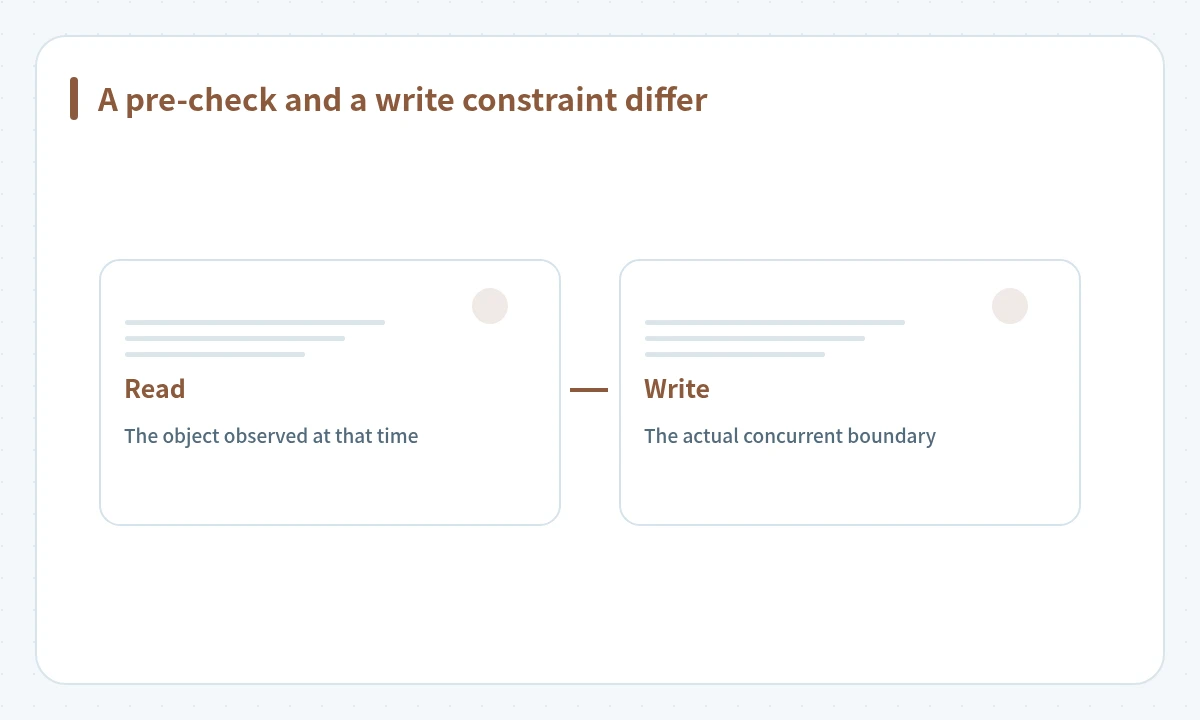
Inspect the race at the write boundary
In an authorised environment, pause two controlled tasks after their checks and allow both to continue. Observe the real constraint result using harmless records. This explains the gap between the check and insertion without repeatedly sending messages to real customers.
| Stage | Purpose |
|---|---|
| Business identity | Define which writes refer to the same object |
| Pre-check | Improve the normal path and feedback |
| Constraint | Enforce the rule during actual writing |
| Conflict handling | Relate the existing object to the request |
Do not return an existing record for every conflict automatically. Establish that the current caller may read it and that it represents the same intended operation. Otherwise a convenient duplicate path can reveal another account's object or attach the new task to the wrong result.
Coordinate external effects separately
If creation triggers a notification, follow the design linking a committed result to later work. A unique constraint limits a class of stored duplicates; it does not make an external provider execute exactly once. Keep its operation identity and supported repeat handling explicit.
Classify the error before applying recovery. A structural problem or lost connection is not a unique conflict merely because it happened during insertion. Different failure categories need their own outcomes rather than one blanket return-existing branch.
Define whether a recognised repeat is allowed to update the existing object or only report it. A conflict handler that overwrites values automatically can turn a duplicate request into an unintended edit. Compare the relevant immutable identity and supported change policy before choosing the result. If another task owns an incomplete object, expose the appropriate pending or reconciliation state rather than claim completion. This gives concurrent callers a consistent way to understand the same business operation while leaving ordinary edits and genuine new records within their own authorised paths.
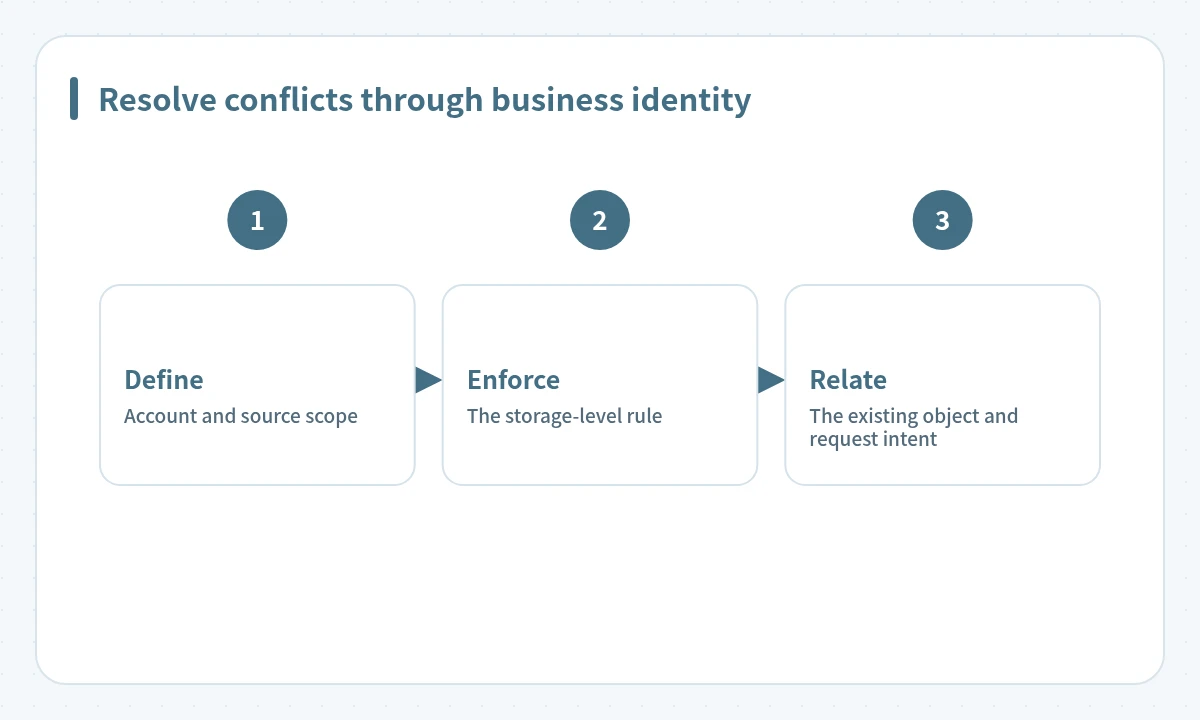
Make the recovery result understandable
Distinguish created, recognised existing and unresolved outcomes with the original request relationship. An operator should be able to determine which object is authoritative without reading a complete private message history.
Test concurrency, changed permissions and rollback paths, then inspect the final object and task state together. Record the constraint category and limited references in diagnostics. The repair should enforce the intended relationship at the actual boundary and explain conflicts accurately, not hide them behind repeated pre-checks or unbounded retries.
