
An import preview can reduce mistakes without guaranteeing that execution is safe. A simple mobile SMS number application should validate the reviewed file, mapping, target and current authority again at the appropriate commit boundary. A confirmation of one input should not silently apply to another.
Bind review to the actual material
Retain the file identity, parsing settings, mapping and intended resource. If the file changes or the mapping is edited, repeat the relevant checks. A target reassignment can also change who may import what.
Temporary files and previews need suitable access and retention. Do not place an entire private history in a public directory or put every rejected row into unrestricted error output. Fictional samples are sufficient for ordinary development fixtures.
The preview itself should have a defined effect. A mode called check should not silently update records or call external services unless those actions are explicitly intended and authorised. Its name is not proof that the operation is reversible or read-only.
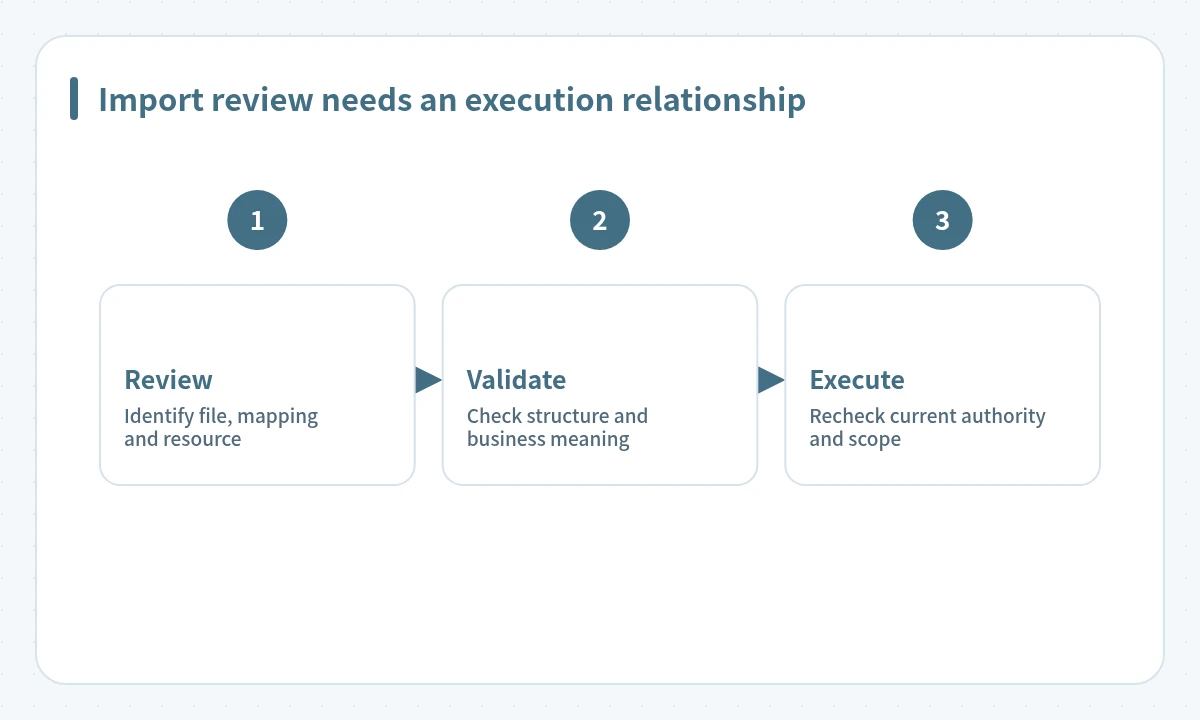
Separate parsing, validation and commit
A readable format does not establish correct field types, source identity or business associations. Validate necessary values, time meaning, identifier scope, resource ownership and duplicate candidates according to the import contract.
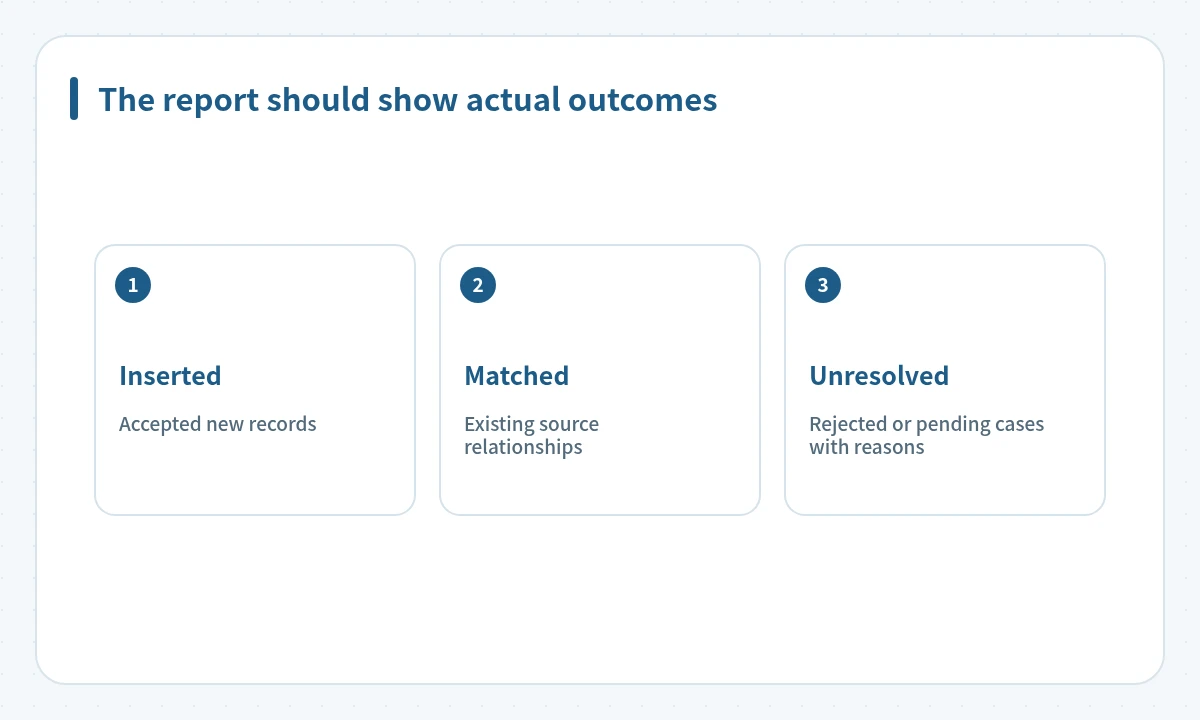
Decide whether the product provides all-or-nothing execution or an explicitly partial outcome. Record results in a way the user can trace. A failed subset should not be presented as total success, and rollback should not remove data that existed before the import.
Missing or invalid values need deliberate handling. Converting every failure into an empty value can create apparently valid records with lost meaning. Keep unresolved rows distinguishable from accepted rows.
Recheck authority at execution
Permission during preview is not a permanent grant for later commit. Background work needs trusted account and resource context, not an administrator role supplied in a hidden form field.
For a long operation, provide a defined state and recovery route. A client timing out does not establish that nothing was written. Supported retries should identify the same import intent rather than create unexplained duplicate work.
Record the relationship between the approved preview and its execution result. A file digest or another suitable integrity reference can help identify the input under the design, but it does not establish authorisation or correctness by itself. The final operation still needs its mapping, resource and permission checks. Keep any preview expiry rule understandable to the operator.
Exercise failures at different boundaries
In isolation, test a changed file after preview, interruption during commit, a relevant permission change and response loss. Inspect stored data and the report against the chosen atomicity or partial-success rule.
Include a repeated import with known source references. The outcome should distinguish new, matched and rejected items without inventing new external identifiers simply to avoid a duplicate warning. Inspect temporary-output cleanup under the actual process too.
After execution, compare counts and sample associations with the confirmed scope. Retain limited source references and reasons, not a permanent copy of live verification material in the report. A useful import result explains what was examined, what was changed and what remains unresolved under the same input and authority boundary.
