
The third column in a new SMS file is not necessarily the message body. An online virtual phone inbox importing history should match fields by their documented meaning, not an old column position. A file can parse successfully while placing a sender, timestamp or private note into the wrong target field.
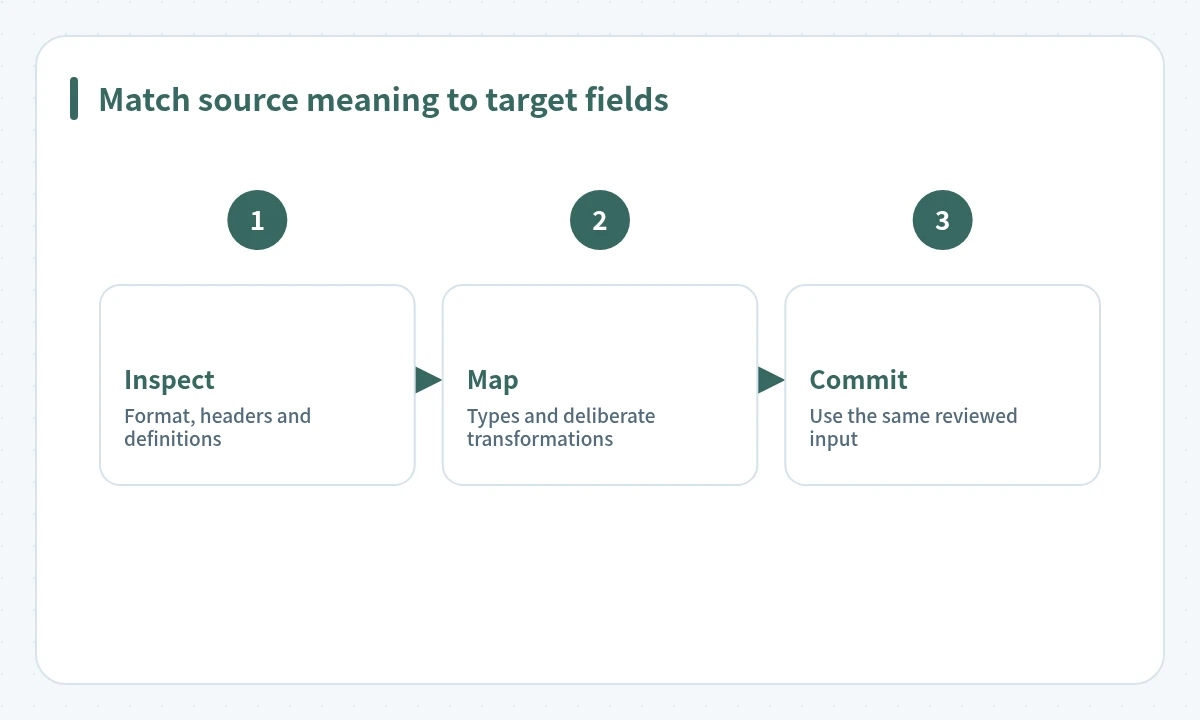
Establish the source format before mapping
Identify the source, file version, delimiter and encoding. Then inspect the header and field definitions. Provider receipt time and business event time should not become one date field merely because their labels resemble each other.
Likewise, recipient, sender and a local contact note have different roles. If a field has no reliable definition, keep it unresolved rather than guessing from a few rows. A sample that looks like a phone number does not establish the meaning of the whole column.
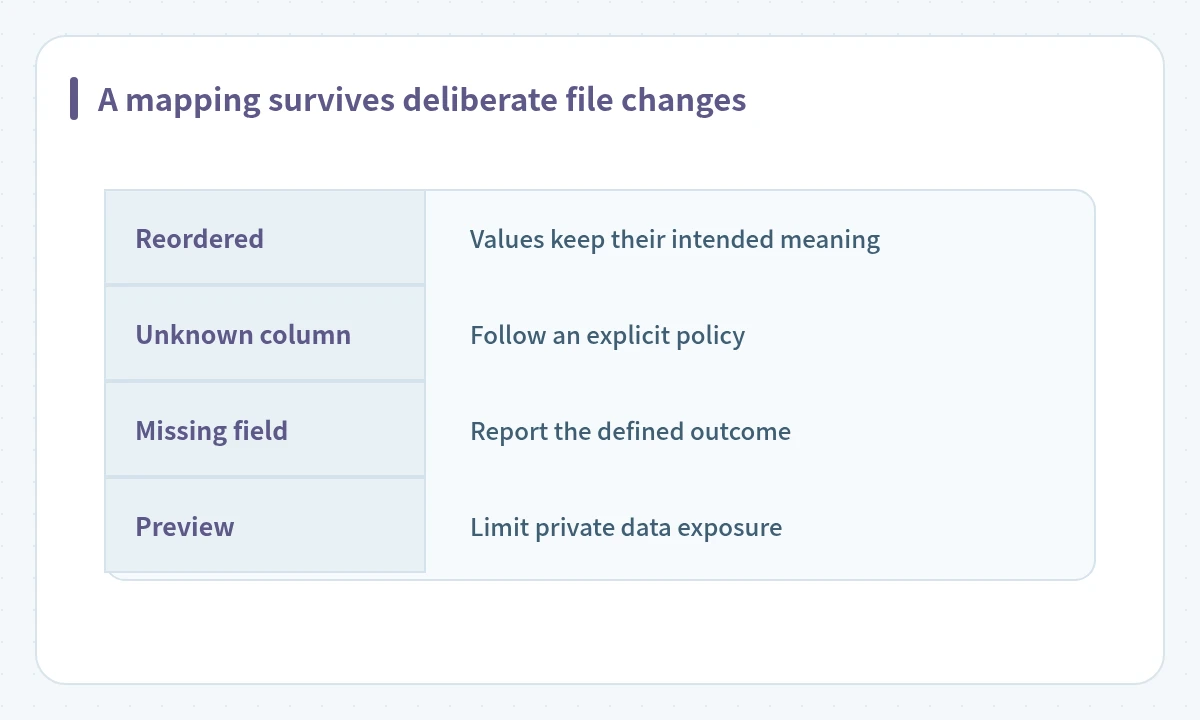
Define how duplicate, blank and unknown headers are handled. Silently choosing the last occurrence of a repeated name can conceal a structural problem. If the importer accepts a fixed schema, reject a mismatch clearly instead of shifting extra columns into the remaining fields.
Retain a reproducible mapping
Keep the source field, target type, requirement and transformation together. Phone numbers and message identifiers need their own representation rules; a digit-like value should not automatically become an arithmetic number.
For time conversion, retain the unit, zone and meaning. Make derived fields distinguishable from source values. An importer should not overwrite an unexplained original with a convenient display string and leave later operators unable to trace the change.
Import only the fields needed and authorised for the task. An extra internal note or another resource’s content should not enter the target automatically. Preview handling needs suitable access and masking rather than exposing the full history to everyone who can open an import form.
Test the mapping with deliberate differences
Use fictional rows with multiline bodies, empty fields, similar identifiers and different time values. Inspect each destination field. Then reorder columns, add an irrelevant column and remove a required one to check the intended policy.
These tests should exercise the parser and mapping together. A visually correct preview assembled from a different input path is insufficient. No active verification messages are needed for realistic structural cases.
Keep transformations visible in the review. A mapping can correctly select a column while a later default replaces its empty values or an importer trims meaningful characters. State which adjustments are intentional and show a safe example of their result. A column match and a faithful value conversion should be checked separately, including after a mapping is reused for a later file.
Bind confirmation to the actual import
At execution, validate the same file and mapping that were reviewed. If either changes, or the target resource changes ownership, repeat the relevant checks. An approval of one input should not silently authorise another.
Report inserted, matched, rejected and unresolved records separately, with limited source references and reasons. Avoid dumping private rows into general logs merely to make an error report look complete.
After import, inspect sample associations and the intended resource and time range. No exception being raised is only one observation. The closing result is that fields have the intended meaning in the target, with a mapping another authorised operator can reproduce when the next source file changes.
