
A requested hostname needs validation before it selects a trusted site or generates an outward link. Use approved host mappings and current resource authorisation instead of treating a caller-supplied Host value as account authority.
A request name is not a grant
A virtual disposable sms inbox deployment may distinguish sites by domain. OWASP's Host Header Injection guidance describes risks from using untrusted host information. Supplying a hostname does not establish that it is bound to the intended site or that the caller may read its private resources.
Trace the fields accepted by the reverse proxy and application, including which sources may provide forwarding information. An arbitrary forwarded-host header should not become the trusted tenant choice merely because it resembles a value used by a legitimate proxy.
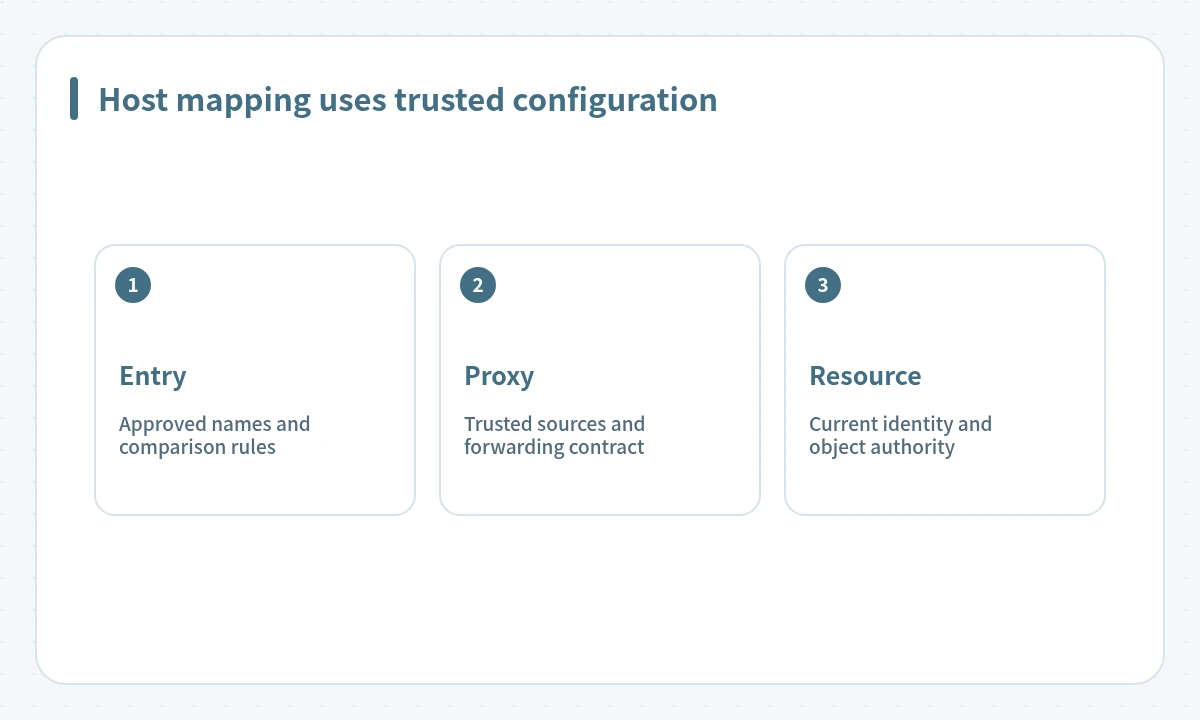
Give binding and URL generation explicit rules
Use the approved configuration's domain relationship. Unknown or unsupported host values need a defined result. A string containing a familiar brand fragment should not automatically select a real account.
| Layer | Control basis |
|---|---|
| Entry | The approved hostname scope |
| Proxy | Trusted sources and forwarding contract |
| Site | The formal configured mapping |
| Resource | Current identity and object permissions |
For notifications or recovery URLs, use a confirmed configuration source rather than insert the request's arbitrary name into an external address. Cache identity and redirects need the same trust review, so a bad host cannot influence a result subsequently shown to another user.
Rehearse only the authorised deployment
Use approved test hosts and harmless resources for valid bindings, unknown values and proxy paths. There is no need to probe another organisation's site or include real credentials in a test link. Inspect the application's actual selection and generated address, not only whether a server responded.
Where aliases are supported, define their relationship to the primary site explicitly. An alias should not accidentally create another independent resource scope or a public recovery route with different trust assumptions.
Define the accepted representation before comparing a host with the approved mapping. Supported handling of a port, a trailing dot or another permitted form needs a documented rule, not a broad substring test. Use the framework and proxy’s actual validated fields and reject ambiguous input under the deployment contract. The mapping should remain server-controlled even where an account administrator may request a new domain binding. A request to add a name and an active approved binding are different states. Verify that the new relationship has completed the required process before it can select private resources or become the source of outbound links. Keep those state changes in the authorised configuration workflow.
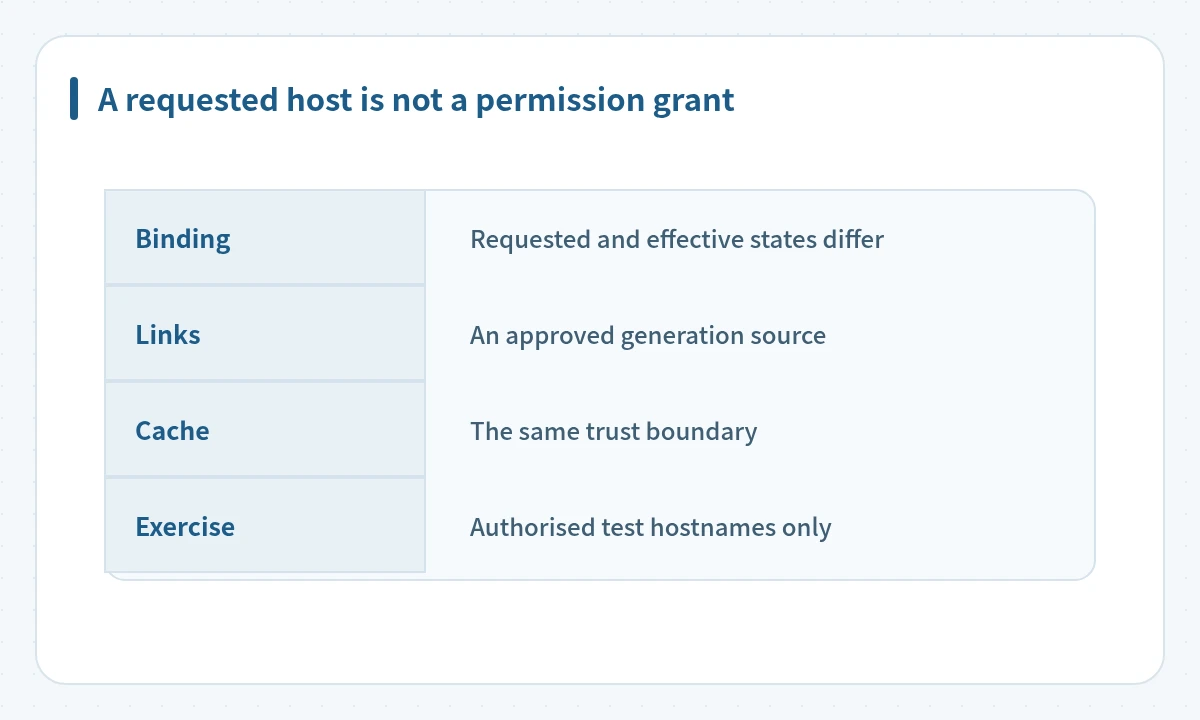
Review all consumers after a domain change
Check configuration generation, caching, backend preview and link construction against the current approved source. Replacing one navigation link is not evidence that the underlying resource selection now follows the same mapping.
Keep restricted host details, handling categories and request references in diagnostics. The final conclusion should follow the effective binding and actual authorisation. A reachable address is an observation about routing, not a complete check of the site's private-data boundary.
