
A promotional-message preference needs a defined scope across saved settings, queued work and future triggers. Inspect the application’s task state as well as a harmless receiving test to confirm which work stops.
Explain the setting in terms the player understands
Name the purpose and channel, such as event invitations by text, rather than an internal team or database flag. If several games or brands share an account, make clear which product the setting covers. Do not silently expand or shrink that scope.
The business must decide which categories are optional and how requested actions are handled. That decision needs to be reflected in the product; it is not solved by marking every message as an essential account notice.
After saving, show the effective preference and any stated processing condition. A local checkbox that changed visually is not the same as a saved server value. Reopen the normal setting to confirm the result under the intended account.
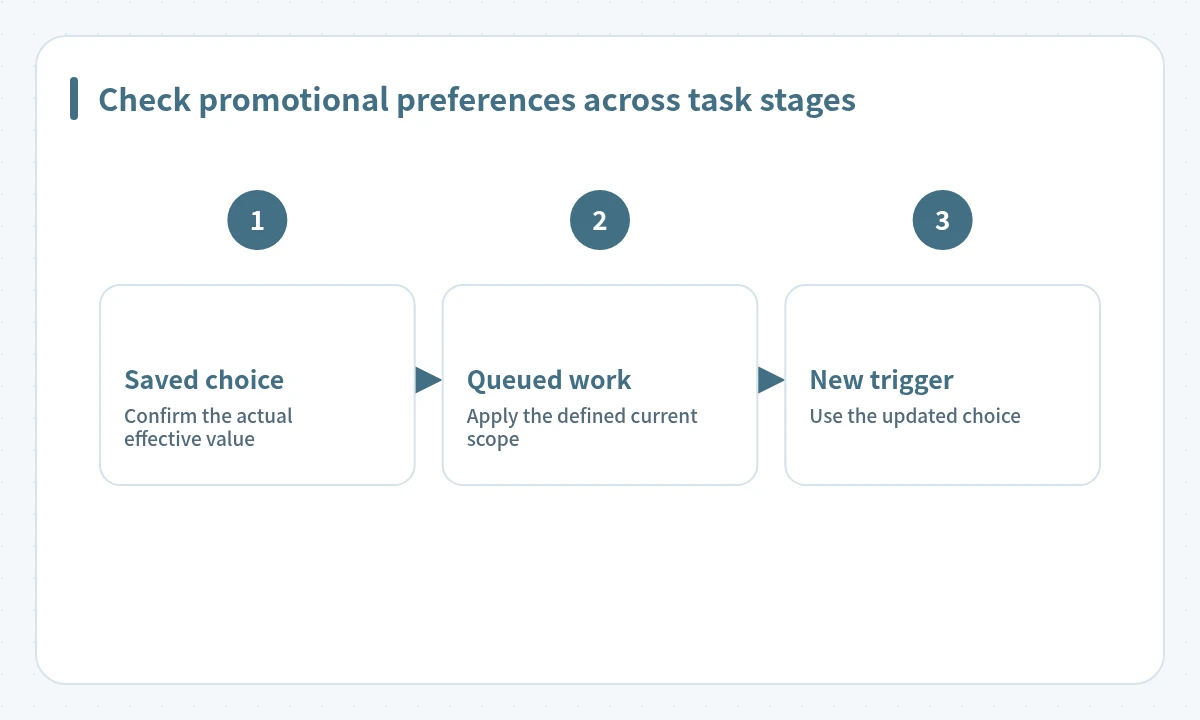
Check work before and after handoff
Create a harmless promotional task in an authorised test environment, then change the preference before the application sends it. Inspect whether the task is stopped, revised or otherwise handled according to the published scope.
Now trigger another task after the change. It should use the current choice, rather than a stale profile copy. These are different test points: old queued work and new event creation can rely on separate code paths.
For a message already handed to a provider, determine the actual cancellation possibilities. Do not claim all messages were recalled because the setting saved. Conversely, do not ignore work still under application control merely because some external messages cannot be recalled.
Keep channel and task outcomes distinct
Silencing the phone changes a presentation path, not the sending application’s subscription state. Blocking a local sender can hide an observation without changing what the game attempted. Use the appropriate saved preference and task records for those questions.
Where email and push have separate controls, test their stated relationship. Closing one channel must not be interpreted as permission to increase another. The user-facing description should explain what remains active and why, according to the actual product.
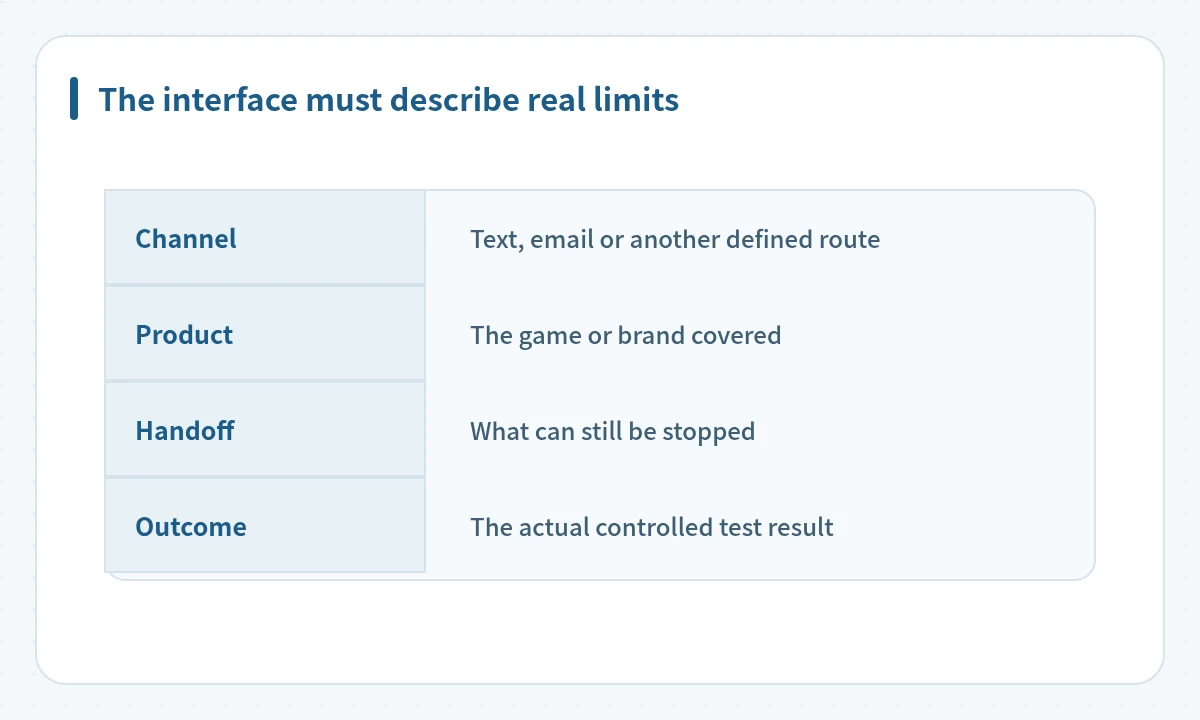
Run a complete preference-change exercise
Use a controlled sequence: enable the defined category, create pending work, disable it, trigger another event and inspect the outcome. Include reopening the setting from another normal session where supported. No real customer needs to receive repeated test invitations.
Also test a request that the player initiates, such as a permitted sign-in verification. Confirm how it is classified instead of assuming it inherits the promotional setting. Retain the real product’s restrictions and end conditions.
Record task references, setting scope, timing and observed results without collecting live authentication material. If a test fails, identify whether the stale value came from the preference store, a queued payload or the sending worker.
The useful closing statement is specific: the chosen category and channel follow the saved choice at the documented stages. A broad claim that all communication has stopped would hide the very distinctions this check is meant to establish.
