
A requested game sign-in code, an account-change notice and a promotional invitation have different jobs. A private online SMS inbox can help inspect authorised test messages, but the product must still manage each purpose separately. Shared sending infrastructure is not a reason to merge preferences, retry rules or reporting.
Name the reason for contact
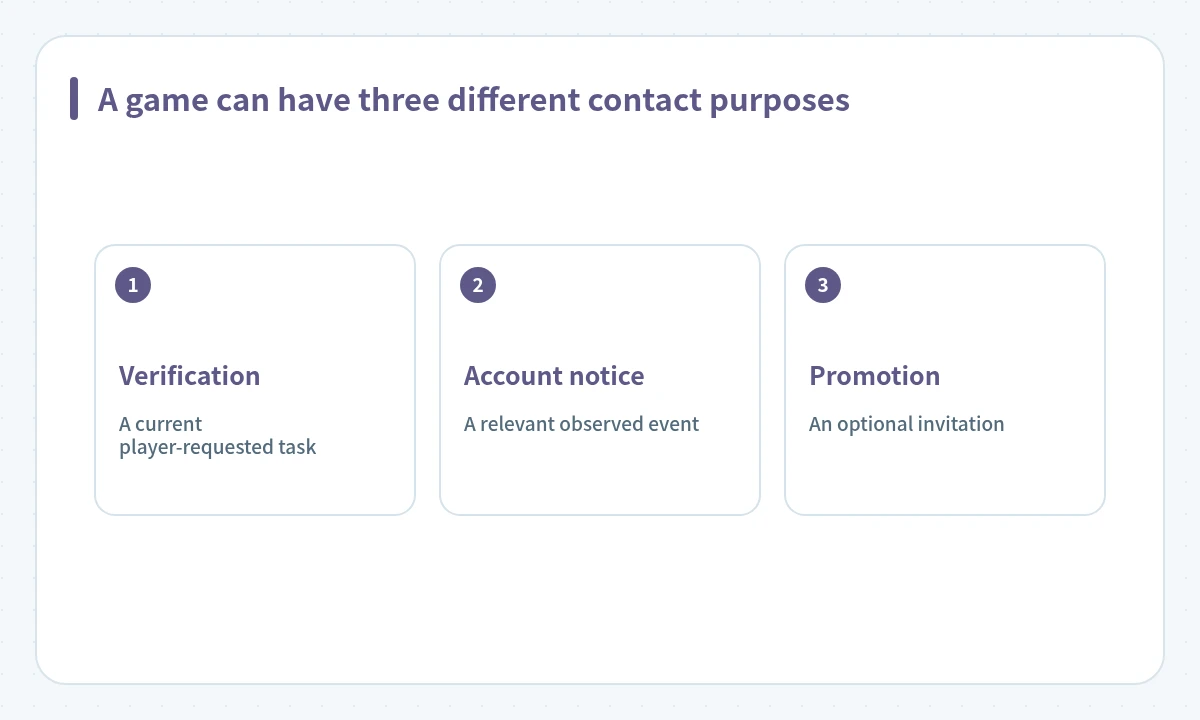
A verification message belongs to a specific player-initiated request. An account notice describes a relevant event. A promotion offers an optional reason to return. Use purpose labels that the product and its operators can understand, with an appropriate business-event reference.
Do not put active codes into marketing reports to count engagement. Likewise, the number of verification messages is not a count of people reached by a campaign. Separate records make it possible to explain repeated requests without treating them as promotional success.
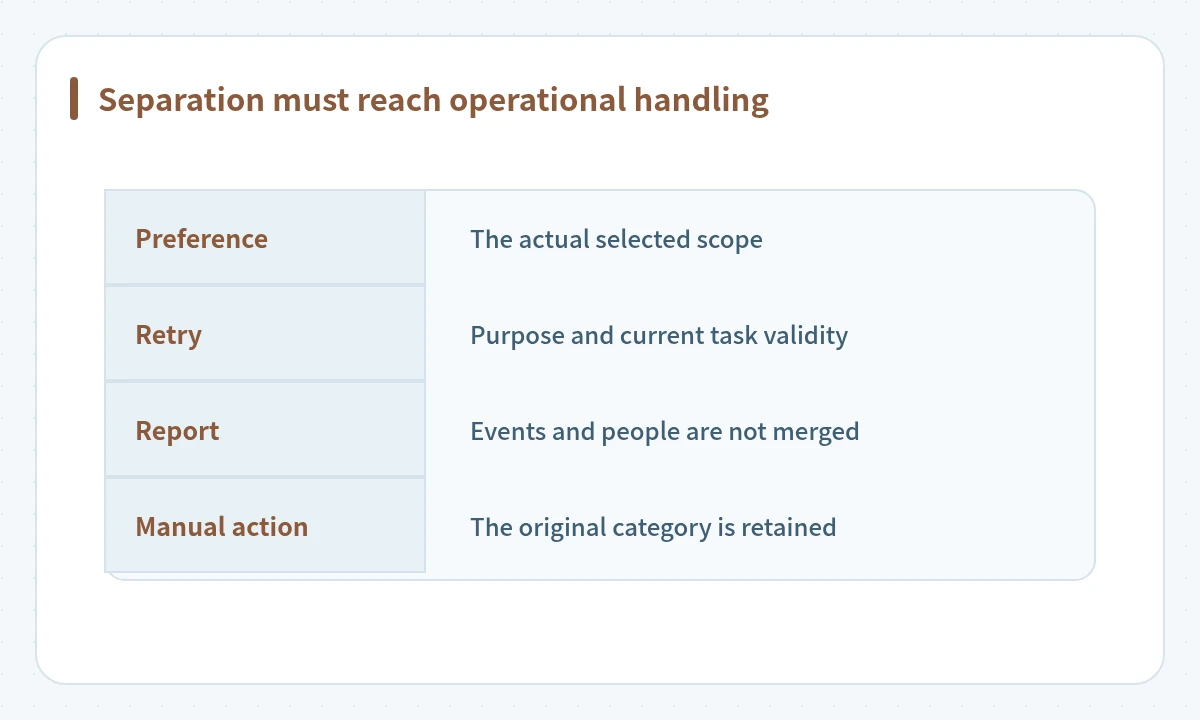
The actual business must determine which contacts are permitted and which settings apply. Categorisation is not permission to rename every message essential. The visible preference descriptions should match the system’s real handling of each purpose.
Follow each message’s own timing
A verification retry should refer to its original task and the current resend conditions. A promotional retry needs a different question: is the invitation still relevant? A failed event should not enter a generic queue that sends it whenever capacity returns, regardless of purpose or expiry.
Account notices also need their event time retained. If a notice arrives late, the destination should show the current state rather than pretending the old action is happening again. The same sending channel can therefore require several distinct end conditions.
Where a common worker handles all categories, give it explicit purpose and state checks. Do not rely only on template filenames. Two messages with different wording can still inherit the same incorrect retry or preference logic underneath.
Verify separation by changing a preference
Use a controlled account to disable the defined promotional category. Inspect a queued invitation still under the application’s control, and then trigger a new invitation. Both should follow the stated setting and its actual scope.
Separately request a supported registration code through the normal flow. Check that its handling follows the verification rules rather than accidentally inheriting the promotional switch. If a service restriction affects both, present the actual restriction instead of promising separation the product cannot deliver.
Check how operators select a template during manual recovery. A generic resend menu should retain the original purpose and current task state. Otherwise a well-separated automatic workflow can still be undermined by a manual action that sends the wrong category.
Include cancelled and expired tasks
Cancel a fictional registration attempt and inspect what happens to its outstanding work. Open an invitation after the event has ended. The interface should explain the present condition, rather than silently creating a new task from an obsolete message.
For tests, retain purpose, event reference, expected state and observed outcome. Harmless sample text is enough to inspect routing and preferences. Personal accounts and real customer codes are unnecessary fixtures.
Finish review at the assembled workflow: page wording, saved preference, pending work, provider handoff and destination. A set of neatly named templates is only one part. The practical result is that the player’s requested action and chosen contact scope remain understandable throughout the task, including after interruption or delay.
