
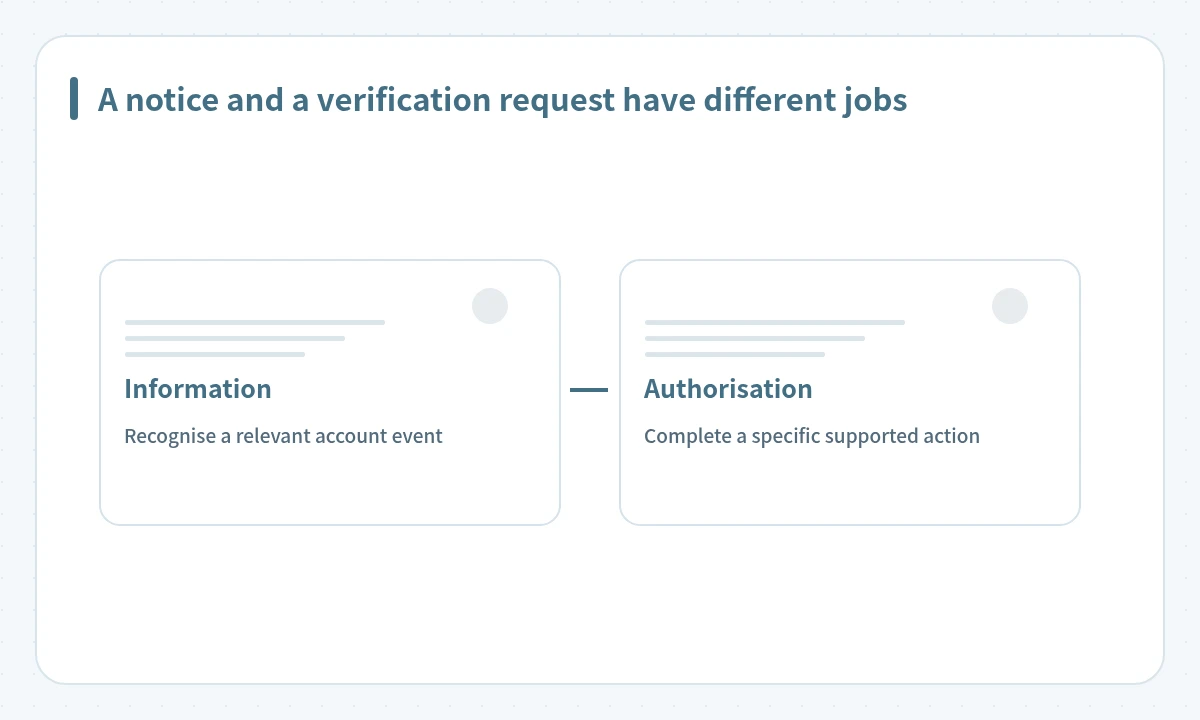
A financial notice and a verification request have different purposes. Select the information needed to recognise or authorise the current action instead of turning the inbox into a copy of a full financial profile.
State whether the message informs or authorises
A notice can report that a defined event occurred. A code can be part of a current authorised action. Combining the two without clear purpose can make the recipient unsure whether reading the text, entering a code or visiting an account page is expected.
The actual financial service must define the permitted process and fields. This design discussion does not determine product-specific notification duties or identity checks. Responsibility for those requirements belongs with the people managing the real service.
Do not ask a customer to return an active code to an ordinary support conversation. A helper can explain the official process without taking possession of authentication material. Keep that boundary visible in message templates and feedback forms.
Choose fields according to the decision
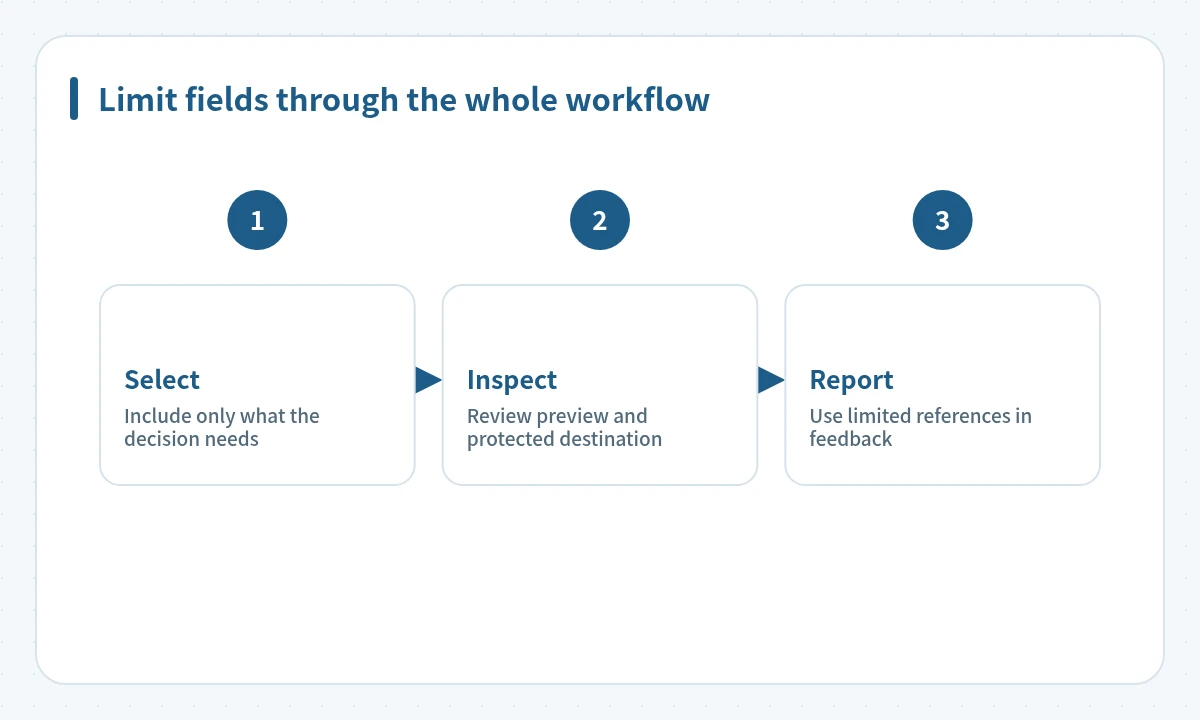
Write down what the reader must establish. If the purpose is to recognise a change, ask whether each proposed field helps that recognition. Information being available in a database is not sufficient reason to copy it into a text.
Lock-screen and desktop previews may reach other viewers. Full account details, addresses and identity information need their own justified handling. Use the business’s actual approved display rules, not a universal masking pattern invented for every product.
If more detail is required, direct the account holder to the familiar protected account route. A short notification should not become an alternative copy of a complete statement merely because there is enough character space.
Keep independent verification available
A familiar sender label or urgent wording does not establish identity. The recipient can inspect the event through a known official application or website. They should not need to follow an unexpected link or call a number supplied only by the questionable message.
The FTC’s guidance on unwanted texts recommends contacting a company through a route known to be genuine when a message is uncertain. That is a useful communication boundary, rather than a claim about whether any individual notice is fraudulent.
Check notification copies retained in support tools too. A carefully limited text can be undermined if an ordinary ticket automatically stores a full account response. Review the fields crossing that boundary with the people responsible for the actual workflow.
Review feedback and testing as part of the workflow
Use fictional records to inspect previews, field selection and the destination page. Include a historic notice opened after the account state changes. The protected page should explain the current result without replaying an old transaction.
For an incident report, start with a time range, masked reference and event description. Keep unrelated transactions and active codes out of ordinary tickets. Additional evidence should have a specific purpose, suitable recipient and defined handling.
Confirm the final templates with the responsible business team, including product-specific requirements that remain outside a general writing checklist. The result should be a message whose purpose and next step are understandable, without unnecessary replication of sensitive account material.
Reference: FTC: advice on avoiding text-message scams.
