
An encrypted backup that exists may still be impossible to restore. For an SMS capable web SMS inbox, identify the permitted data scope, supported tooling and access to the required decryption material. Confidentiality and recoverability need to be verified together rather than inferred from an encrypted filename.
Separate the data inventory from secret custody
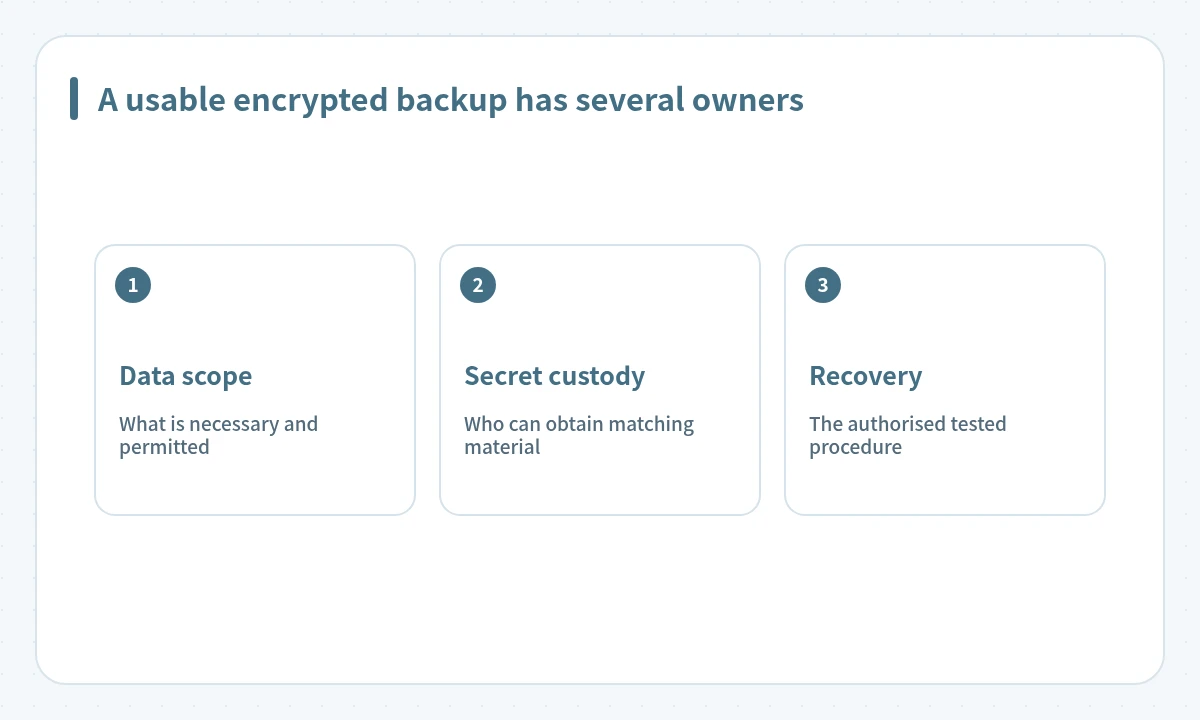
Back up only necessary records you are authorised to retain. Encryption is not a reason to collect old active codes indefinitely. Keep the resource, period and purpose clear while managing decryption authority under the actual operational arrangement.
A non-secret recovery note can identify the tool, version and prerequisites. Do not invent an encryption scheme or put a password into the archive name, public script or ordinary support ticket for convenience.
The backup and key do not need identical access arrangements. Define who may obtain each and who may perform recovery. Giving every file recipient the complete decryption material can defeat the intended audience restriction.
Check the failure the backup must survive
If the key can only be retrieved from the same account that might be unavailable, the arrangement may not address the real scenario. Use an appropriate supported recovery path and verify the responsible person’s authority to use it.
After staff changes, key rotation or tool upgrades, confirm that required materials still correspond to the files retained. Testing a newly created archive does not establish that an older archive made under another configuration remains readable.
Keep retained versions and their requirements understandable. A collection of unexplained encrypted files can leave operators guessing which key or process applies, even when each file was created successfully.
Exercise recovery in isolation
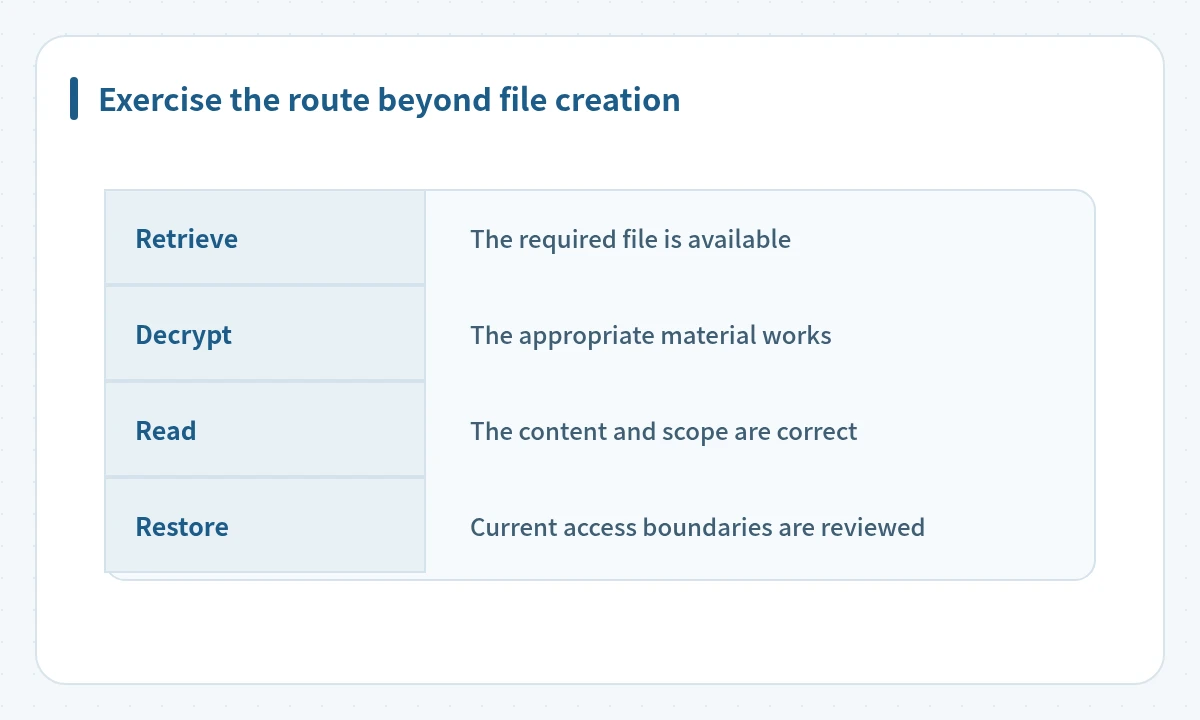
Use approved harmless samples to check encryption, storage, retrieval, decryption and actual reading. A tool exiting without an error is not the whole result. Verify file integrity and the intended content scope under the chosen process.
The recovery environment should not automatically connect to real external actions or send messages. A data copy alone does not isolate deployed credentials, scheduled workers and other integrations.
Review who can perform a recovery if the usual custodian is unavailable. A backup plan relying on one person’s memory can fail even when the file and key are intact. Use the organisation’s authorised contingency arrangement and verify it with a harmless exercise. Record the role and process without distributing the actual secret to everyone involved in the discussion.
Treat restored access as another boundary
When data is restored into an application, review current membership, resource ownership and dependencies. Decryption capability is not a decision that a new number holder may view an earlier user’s history.
Define suitable retention and access for the archive and recovery material. If either may be exposed, follow the actual tooling and business procedure. Changing a current password should not be described as removing already copied old files.
Keep the exercise conditions, result and responsible owner without recording the secret in the report. OWASP’s secrets-management guidance supports treating recovery material as managed credentials. Close with a tested route to the necessary data and an appropriate audience boundary, rather than a file nobody knows how to open.
Reference: OWASP: secrets management.
