
A duty-roster text needs a current owner, not just a visible inbox. Design the notification around the shift assignment so that a message arriving near handover can still reach someone who is responsible for the work.
Identify the covered interval
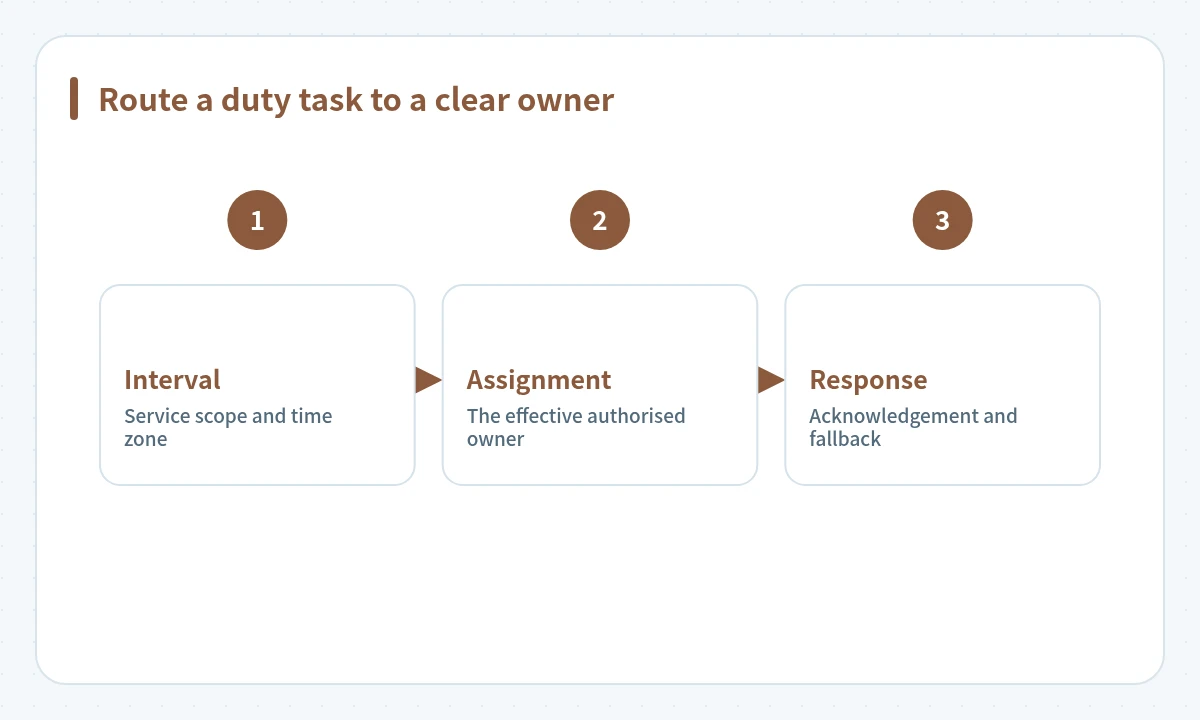
Keep the duty period, time zone and relevant service or queue with the assignment. A person's name without a coverage interval becomes ambiguous when shifts overlap or a replacement is arranged. Use the approved roster as the authority, and give changes an explicit effective time under the team's process.
A no sim sms code receiver may describe a receiving arrangement, but it should not become a shared source of personal authentication codes for the duty team. Keep duty notifications limited to the operational task and direct each authorised responder to their own appropriate account access.
Distinguish notification, acknowledgement and assignment
A delivered notice does not tell the coordinator who has accepted the task. Define the acknowledgement mechanism and the record that holds the assignment. If reading a message is not that mechanism, avoid using the inbox's read marker as a staffing decision. Another person can open a text simply to check what happened.
| Field | Operational purpose |
|---|---|
| Duty interval | Determine which shift covers the event |
| Current owner | Name the accountable role or person |
| Acknowledgement | Record acceptance through the supported process |
| Escalation route | Resolve absence or an unanswered assignment |
Apply the organisation's actual escalation rule rather than inventing a universal response time. The fallback should reach an authorised person who can act, and should preserve the original task reference. Sending the same notice to a larger group can increase visibility while leaving ownership just as unclear.
Handle the changeover deliberately
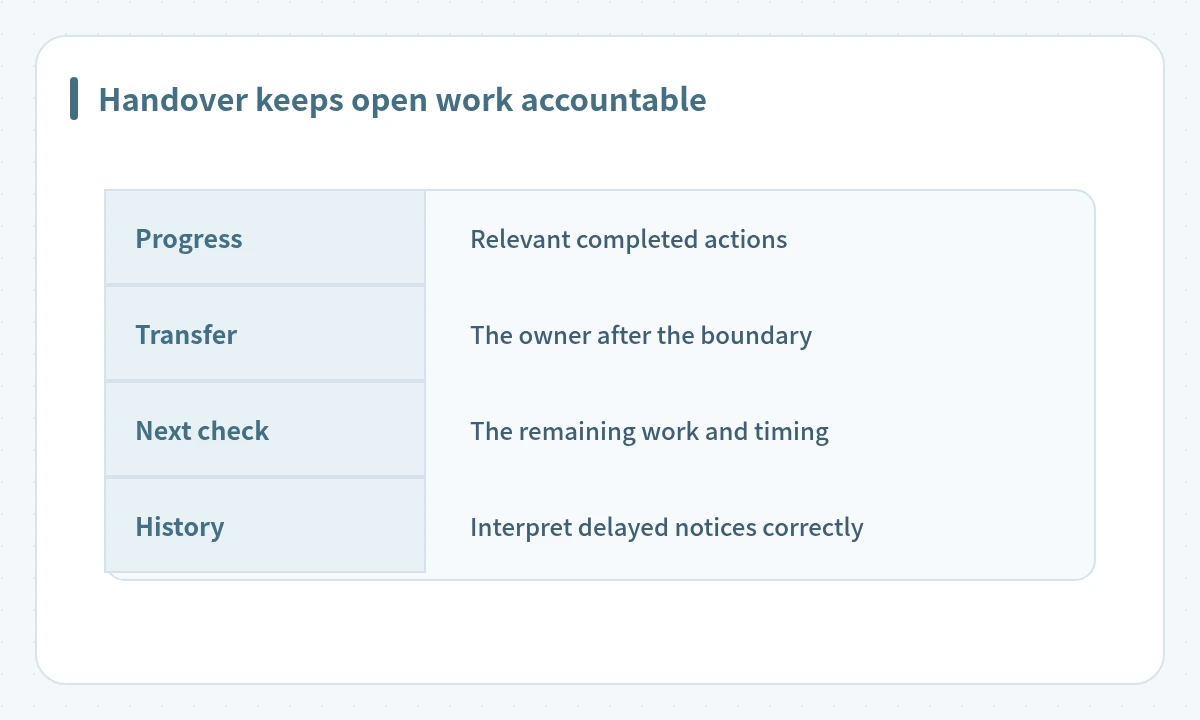
At handover, review open tasks and name the owner after the boundary. A task raised during the earlier shift can still require an explicit transfer. Note what has been done, what remains and any next check time. Avoid pasting private message bodies or account secrets into the roster simply to make the handover appear complete.
Keep schedule corrections distinct from retrospective work attribution. Updating tomorrow’s roster should not silently rewrite who was responsible for an event yesterday. Where the system supports an assignment history, use the relevant effective interval to interpret a delayed notification. If that history is unavailable, record the confirmed handover decision in the authorised work record. The purpose is an understandable chain of responsibility, without distributing unrelated staffing details to everyone who can see a notification.
Test reassignment with harmless notices
Exercise a planned shift change, an absent responder and a replacement assignment using controlled test messages. Verify the roster lookup, acknowledgement record and fallback destination together. The test question is whether the task ends with a clear authorised owner, rather than whether several phones displayed an alert.
After a real schedule change, retire the obsolete assignment in the supported record. A lingering notification subscription can keep an off-duty person involved even when the roster looks correct. Review that receiving route and the replacement's access with the responsible administrator. Keep the final work history attached to the task, so future reviewers can distinguish a late notice from a late response and understand which shift was actually accountable.
