
A database field change must account for old and new application processes running during deployment. A successful write from the new version does not prove that an older queued worker can still read the resulting record.
Find the real readers and writers
A text enabled web sms inbox can receive changes through pages, callbacks, scheduled jobs and maintenance tools. List the actual consumers of the field, including work enqueued before deployment. Reviewing only the visible application can miss a background process that starts later with the previous code.
Identify whether the change adds, renames, changes the type of or removes a field. State the meaning of nulls, defaults and historical records. Choose an explicit transformation for each historical state and retain unresolved cases for review. A missing source value and a confirmed empty value may require different handling.
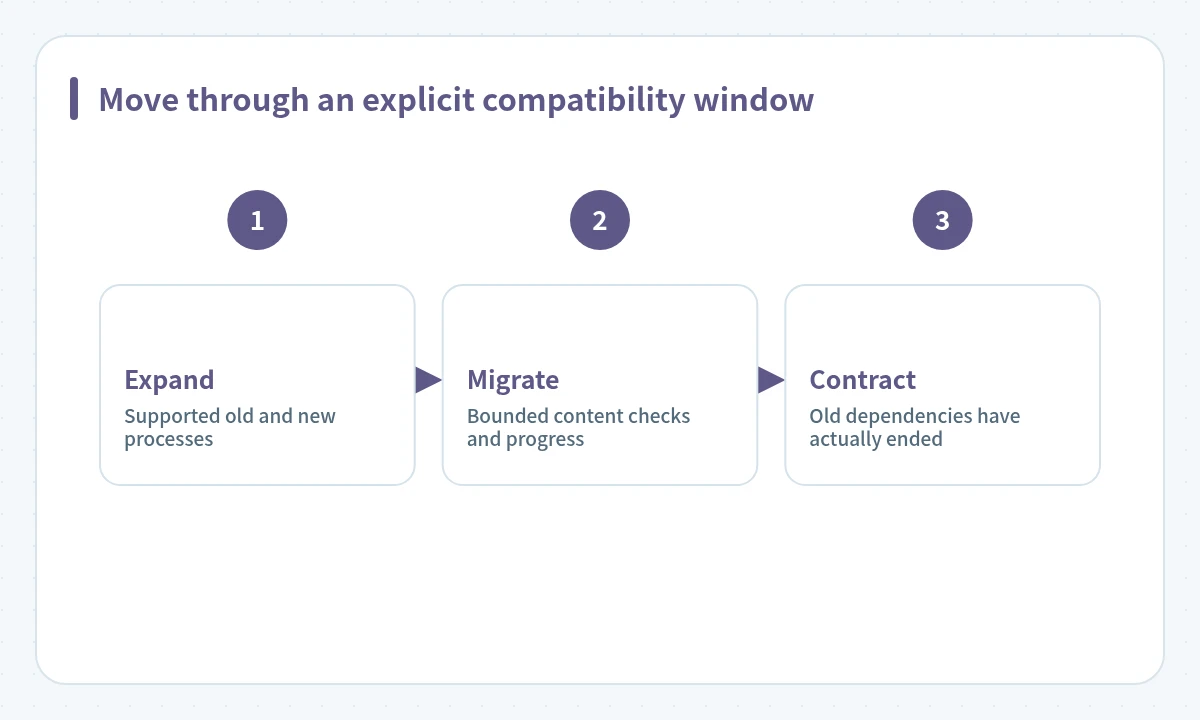
Plan an explicit compatibility window
Evaluate a rollout that first adds compatible structure, then introduces code able to handle the intended transition and migrates historical data in controlled steps. The right conversion or dual-write approach depends on the data relationship. Adding a second column does not by itself keep two representations consistent.
| Phase | Review |
|---|---|
| Prepare | Consumers and compatibility contract |
| Expand | Old and new processes can operate as intended |
| Migrate | Counts, content and unresolved records |
| Contract | Old dependencies have actually stopped |
Keep backfills bounded and resumable under the migration design. Record progress and failures with enough identity to revisit unresolved items. A single complete flag cannot explain whether every historical record was converted correctly. Compare counts with content checks and the applicable business conditions.
Verify the actual rollback path
Once new code has written a new representation, determine whether the previous release can still interpret it. Retaining old program files is not a complete rollback strategy if the schema or newly written data no longer meets their expectations. Exercise the approved recovery path before relying on it.
A backup is useful only within a considered restoration process. Identify the work and changes that a restore would affect rather than promising that replacing one file undoes an entire rollout. Keep this assessment inside the authorised deployment process and use isolated representative data for rehearsal.
Monitor the transition using evidence from each active version, not just the newest release’s success count. A shrinking old-worker population can still process the rare task that requires the retiring field. Use the deployment’s actual process and queue records to establish that the compatibility window has ended. That provides a defensible cleanup condition without leaving the obsolete structure indefinitely or removing it on an assumed schedule.
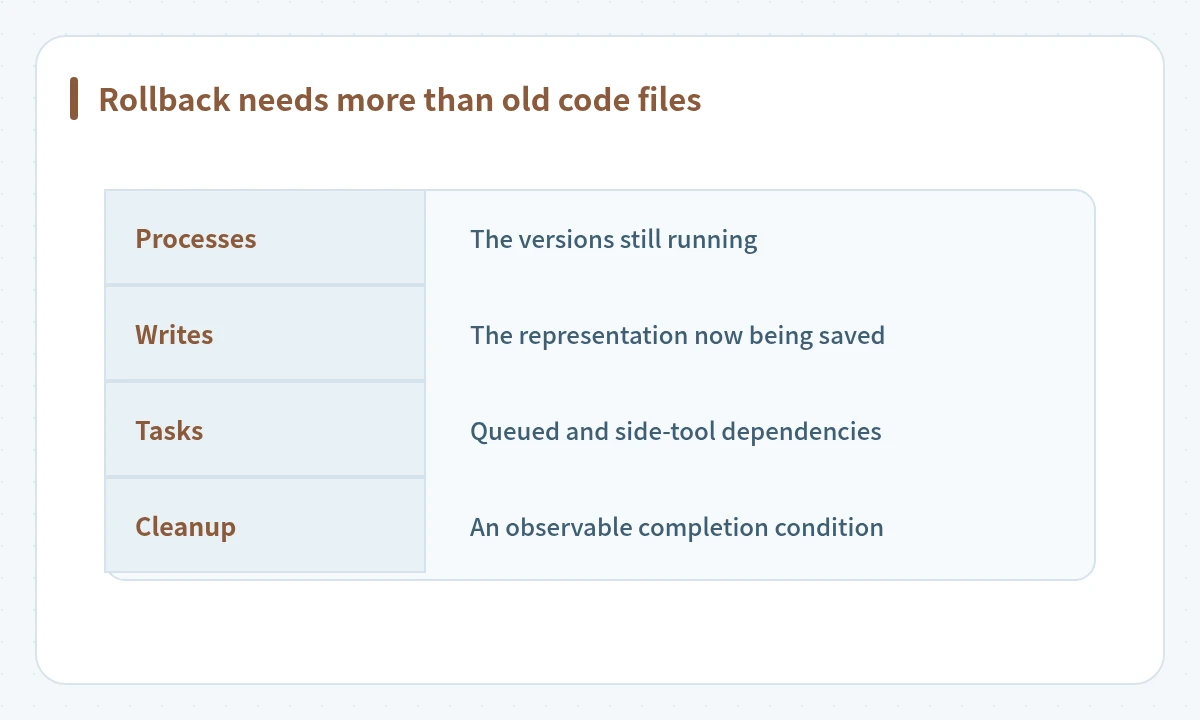
Remove obsolete structure after the evidence
Confirm that old processes, queued tasks and side scripts no longer require the retiring field. Consider supported restore and later-read needs before the planned cleanup. Avoid leaving two indefinite sources of truth with no owner, but do not delete the old representation merely because the first new page looks correct.
Keep migration diagnostics to the application version, batch and failed reference. Private SMS bodies need not appear in every progress report. The desired result is an understandable transition in which each active process has a supported data contract, and the final cleanup follows that contract rather than hiding incompatibility behind a short maintenance window.
