
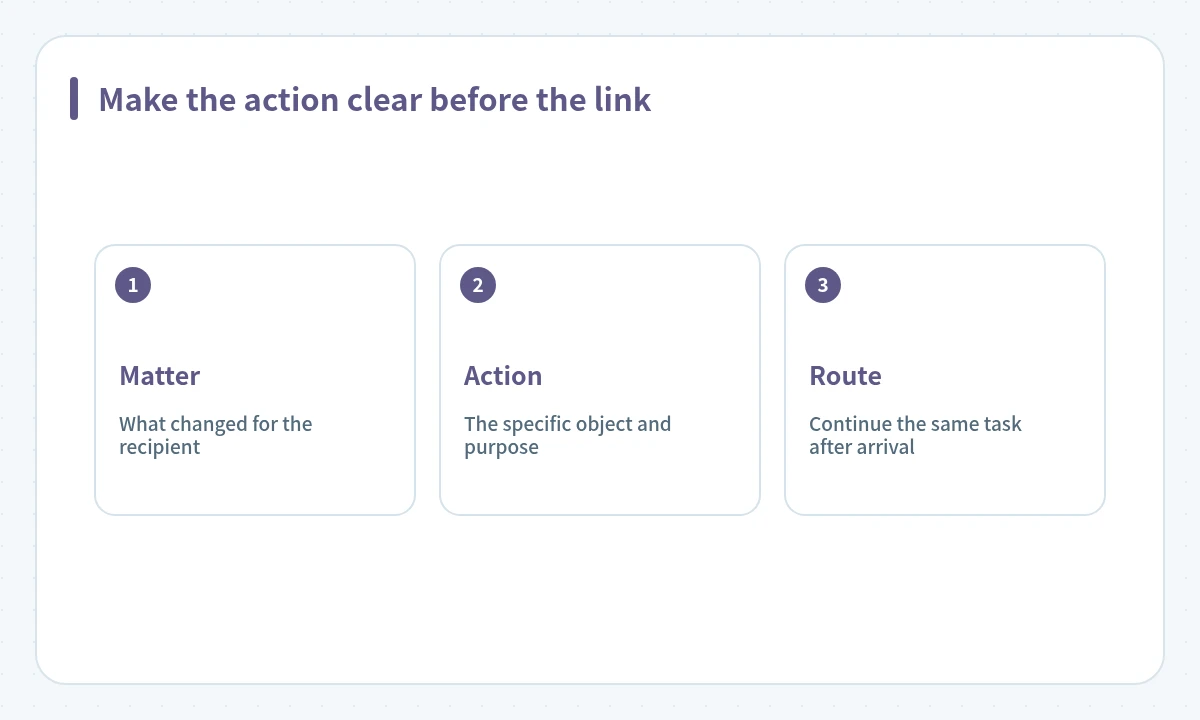
Before a link, a business text should tell the reader what happened and what action is relevant. A message saying only click here leaves the recipient to open an uncertain destination before understanding the task.
Give the action a specific object
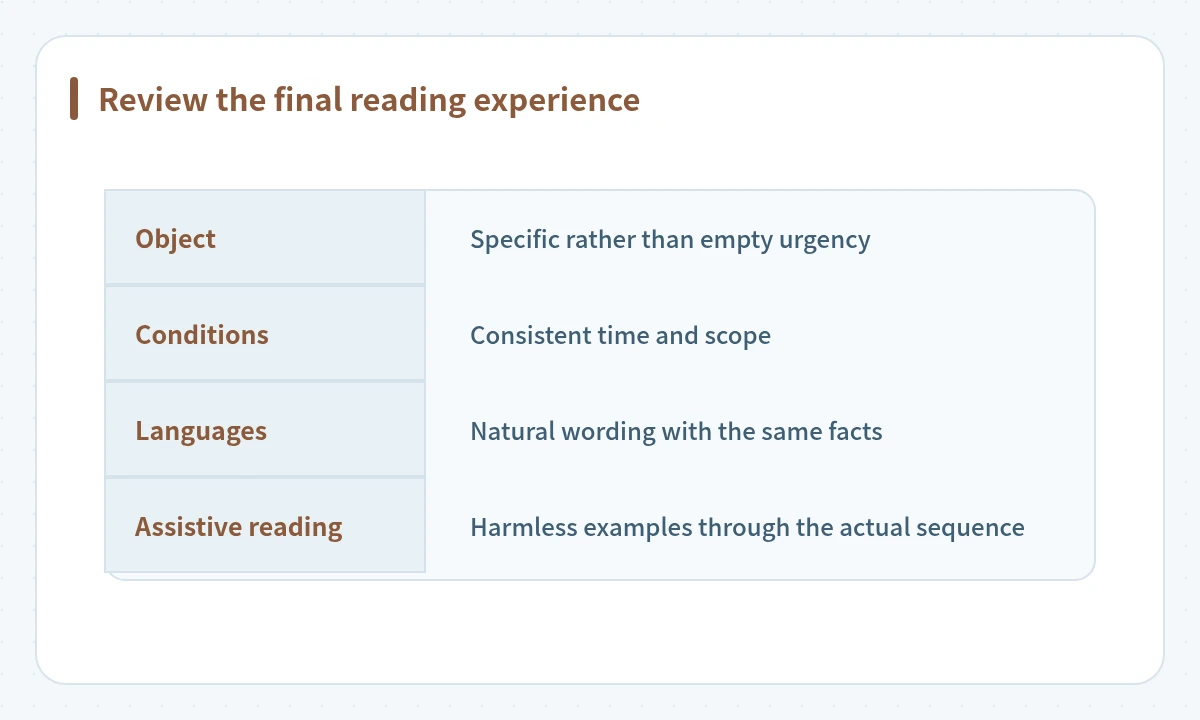
A single use private sms inbox notice can identify an appointment to review, a date to confirm or an updated arrangement to read. Use the actual task instead of repeating urgent notification and act now without explanation. The reader should have enough context to decide whether the message concerns them.
Not every detail belongs in the text, but conditions that determine the next action need to be understandable. Remove unrelated slogans and repeated background to make room for the object, relevant date and purpose. Keep urgency proportional to the real business situation.
A destination does not explain itself
The link description and landing task should agree. A view-details instruction should not lead only to an unrelated promotional home page. Where the workflow uses no link, provide a genuinely usable known way to inspect the matter rather than adding a decorative button.
- State the specific matter and current change.
- Name the action and its object when one is required.
- Keep applicable conditions and deadlines explicit.
- Check that the reader can continue the same task after arrival.
Do not ask for passwords or active verification codes in a purported safety instruction. A security reminder should not become another route for requesting secrets. Clear wording helps the reader understand the legitimate next step without being pushed into an unrelated account action.
Review the reading sequence
Give an authorised reviewer the final text and ask what matter and action they understand. Then compare that answer with the destination. A demonstration using a screen reader can reveal awkward abbreviations, symbols and repetition without reading genuine private customer content aloud.
Check long or unusual values through the final renderer too. A missing date or an overlong identifier can leave an otherwise clear instruction incomplete. Use harmless fixtures to confirm the fallback wording rather than assuming the editor's ideal sample represents every incoming record.
If a notification contains more than one possible action, give the reader a clear primary task and distinguish an optional help route. Several equally urgent instructions can compete even when each sentence is individually accurate. Review whether every action is necessary for this message and keep unrelated promotion out of the way. The practical check is whether the recipient can explain which step applies now and which route is only available if they need assistance.
Keep the same facts across languages
Natural translation can change word order while preserving the actual object, time and conditions. One language should not imply mandatory confirmation while another says the same message is informational. Review the final instruction in each language against the same business requirement.
A useful notice lets the recipient identify their next step quickly. It does not need repeated brand terms, several competing links or an exaggerated heading. Keep the purpose apparent before the destination and verify the actual continuation, so the message remains helpful to readers using different devices and reading methods.
W3C’s link-purpose guidance explains the value of understandable link text or related context. That is a useful review principle for a notification, alongside testing the actual message and destination on the supported reading path.
