
Two notification versions cannot be compared usefully if audience, timing and business conditions change unnoticed between them. Define the question and observation before attributing a different outcome to the wording.
Keep the intended change identifiable
A virtual browser text inbox notification test might ask whether an action instruction is clearer. Keep the task, destination and other relevant conditions comparable to that question. If the subject, offer, list and timing all change, the result cannot be explained simply as the effect of one sentence.
Retain an identifiable copy version and its actual use. A template overwritten later is not reliable evidence of what recipients saw earlier. Keep illustrative examples separate from measured results, and do not invent an improvement percentage or a winning variant without real records.
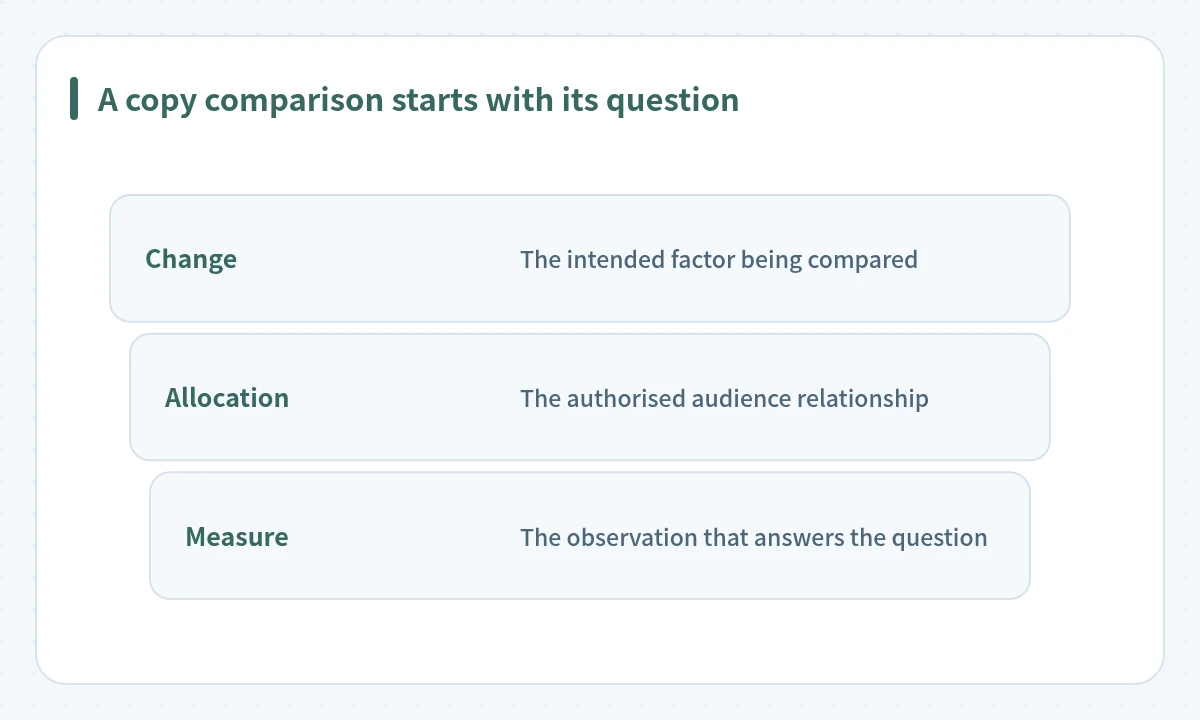
Decide allocation and measurement beforehand
Design groups within the authorised audience scope, rather than putting the most active contacts into one preferred version. An appropriate randomised or other comparison design depends on the task and available sample. Two convenient historical lists are not automatically comparable groups.
| Dimension | Record |
|---|---|
| Audience | Group source and applicable scope |
| Conditions | Task, timing and relevant differences |
| Measure | The defined acceptance, click or task outcome |
| Version | The complete wording actually used |
A click is not automatically understanding or business completion. Select an observation that can answer the actual question and include failures or absent results. Choosing only an attractive number after the exercise makes the account less useful to another reviewer.
State the limits of a small comparison
A small sample, unequal observation periods or another simultaneous change can leave the result uncertain. Preserve those conditions instead of describing a limited comparison as a permanent rule for every language, region or recipient.
Where the result does not distinguish the alternatives, keep that outcome explicit. The team can choose another review or a better-defined follow-up rather than force a winner. A cautious conclusion is more actionable than a confident copy recommendation whose evidence does not support it.
Check that repeated events and recipients are counted under the chosen measure. A reminder click and an original click can belong to the same underlying task, while two independent tasks may reach one contact. Keep those relationships in the analysis contract before calculating a total. Otherwise a delivery retry or repeated visit can appear to be a copy improvement. Report the observation window and exclusion choices so another reviewer can understand how the outcome was obtained.
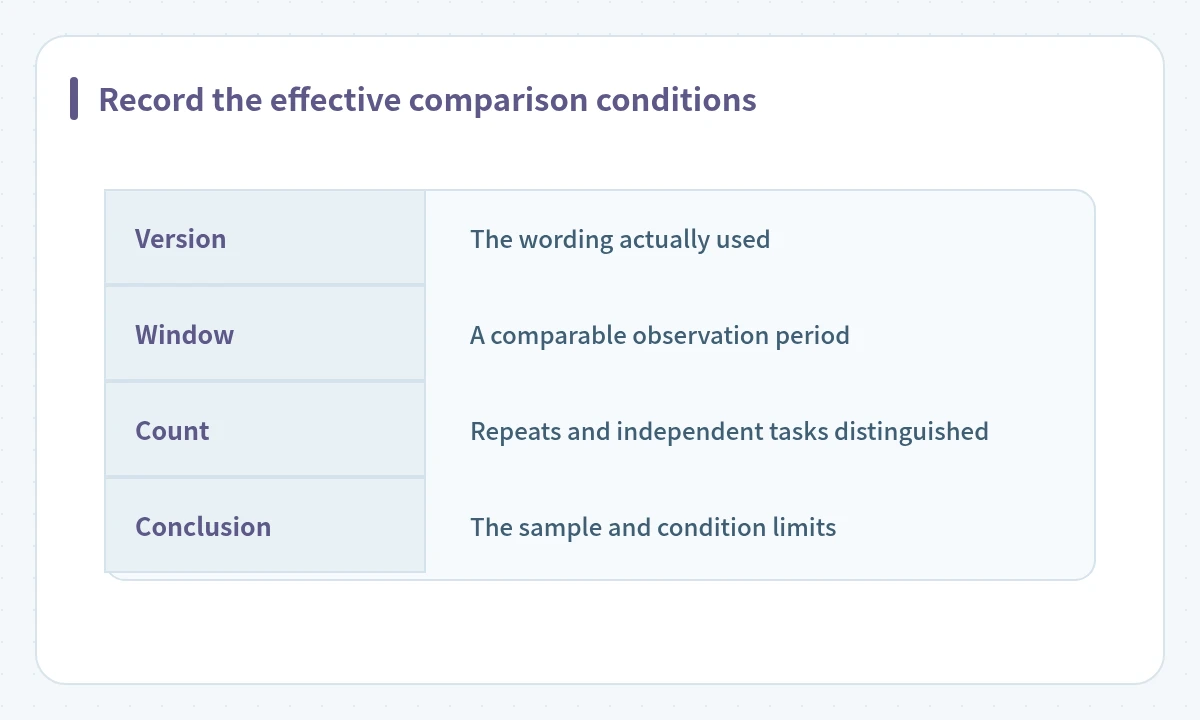
Pair reading review with outcome review
Before a limited authorised comparison, check that both versions are accurate, usable and non-misleading with harmless examples. Incorrect conditions or exaggerated promises should not become test variants merely because someone wants to see whether they generate more responses.
Keep the version, allocation method, observation conditions and supported result in the report without publishing contact lists or private messages. The final choice should have an explainable reason. The purpose is to learn about a defined communication question, not to manufacture a claim that every change in a campaign total came from the text alone.
NIST’s guidance on choosing an experimental design relates the choice to the objective and factors under investigation. Establish those conditions before treating two observed totals as a comparison of one intended change.
Reference
NIST: Selecting an experimental design
