
If a provider explicitly delivers several events in one callback, distinguish the delivery request from each business event inside it. A SIM free virtual number does not define that contract. An application needs to know what its whole-request response promises when only part of the batch has finished or failed.
Read the batch response agreement
Identify the top-level structure, delivery reference, item identity and retry unit. Some designs may retry the request together; others define item-level outcomes. Do not copy behaviour from another provider or assume a single-event endpoint can be wrapped into a batch arbitrarily.
Authenticate the request through the actual provider procedure, then validate each item’s structure and resource relationship. A valid batch request does not make every contained object belong to one tenant or bypass ordinary authorisation.
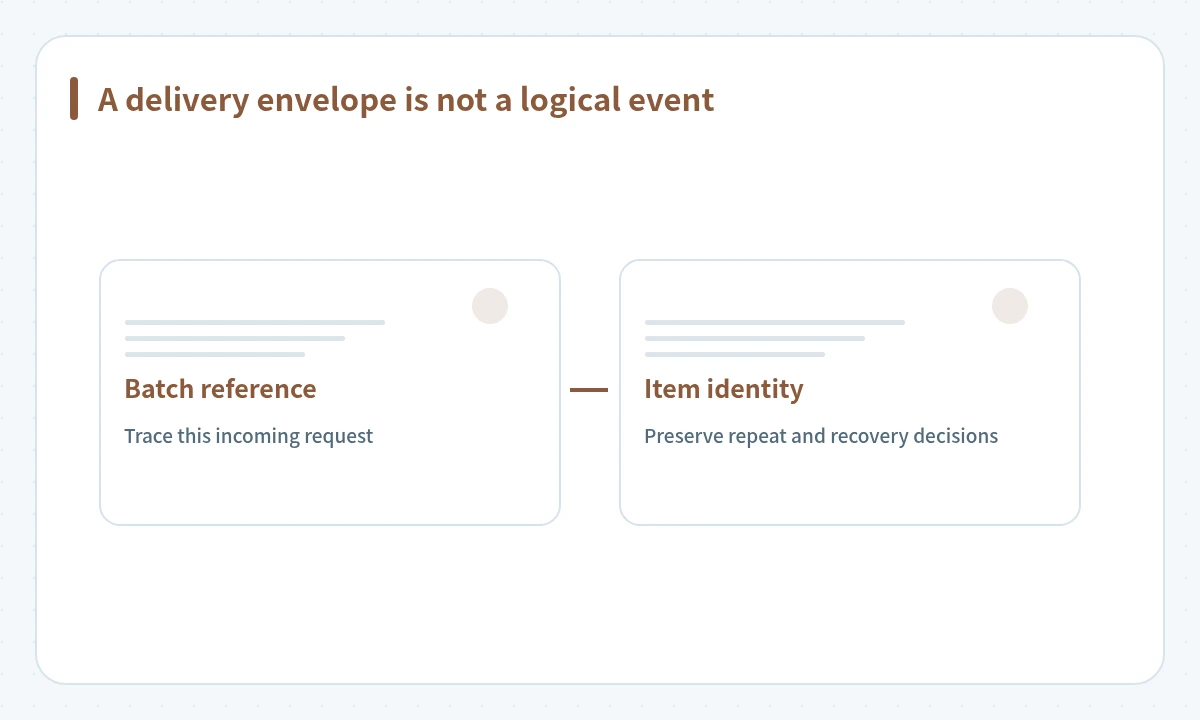
Keep the delivery identity and item identities separately. They help answer different questions: what arrived in this request and which logical events have already been accepted or completed elsewhere in the workflow.
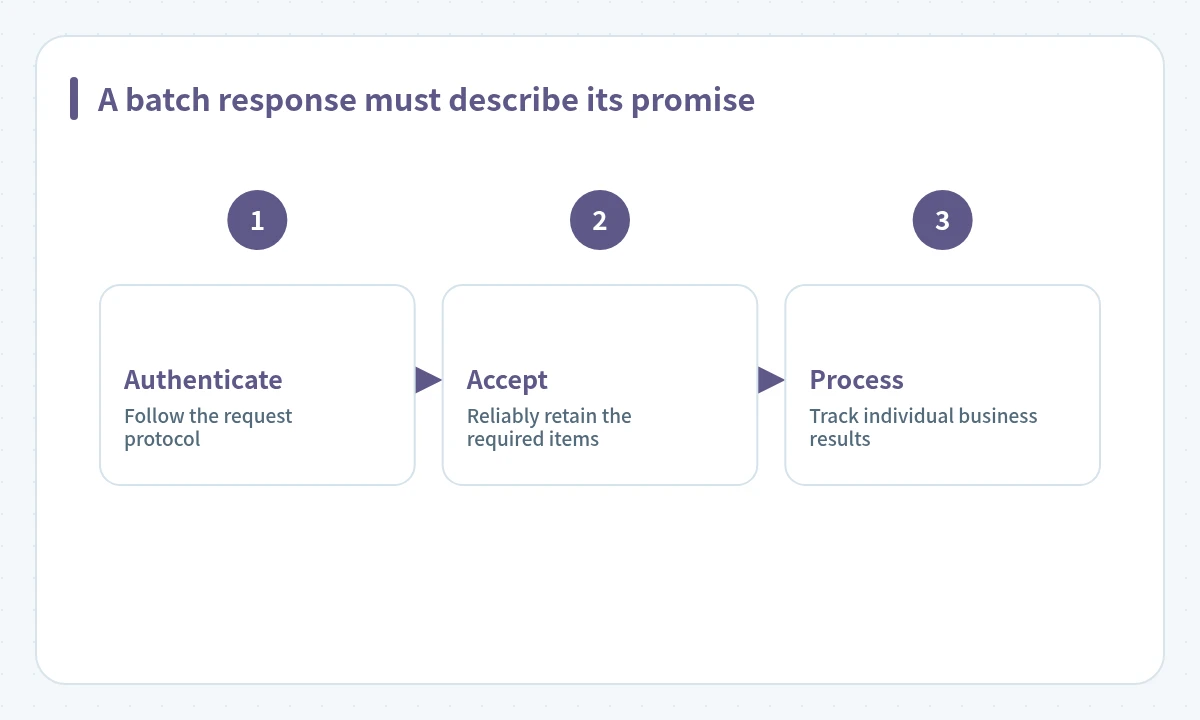
Save accepted work before promising it
If the design acknowledges durable acceptance before asynchronous processing, establish what was reliably saved for the required items. Putting the first item into memory is not a reason to declare the entire batch complete.
Malformed data, an unsupported version and a temporary processing fault may need different controlled outcomes. Make those states traceable rather than flattening them into one success counter. Avoid quietly dropping an item merely to let the rest pass.
The same item may appear again in a retried or different batch. Preserve its logical identity so a new delivery envelope does not automatically produce a new business action. Recovery should continue appropriate unfinished work without repeating established effects.
Understand the consequence of whole-request rejection
Where the contract retries the whole delivery after a failure, determine how already processed items remain protected. A rejection response is not a rollback of external side effects that already happened during handling.
If ordering matters to the task, consult the actual guarantee. An array’s visible sequence is not proof of a global event order across deliveries. Retain sufficient event context to make the application’s decision explicit.
An item rejected for a permanent structural problem needs an accountable destination. Depending on the contract, that can be restricted review or another defined error route. It should not disappear from the report, and it should not cause endless blind retries of valid neighbours. Retain a limited reference that makes the unresolved item discoverable without exposing its full contents.
Use mixed fixtures rather than a production flood
In an isolated receiver, combine normal items, duplicates, invalid structure and a controlled processing failure. Inspect both the required response and each item’s recorded result. Then exercise response loss and repeated delivery under the supported protocol.
No customer codes or repeated production traffic are needed. A controlled sender can demonstrate the relevant application transitions while preserving the distinction between a simulated condition and a real provider observation.
Diagnostic records need the batch and item references, stage and reason, not a broad copy of every private body. End review when the whole response, reliable acceptance and individual completion states have consistent meanings, with a recognised owner and path for the failed items. A label such as batch success should never hide which promise was actually fulfilled.
