
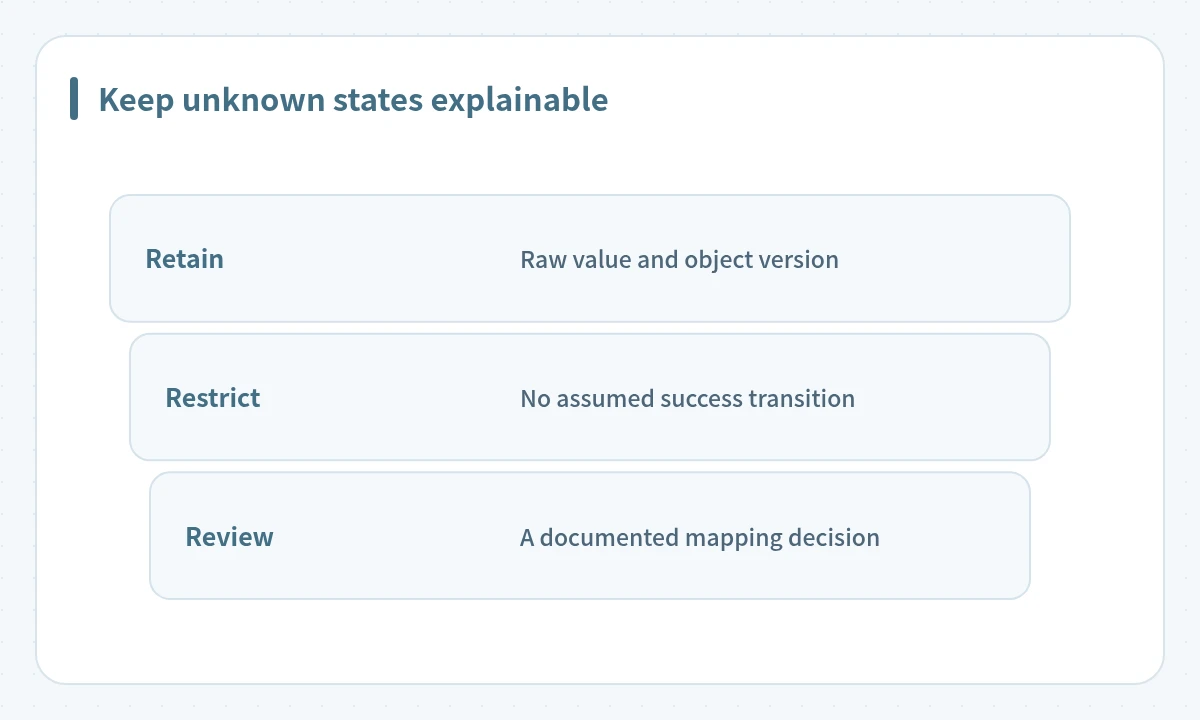
An unfamiliar SMS API status means the current application cannot interpret that result. Preserve it as unknown and limit downstream actions instead of placing every value outside the failure list into a success branch.
Identify the status-bearing object
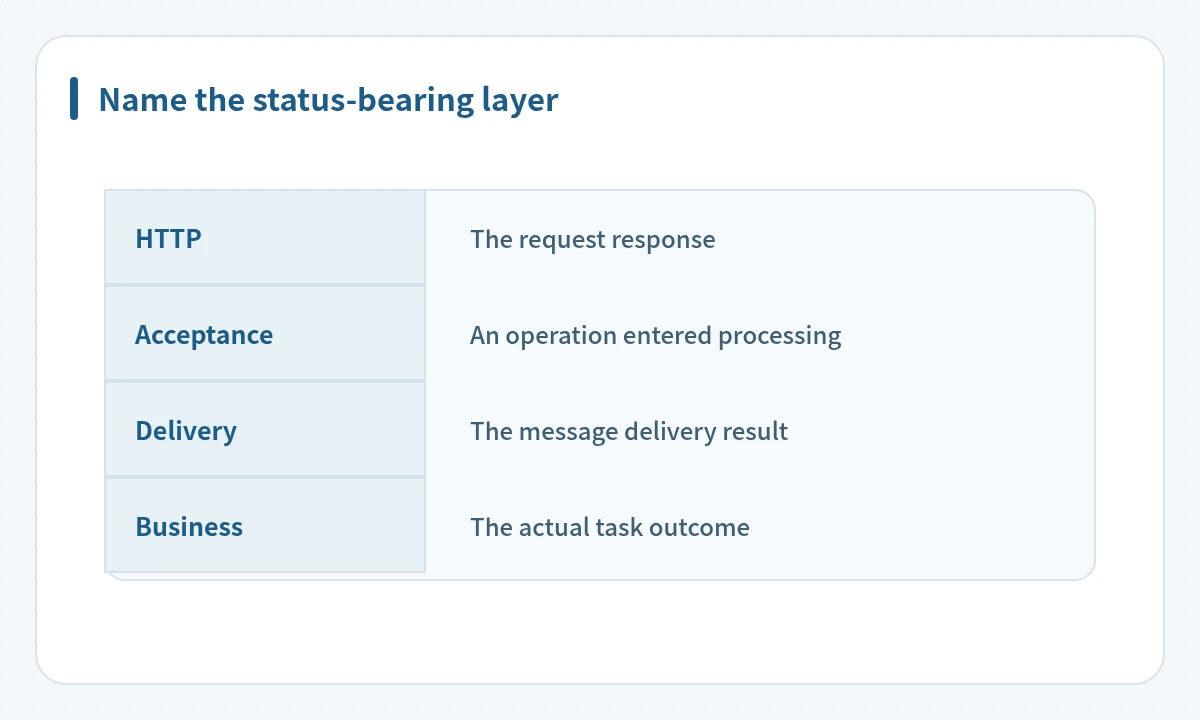
A sim free virtual sms number does not determine the meaning of an API response. The response may describe request acceptance, message storage, delivery or another business operation. Record the endpoint, version and object whose state is being reported. A successful HTTP response and a completed user task answer different questions.
Even familiar words need their documented context. Complete might describe an export job rather than a delivered message. Reusing one endpoint's status map across unrelated operations can produce a convincing display with an incorrect business meaning. Keep mappings attached to their actual contracts.
Give unknown its own path
Retain the raw status value and a limited object reference in the diagnostic record. Present a clear unresolved result where appropriate. Do not automatically close work, erase source records or trigger another consequential operation simply because the returned string is not recognised as a failure.
| Result | Handling direction |
|---|---|
| Known intermediate state | Continue documented tracking |
| Known final state | Apply the corresponding business rule |
| Unknown value | Hold interpretation and investigate |
| Missing field | Distinguish a permitted absence from invalid structure |
Unknown does not automatically mean retry the original operation. The provider may already have acted. Consult the supported object lookup and retry contract before sending another request. A mapping failure and a transport failure need different recovery decisions, even when both leave the user without an immediate answer.
Update the mapping with evidence
Check the official change record and the version serving the affected endpoint. Obtain an authorised, redacted fixture representing the new value. Determine whether it is intermediate or final and whether its meaning varies by operation. Have the business action reviewed before introducing a new automatic transition.
Historical unknown records need an explicit migration scope. Do not assign the newly understood meaning to every old unresolved value without checking its endpoint and version. Some records may have a different cause or may already have a later authoritative result.
Keep unknown-state handling separate from presentation translation. Changing a label into the interface language should not change the state used by business logic. Preserve a stable internal mapping and a distinct display label. If a translation is missing for a known state, that is a presentation defect; if the provider value itself is unfamiliar, that requires a contract review. Reporting those cases separately makes recovery more precise.
Test values beyond the familiar examples
Include an unseen string, a missing field, an unexpected type and an unrelated new field in the fixtures. Confirm that invalid or unknown state information cannot trigger the success action. Keep the customer-facing result understandable without displaying an internal exception or an unrestricted copy of the response.
Assign an owner to mapping alerts and suppress repeated noise from the same unresolved object under the operational design. After the correction, resume tracking through the existing object relationship. Preserve the investigation outcome so that the final state is explainable, rather than concealing the interval in which the application could not interpret the provider's answer.
