A resource order describes an arrangement. A message row describes what the receiving service recorded. The target business must separately confirm the operation you intended to complete.
What an order can establish
A provider's order record may identify the product selected, the resource involved and the state of that order, according to its documented fields. It should not be promoted to proof that a particular sender transmitted a code or that the receiving service recorded one.
Even a completed purchase does not define every technical capability. The actual product description still determines the receiving scope and conditions. An order for one service should not be treated as a promise of replies, voice calls or support for every third-party verification workflow.
Read the current record and its labels. “Pending,” “active” and “complete” can have product-specific meanings. If the provider does not explain what a status refers to, ask rather than translating it into a stronger claim such as “all messages have been delivered.”
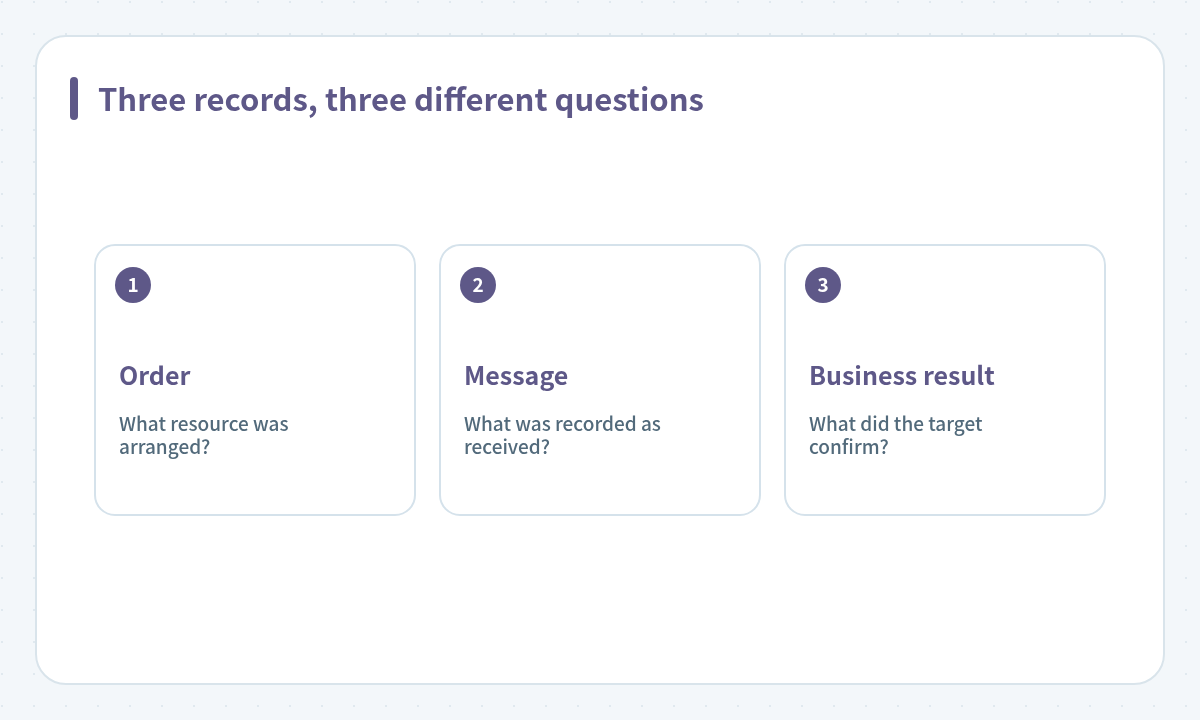
A message record answers a narrower receiving question
An accessible message can show the text and fields recorded by the receiving service. Confirm the recipient number, time meaning and relevant business context. A row appearing in the inbox does not by itself prove the sender's identity or that the target business accepted your later action.
A successful verification requires the intended target service to confirm the relevant operation. Entering a code, seeing a local copy notification or opening an inbox detail are not substitutes for that result. Keep your observation of receipt separate from the confirmation at the business account.
This distinction also helps with an empty list. If the current resource is available but no matching message is found in a successful query, the problem still needs investigation. Showing the purchase record again cannot locate the missing stage in the message path, and repeatedly buying resources does not clarify the first attempt.
Build a small chain of references
For an authorised support enquiry, describe the resource or order reference, the intended receiving task, the time range and the observed result. Mask information that is not needed. Support may request additional details through an appropriate channel, but the initial report does not need payment credentials or a complete inbox export.
Where possible, retain the distinction between a provider reference and a target business reference. Identical-looking reference strings from different systems are not automatically the same identifier. Label where each came from instead of combining them into a single “transaction number.”
If the question involves a charge or an order outcome, use the provider's official records and current terms. If it involves a business account action, consult that service's actual state and supported help process. Neither side's record should be used to invent the other's policy or technical result.
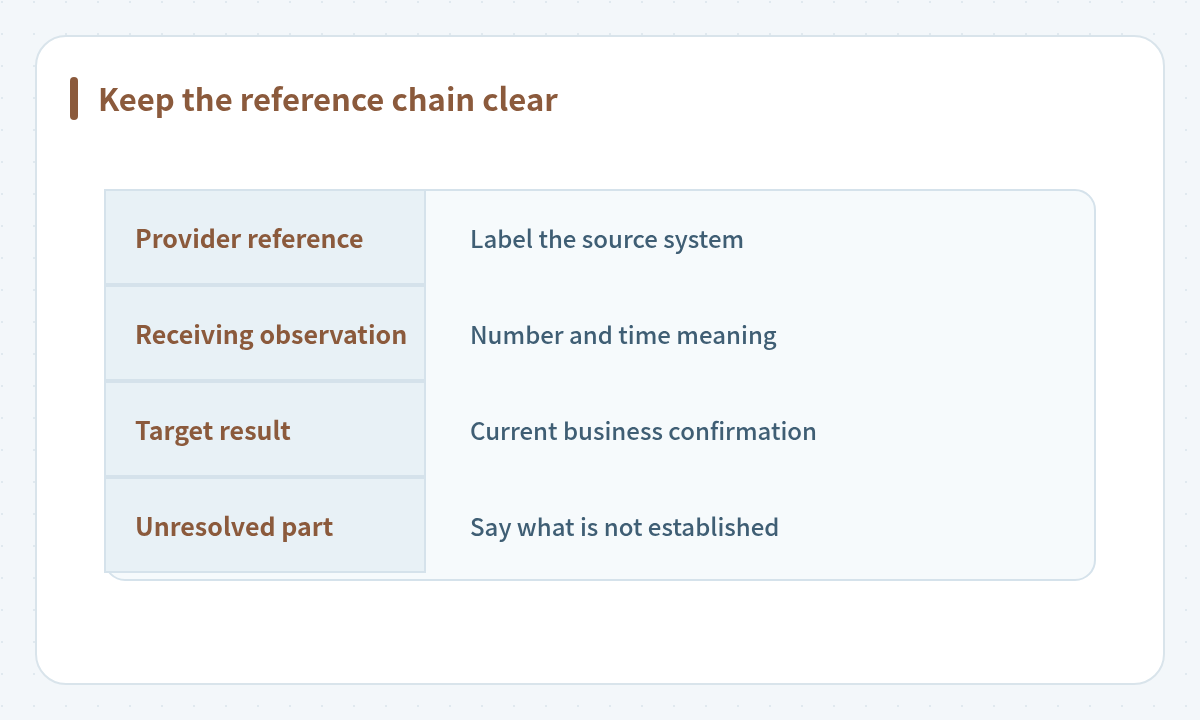
Keep a short chain of labelled references
Use separate labels for the provider order, receiving record and target business task. If the inbox query succeeded but found no matching message, record that observation rather than asserting the sender never submitted it.
If a text arrived but the verification failed, preserve both results and the target’s error wording. Repeating purchases or collapsing everything into one success label will not explain the missing stage.
Record an unresolved outcome honestly
A clear note might say that the resource was confirmed available, the relevant inbox query completed, and no matching message was found during the stated observation. That is useful evidence without asserting an unverified cause. Do not write “sender never sent” solely because you lack a receiving row.
Likewise, if a message arrived but the target rejected the request, keep both observations. The receiving service may have performed its part while the request expired or failed for another documented reason. Do not overwrite the history to make it fit one convenient success or failure label.