
AWS verification codes and unavailable MFA devices require an identity-type check before recovery. The root user, an IAM user and an organisation's other entry routes do not necessarily share the same administrator or recovery process.
Establish the account and identity first
AWS's official MFA recovery guidance distinguishes root-user recovery from the IAM-user route, where an authorised administrator handles the unavailable device. If another MFA device is already registered to the same identity, the page can offer its use as an alternative.
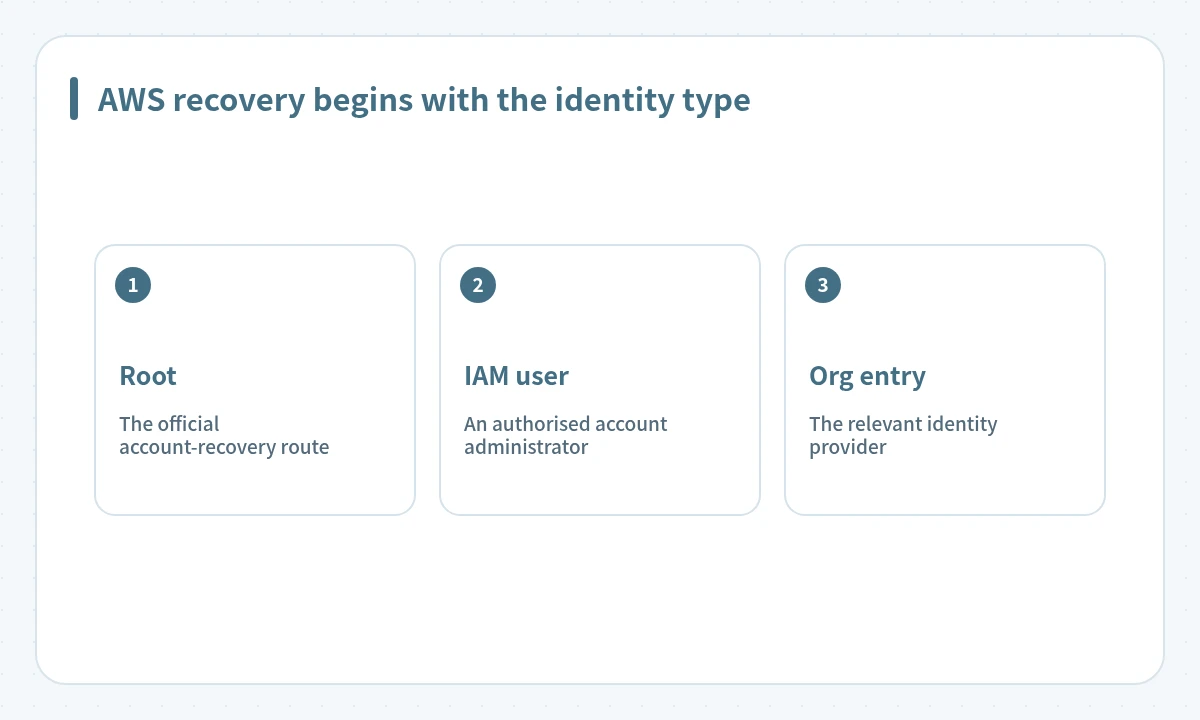
Confirm the account, user and login entry using the page and information supplied by your organisation. A familiar email is not enough to establish that you are using the root identity. Permission to operate a business service does not establish permission to manage every user's authentication.
For an organisation-provided sign-in portal, inspect that identity system's guidance before applying an IAM recovery screenshot. Describe which entry you actually used so the responsible team can identify the account context.
Recovery contact checks are not routine MFA codes
The root recovery documentation describes using the registered email and primary contact phone for alternative verification. That purpose differs from an enrolled authenticator, hardware token or security key. Read whether the current step is recovery or routine MFA instead of treating any arriving message as a substitute for the requested factor.
| Current identity | First route |
|---|---|
| Root user | The official root MFA recovery instructions |
| IAM user | An authorised administrator for that account |
| Another organisation entry | The corresponding identity-provider guidance |
Do not move between these routes simply because one asks for information you cannot currently access. The appropriate route follows the actual identity, not whichever recovery form appears easiest to complete.
Tell the administrator what remains available
Record the affected account and user, MFA type and whether another registered device remains usable. Provide necessary identifiers only through a trusted support channel. Passwords, current codes and recovery secrets are not required in an ordinary incident record.
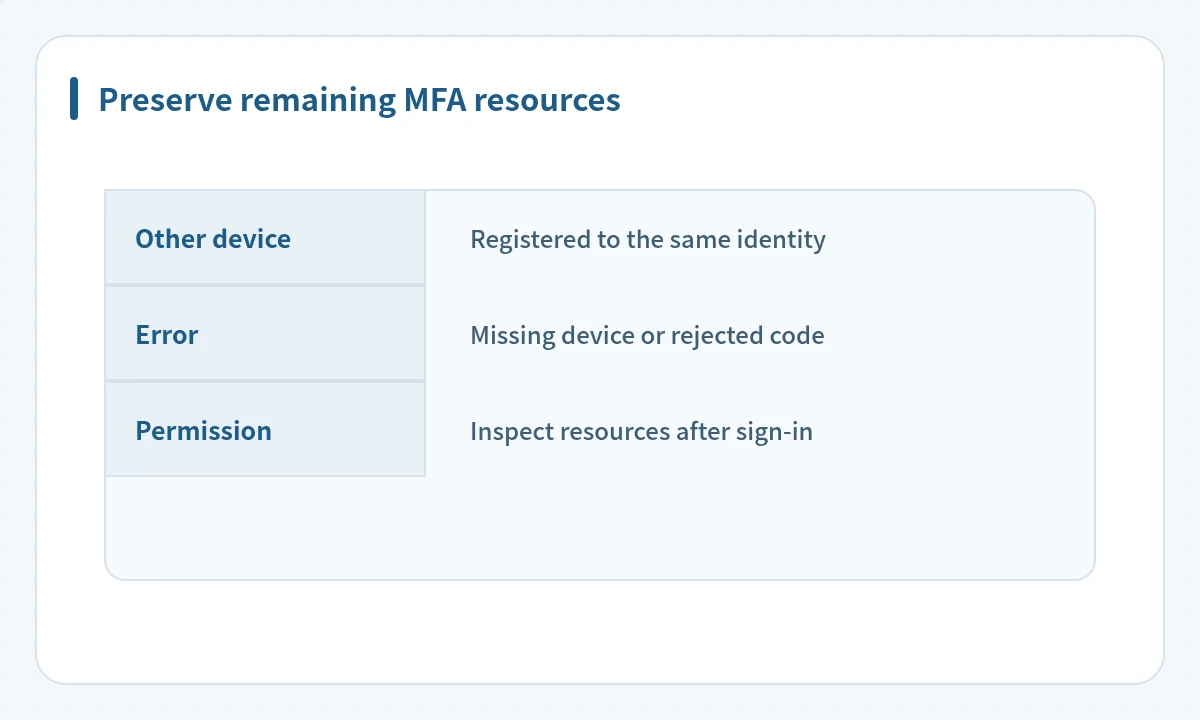
If a token still functions but its codes are rejected, inspect the official synchronisation or relevant troubleshooting guidance before describing it as lost. If it is truly unavailable, preserve other working factors instead of removing them all as a test. Recovery should have a clear owner and an identifiable sequence.
A colleague helping with the incident does not need to borrow your identity to perform unrelated business work. Use the organisation's proper administration and access arrangements while the affected user's recovery is handled.
Check resource authorisation after account access returns
Once sign-in succeeds, inspect any remaining service error according to the actual permissions. MFA confirms an identity; it does not assign access that the identity never had. Do not keep seeking new codes to answer a separate resource-authorisation question.
During routine maintenance, review registered backup MFA and primary contact information under the organisation's rules. A staff handover should use formal identity management, rather than continued dependence on a former employee forwarding codes. Keep root credentials out of ordinary shared handover sheets.
References
AWS: Recover root-user and IAM-user MFA access; AWS: Root-user MFA types.
