
Temu verification codes should first be identified as account-security information or part of a particular parcel task. Different messages can appear around the same purchase without authorising the same action. Inspect the formal page and message purpose before entering a value.
Separate the objects described by the service
Temu's Australian privacy information separately discusses account-security codes and collection-verification information in markets where the latter applies. This establishes different possible purposes, not a universal collection process or format for every country and order.
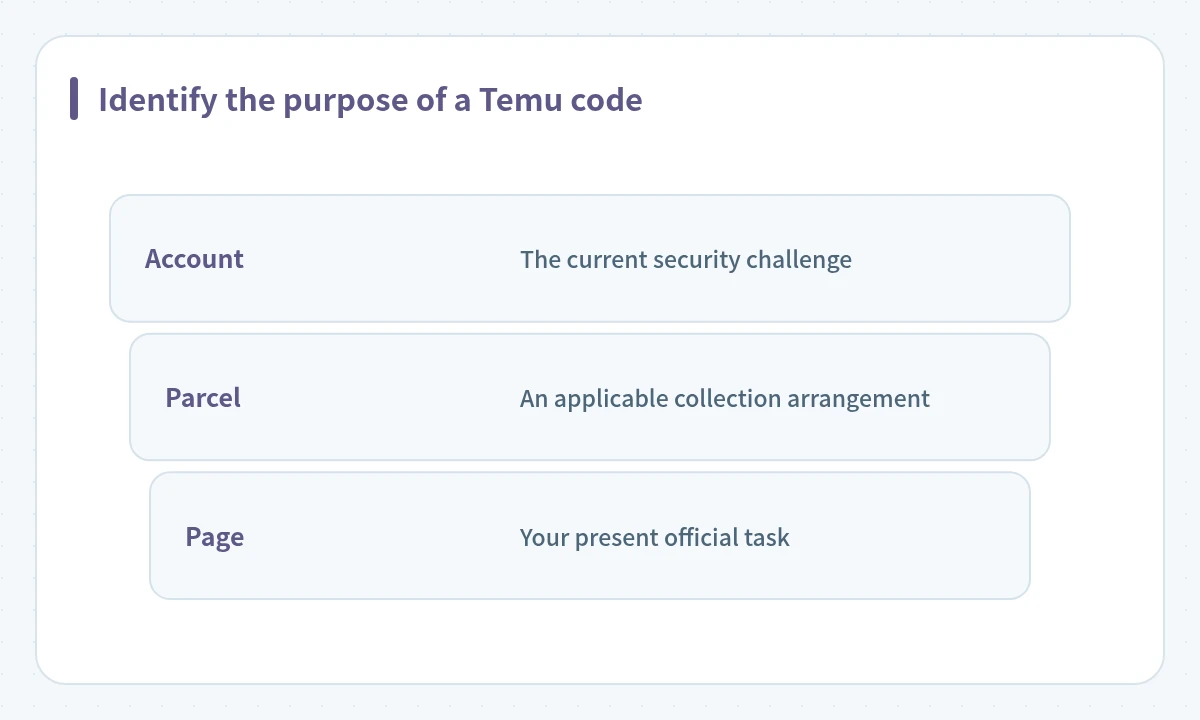
On your own sign-in page, inspect the account method requested. For collection information, inspect the actual order and applicable official instructions. Do not let a chat message redefine a login value as delivery confirmation merely because the sender claims to be handling the parcel.
Match the source with the requested action
| Object | What to establish |
|---|---|
| Account check | Your initiated sign-in or security task |
| Parcel information | The relevant order's actual collection arrangement |
| Current page | The information requested and resulting state |
If someone requests a text for delivery, a reward or a reported problem, open the official account and order independently. Ordinary parcel communication does not grant someone authority to enter the account. Passwords and recovery information should not accompany a message simply to make the conversation easier.
A support record can identify the market, task and related order without retaining the live value. Keep personal addresses and full contact information out of a public report unless an appropriate official process genuinely requires them.
Use the account's actual security configuration
Temu's account help discusses two-factor protection. Follow the methods and settings shown for your own identity rather than assuming an option in a tutorial has already been configured. After setup, inspect the recorded result rather than only the arrival of a message.
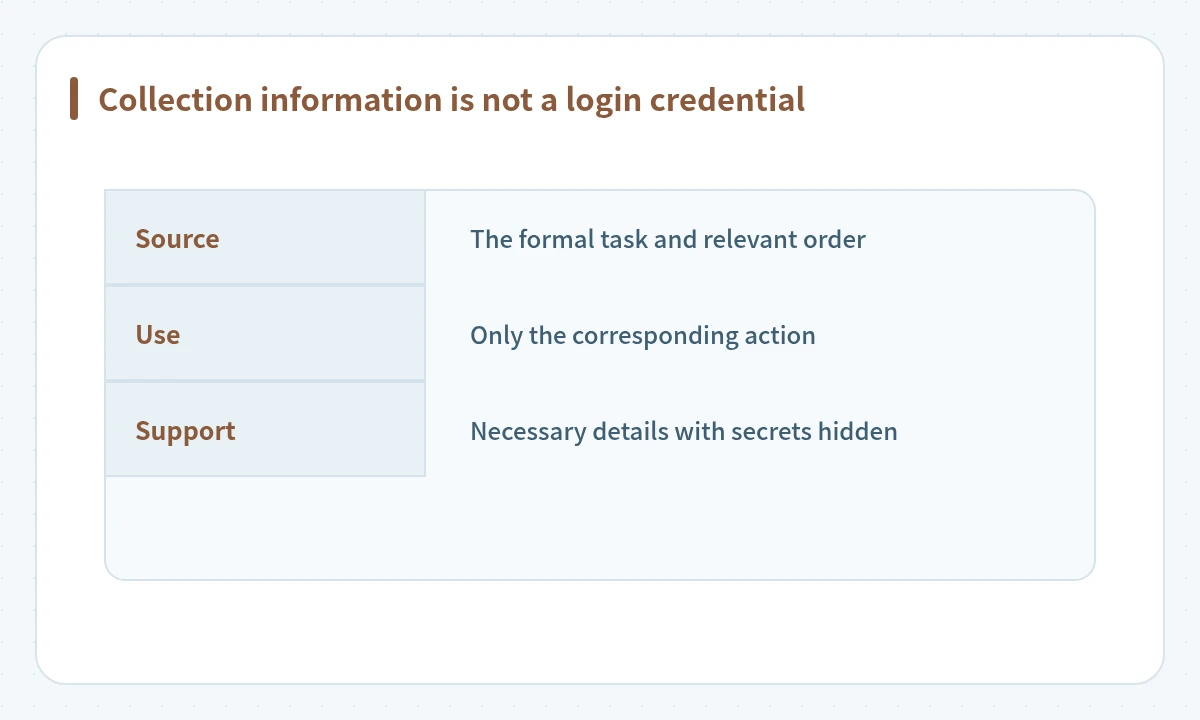
For missing mail or texts, inspect the current destination, filters and request time. Follow any retry limit. Do not use collection information in an account challenge or keep trying an earlier sign-in value against another task.
If an old contact destination is unavailable, preserve remaining account access while reviewing the supported change process. An outside receiving line is not a replacement for ownership of an existing account's enrolled resource.
Confirm access and order outcomes independently
After a value is accepted, determine whether account entry succeeded or a specific order action has a result. Inspect their respective pages. Message delivery alone cannot tell you that all related business activity completed.
Tell support the market, task, whether an order is involved and the exact error, with credentials hidden. Keep a usable session rather than clear all devices or alter several account fields as a reception test.
Identifying the purpose first makes the problem easier to describe and reduces the chance that an ordinary delivery conversation becomes a request for account access unrelated to the parcel itself.
When reporting a message, describe its stated purpose without copying its secret value. For example, account sign-in and collection of a named order identify different tasks. This is a way to organise your observations, not proof that any particular order uses collection verification.
References
Temu Australia: Account-security and parcel-information purposes; Temu: Account two-factor protection.
