
A visitor appointment text can confirm registration without establishing that entry is currently authorised. Check the place, time window and actual property-management process before treating an SMS as a general access credential.
Match the visit to a specific location
A flexible backup phone number receiving the notice still needs to be associated with the right visitor and appointment. A site may have several buildings and entrances. Use the known booking or property-management route to check the precise destination when the message uses a short location name.
Verify the date and visit window, especially if an older invitation remains in the inbox. A record for yesterday is not an explanation of today's access arrangement. If the invitation is unexpected, contact the known host rather than testing a code at an entrance to find out whether it works.
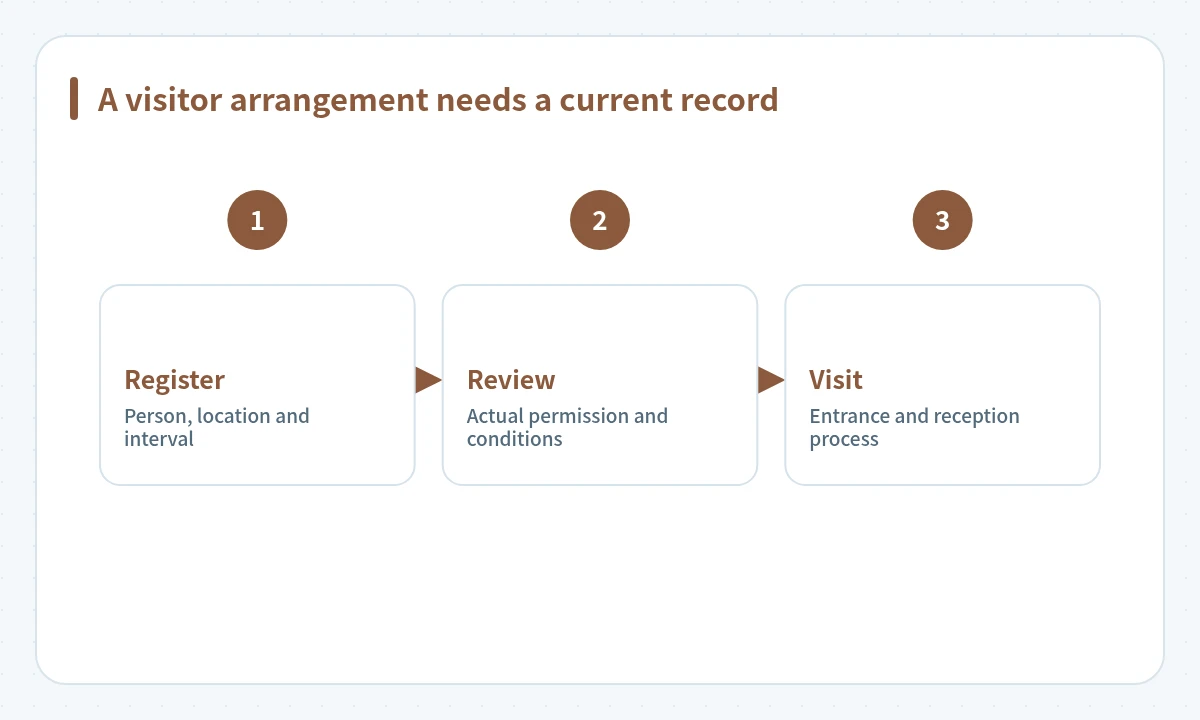
Identify what the current status means
Submitting visitor information may create a pending record. The property's rules determine whether approval, reception processing or another check is required. A phone number receiving the notice does not establish that a particular person has completed those steps or may enter every part of the site.
| Record | Question |
|---|---|
| Appointment | Who, where and when? |
| Approval | What is currently permitted and on what conditions? |
| Entry arrangement | Which entrance and supported check? |
| Visit | What reception or entry event actually occurred? |
Follow the stated limits on any temporary permission. Do not borrow another visitor's credential or interpret a booking-success message as permission for unrelated areas. Where the notice is unclear, ask the host or property administrator to explain the current arrangement through the approved contact route.
Update a changed visit in its original process
If the time changes or the visit is cancelled, amend the existing appointment through the supported workflow. A late reminder should be checked against that current record instead of being read as a renewed invitation. Keep the host and visitor working from the same confirmed arrangement.
For multiple visitors, verify which records need amendment rather than assuming one person's change covers the group. Share only the coordination information each participant needs. An access code or identity document should not become a general chat attachment merely because several people are travelling together.
For a host who cannot be present, confirm which authorised reception role will handle the visit and how that handover is recorded. Do not solve the absence by broadly forwarding a temporary access credential. Give the visitor a known contact route for an unexpected change in arrangements. A clear handover supports the scheduled visit without inventing new permission or leaving the visitor to negotiate entry from an old notification.
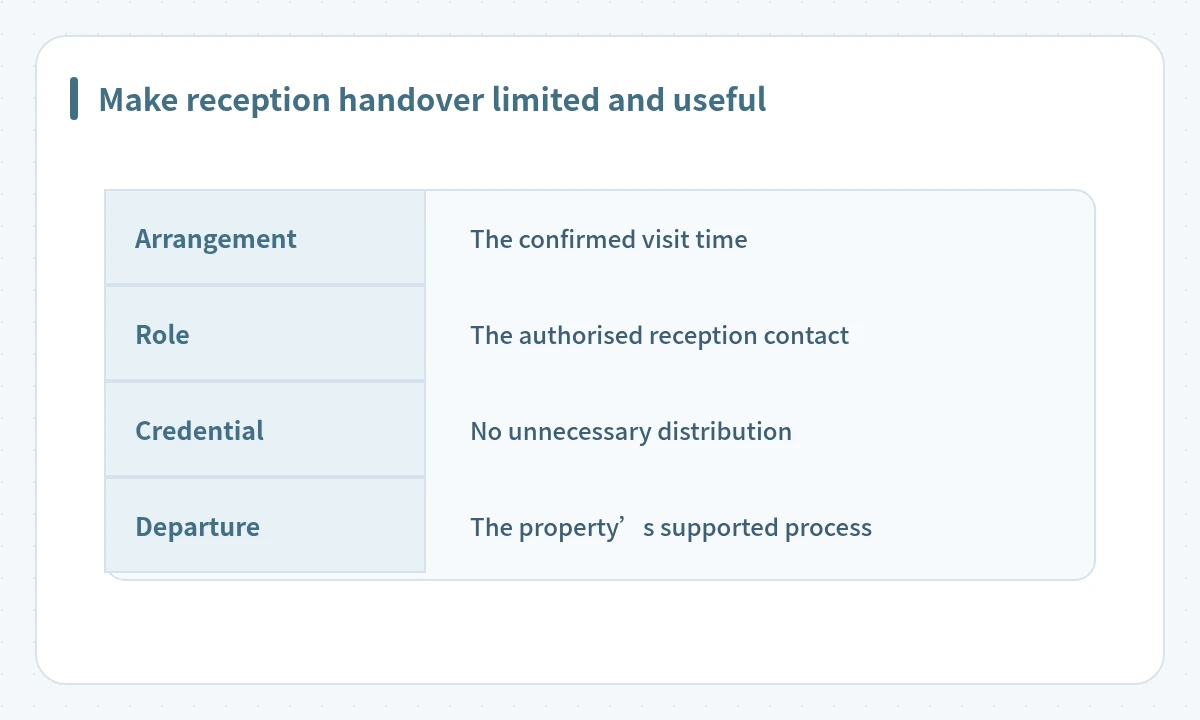
Keep reception handover limited and useful
Provide the relevant arrival time, person and appointment reference to the authorised reception role. Submit any required identification through the property's accepted method. Unrelated staff do not need a complete visitor itinerary or copies of identity documents to understand a basic scheduling update.
At the end of the visit, follow the actual departure and temporary-access process. If notices continue, investigate the specific appointment or subscription rather than simply muting the inbox. The notification should help people find the current controlled arrangement; it should not become an informal access mechanism detached from the property's own record.
