
After a booking change, check the current order rather than constructing an itinerary from the last message received. Departure, arrival, meeting points and connections may have changed separately.
Open the same booking through a known route
Use the operator or booking account you already recognise and match the stable reference. One contact number can receive updates for several travellers or journey segments. A shared date alone does not establish that two messages describe the same object.
Protect the personal context while investigating. Private itinerary and identity information should not be posted to a public inbox or group to ask which message is latest. A limited booking reference and verified support route are a better starting point.
Read whether the update is a proposal, a saved change or a request for your choice. Viewing a message or opening its page does not necessarily accept a new arrangement. The actual business process needs a defined result.
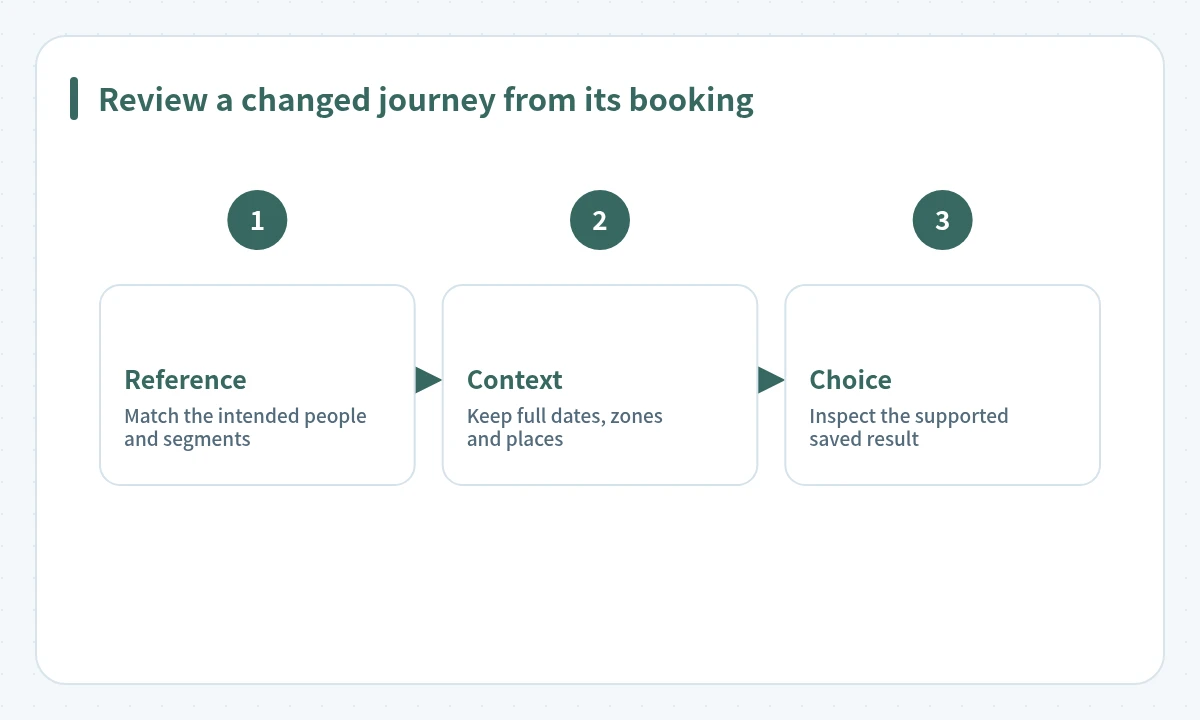
Review each segment’s complete time and place
Retain the full date, stated time zone and location identifiers. Do not subtract clock values from different zones without establishing their context. The receiving phone prefix cannot identify the traveller’s current location or the relevant schedule zone.
If several operators manage different parts, keep their references separate. Inspect whether the changed segment affects later arrangements, but obtain actual options and conditions from the responsible provider. A generic message guide cannot promise free changes or declare a connection feasible.
Where the business requires a decision, use its current supported options and inspect the saved outcome. If the response is unclear, check the booking before repeating a state-changing action. Do not create several replacement bookings to discover which one is valid.
Interpret late notices against confirmed state
Compare event context and the current account result. An earlier notice seen later should not silently reverse a change already confirmed by the operator. Keep the discrepancy with its reference and ask the genuine business if the arrangement remains uncertain.
A message may remain readable after its proposal expires. That does not make the option available again. Follow the service’s normal route rather than modifying links or trying to replay an obsolete choice.
If your contact route will expire during the trip, review the provider’s supported contact-change options before relying on further updates. This is an access dependency, separate from the booking itself. Do not assume an old text remains a working entry point indefinitely.
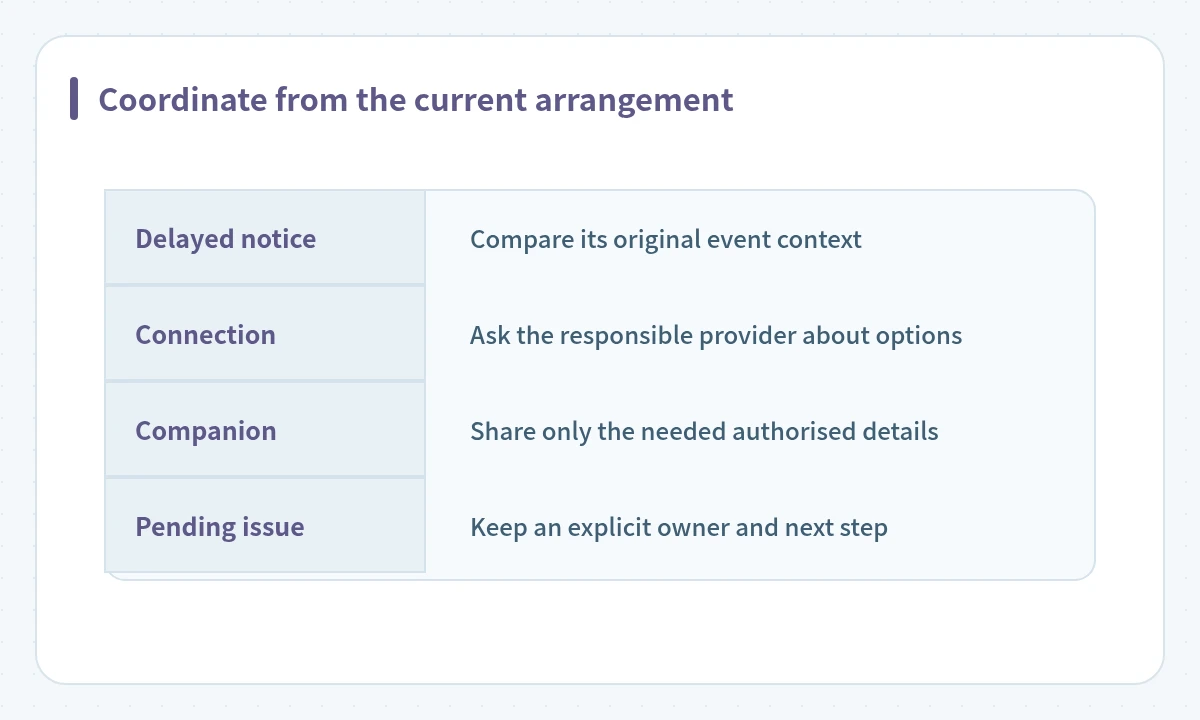
Coordinate only the information others need
A companion may need the confirmed schedule without authority to change the account. Use supported delegation where required, and keep login codes and management links out of ordinary forwarded itinerary notes.
For operators, controlled tests should cover successive changes, cancellation and opening an old message. The current page should explain the present arrangement without restoring an expired proposal or creating a duplicate reservation.
After choosing, keep the confirmed itinerary and remaining actions rather than only a screenshot of the text. Unresolved support, cost or connection questions should stay assigned to the appropriate business. The closing result is a coherent current plan for the relevant people and segments, with uncertain conditions visible instead of guessed from notification order.
