
Machine translation can make an unfamiliar SMS easier to understand while changing a word that affects what you should do. Keep the original record available and check the action-bearing details before responding. Searching for a virtual number to accept incoming sms does not establish what language a sender will use or how a browser translates it.
Begin with an identifiable original
Know which message is being translated, including the recipient and relevant time context. Browser translation may affect surrounding interface labels as well as the message. Distinguish the service’s buttons from the sender’s original text so that a translated page control is not mistaken for part of the notification.
If the interface offers an original-language view, use the supported control when checking exact wording. A screenshot of a translated screen can be useful for describing a display problem, but it should not be treated as the unchanged source message.
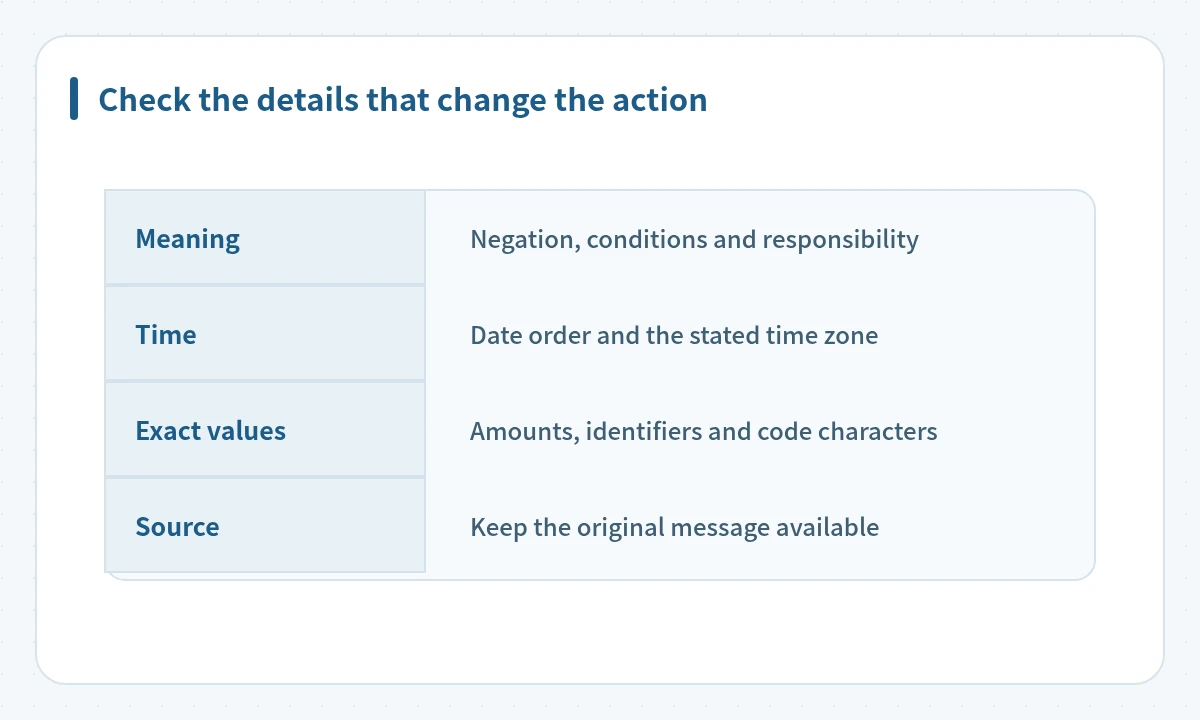
Check the details that change the decision
Negation, conditions and deadlines deserve close attention. “Not confirmed” and “confirmed” lead to different actions. A notice saying an action will occur unless cancelled differs from a request to approve that action. Translation that sounds fluent can still leave those relationships unclear.
Keep amounts, dates, reference strings, phone numbers and code characters attached to their original labels. Do not translate an identifier into a more readable form or assume that a familiar-looking date follows your local order. If the source does not state a time zone, translation cannot supply the missing fact.
| Detail | Check against the source |
|---|---|
| Action | Who must do what, and whether it is optional or conditional |
| Time | Date order, deadline wording and any stated time zone |
| Exact value | Amount, reference or code without silent character changes |
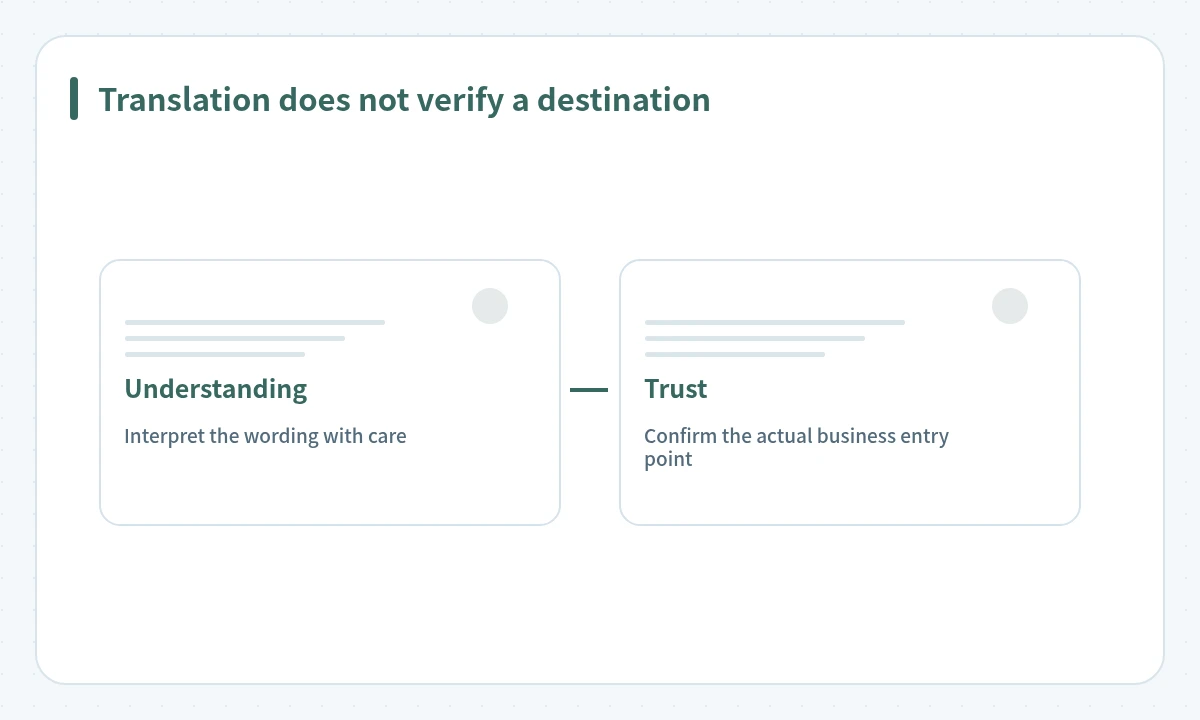
Translation is not destination verification
A translated instruction to visit a link does not establish that the link belongs to the business. Check the destination through an independently known route when the action concerns account access or payment. A convincing translation cannot grant permission to use someone else’s code or account.
If the decision has serious consequences and the original remains ambiguous, ask the responsible service to clarify through its normal support process. Describe the unclear wording and relevant task; do not rely on a second machine translation as proof that the first interpretation was correct.
Keep private text out of unnecessary tools
Before pasting a message into an external translation service, consider what it contains and whether that service is appropriate for the information. Often only a short, non-sensitive phrase needs explanation. Remove active codes, personal identifiers and private account links where they are not necessary to understand the wording.
For a work task, follow the organisation’s approved handling arrangements. Do not assume that an installed extension translates entirely on the device or that every browser translation feature handles data in the same way. Review the actual product’s current information when that distinction matters.
Once the meaning is clear, complete the authorised task in the original business environment. Retain any necessary interpretation note separately from the source so that a later reader can see what was received and what was inferred.
