
Distinguish investigation, repair, temporary recovery and confirmed resolution in a service update. Progress wording and an estimated recovery time do not establish that normal operation has resumed.
Establish the affected scope
A problem may involve particular functions, resources or locations. A useful notice states the confirmed scope and observation time. It should not turn a local issue into a universal outage, or use a broad green status label to answer every individual account question.
Use the business’s known status page or account route. If an unexpected text uses an outage as a reason to request credentials, another payment or a code, verify it independently. Experiencing a real access problem does not authenticate the person offering to fix it.
Operators should retain the link between the notice and the incident record. Discovery, confirmed impact and the current measure can occur at different times. Keeping those facts distinct makes later explanations more reliable than reconstructing them from memory.
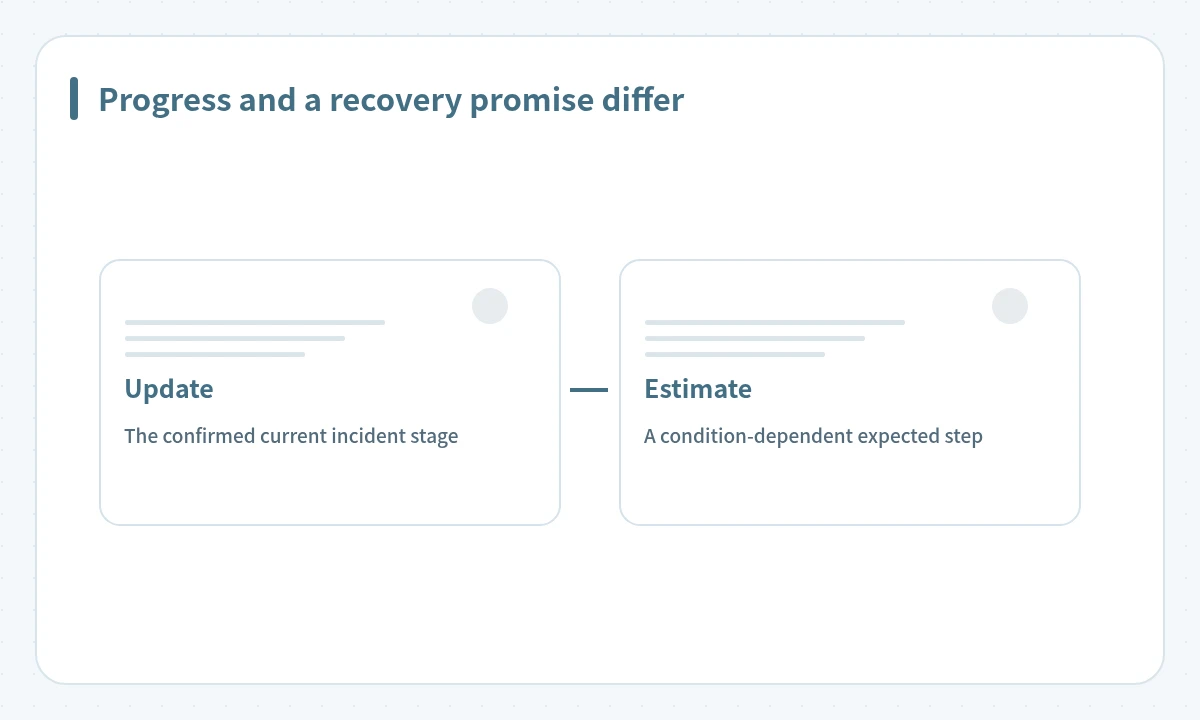
Read estimates with their conditions
If a provider offers an expected recovery time, identify which step it describes and when it was updated. An estimate is not necessarily a guarantee. Do not turn an uncertain internal target into a precise customer promise simply to fill the message.
Where no confirmed time exists, a recognised update route or stated next-update point can be more useful. That information must come from the actual operation, rather than a template inventing a reassuring deadline.
A temporary workaround also needs a verified source, permitted scope and ending condition. Do not direct users to an unfamiliar mirror site from a message that they cannot independently confirm. A workaround should not silently weaken the account’s normal access boundaries.
Check the original task after access returns
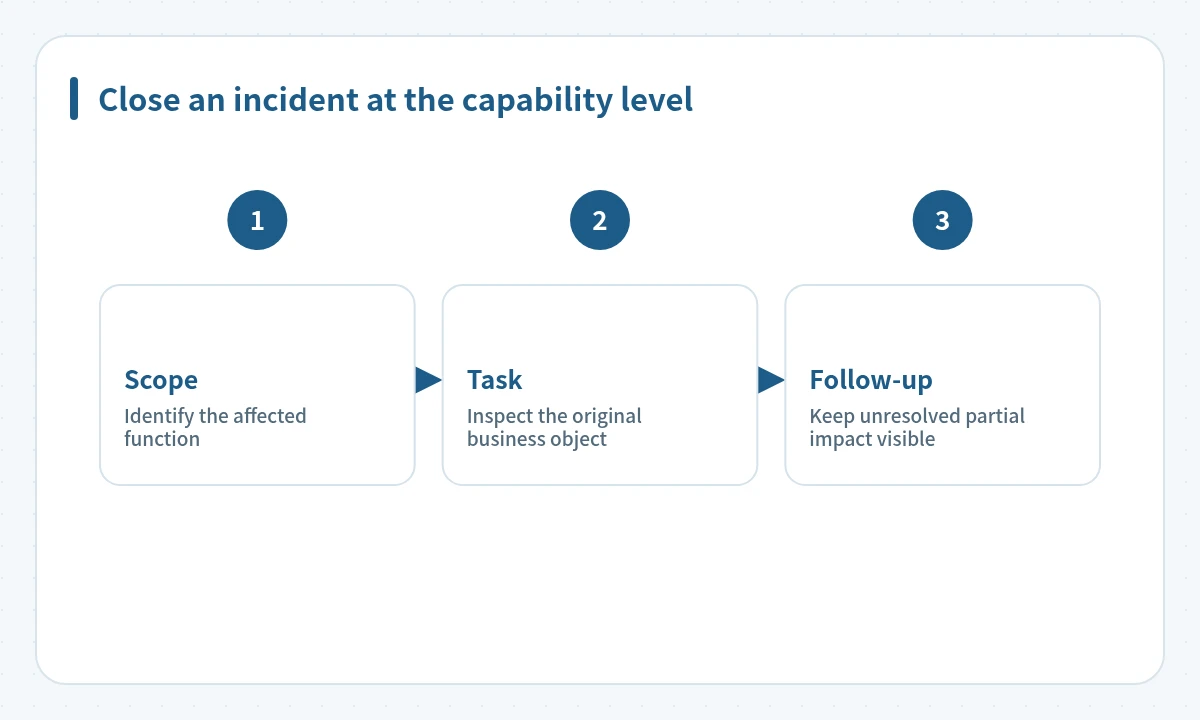
A page opening again does not establish that an interrupted order, upload or verification completed. Inspect the relevant business object and distinguish completed, processing and failed states. Follow the supported next step for that result.
Avoid replaying every uncertain action at once as a recovery test. State-changing operations can need their original reference and duplicate controls. A working home page alone cannot answer what happened to an earlier submission.
If several functions recover at different times, keep their labels separate in follow-up. A restored query endpoint should not be reported as restored submission capability without checking that operation. Match each update to the capability users are actually waiting to use.
Close outdated notifications deliberately
Operators can simulate successive incident states with harmless fixtures. Open an earlier message after recovery and inspect pending notices. The current destination should explain the latest state, while controlled queued work should not continue announcing an obsolete outage.
A correction needs to say what changed. Sending the same old alert again adds traffic without updating the user’s understanding. Keep any remaining partial impact explicit instead of declaring universal restoration prematurely.
For a continuing problem, report the resource reference, exact error, observation time and last confirmed step through official support. A complete SMS history is not normally the first thing needed. Close the issue according to the responsible service’s confirmed result, retaining any unresolved tasks so a progress update is not mistaken for a finished recovery.
