
A business using a different sending number is neither proof of fraud nor proof of identity. Confirm the business event independently rather than relying on the number or conversation grouping alone.
A sending service may select among resources
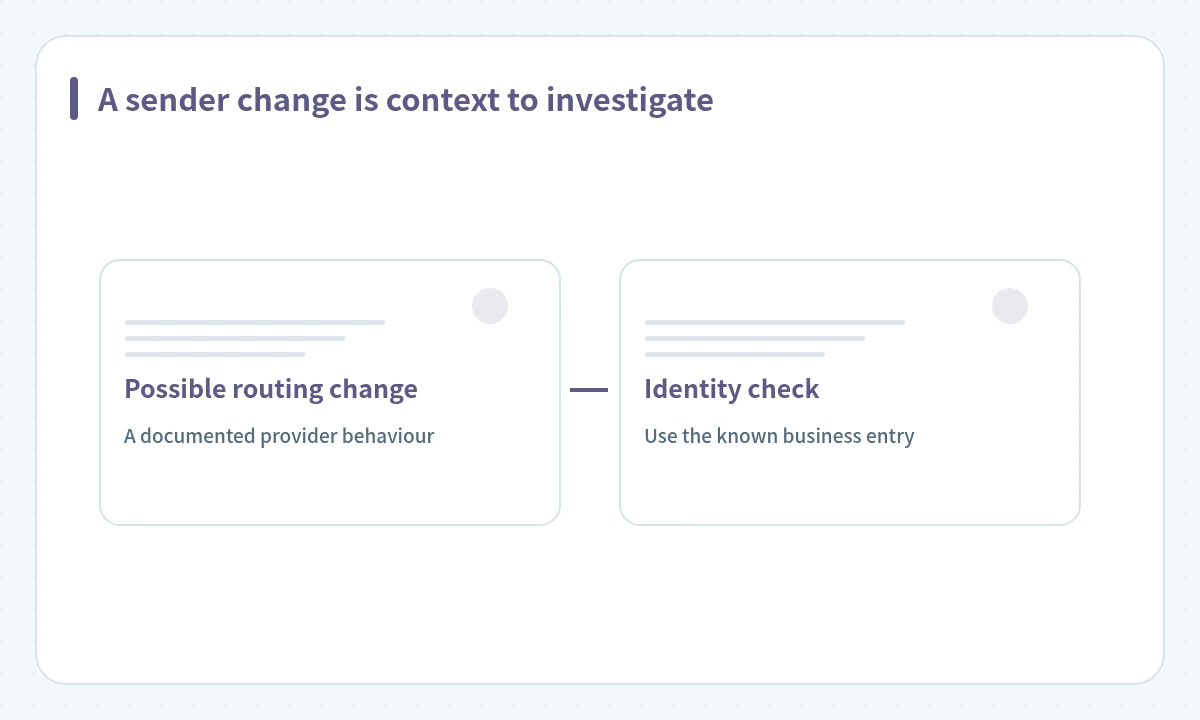
Twilio’s Messaging Services documentation describes sender pools and selection features, including mappings intended to keep a sender consistent for a recipient. It also explains that mappings can change under documented conditions. This is an example of service behaviour, not evidence that a particular unexpected message came from a legitimate business.
A company may use several systems or channels, but the recipient usually cannot infer the configuration from a displayed number. Do not turn a plausible technical explanation into an identity guarantee. A familiar number can also be insufficient evidence on its own.
Match the business task independently
If the text concerns an order, account or appointment, open the business’s known application or website. Check whether the described event exists there and whether the requested action matches it. You do not need to click the new sender’s link to establish that context.
| Clue | What it can help with |
|---|---|
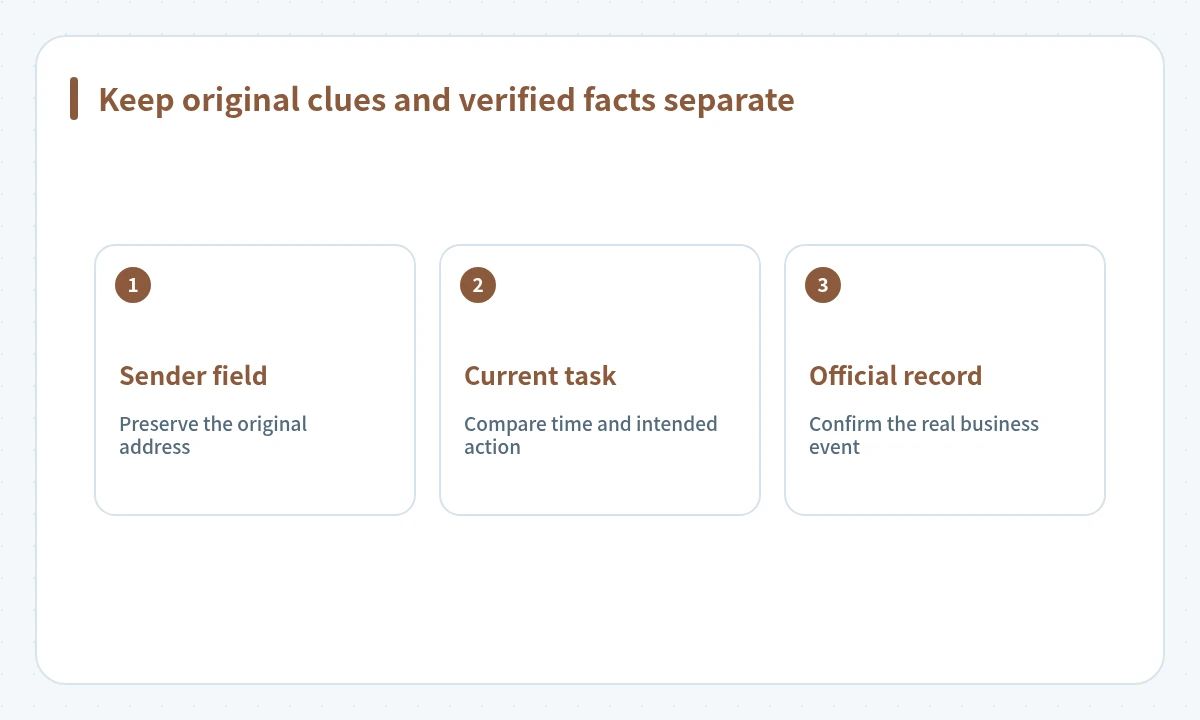
| Original sender field | Identify which sending address appeared |
| Message time and task | Compare with your current authorised activity |
| Official account record | Establish whether the business event exists |
| Known support route | Clarify an unexplained sender change |
A sender label saved in your contacts can hide the raw address. Where the inbox offers a normal detail view, distinguish the provider field from a local nickname. Keep an unknown value unknown instead of assigning a reassuring company label because the text looks familiar.
Separate conversation organisation from permission
If related texts appear in different threads, use a supported internal label or task reference where appropriate. Do not merge records by rewriting their original sender fields. Preserving those fields helps later troubleshooting and avoids turning a convenience grouping into a claim about origin.
Blocking the old sender does not necessarily stop every message from a service, and allowing a new sender does not establish what its future content will be. Subscription preferences and local display rules need their own documented scope. Avoid broadly whitelisting all similar-looking numbers to make a conversation look tidy.
For a business operating the sending system, test its documented sender-selection behaviour with controlled recipients and harmless content. Explain the expected sender identity through established channels when a change is planned. Do not tell customers that matching a brand name in an SMS is enough to trust a request.
For a recipient, a useful question to verified support is whether the specific sender is used for the current type of notification. Provide a redacted sample and the time if needed, without forwarding active verification codes. The answer should clarify the supported contact route while preserving normal checks on each requested action.
Technical reference: Twilio: Messaging Services and sender selection.
